Level 2
Articles in this pillar
A master data model for reusing calculations while keeping materiality, boundary, timing, purpose and compliance decisions distinct
Decision guide · 8 min EU Voluntary Standard vs IFRS S1 and IFRS S2: SME Reporting and Investor Information ComparedHow intended users, materiality, climate content, financial effects and compliance claims differ — with a decision guide for lender- and investor-facing SMEs
Comparison · 10 min EU Voluntary Standard vs ESRS: Key Differences for Companies Outside CSRD ScopePurpose, eligibility, modules, materiality, value chain, assurance, public reporting, claims and a controlled migration path
Comparison · 10 min EU Voluntary Standard vs GRI: Which Framework Fits an SME?A practical comparison of reporting purpose, users, materiality, disclosure architecture, effort, claims and controlled data reuse
Comparison · 13 min✓ Knowledge Hub AI Assistant · Human-in-the-loop

Ask about this guide
It answers from this page, and reaches into the linked disclosure cards when your question is about the standard itself.
Go deeper · EU Voluntary Standard 2026
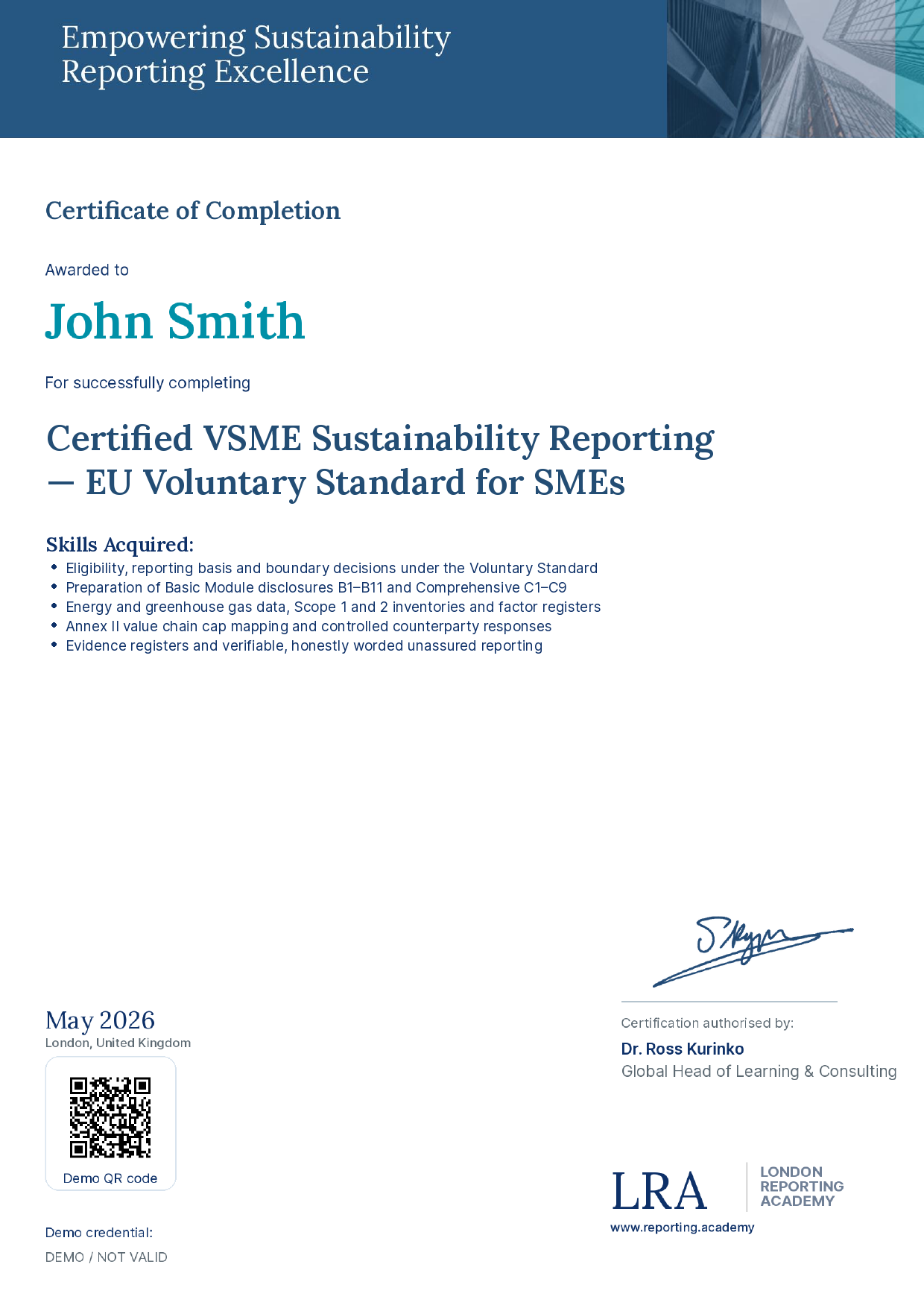
Certified VSME Sustainability Reporting (EU Voluntary Standard for SMEs)
This page settles one datapoint. The VSME course turns the EU voluntary standard into a proportionate reporting process for a non-listed SME, on your own data.
Available as Guided Flex, Live Cohort, 1:1 Expert Mentorship or Corporate Programme.