
Disclosure focus
The practical focus is on coverage and credibility, not just the fact that assurance exists. A useful explanation should help a reader understand whether the assurance covered the organisation’s full operations or only certain entities, sites, or emissions scopes, and whether the review was designed to support confidence in the reported figures as a whole or only in a narrower subset.
This LRA educational guidance supports disclosure preparation. For the exact requirements, always refer to the official CARB source.
Prepare
What to collect before drafting
Tick each field as the evidence lands. Owners are the teams that usually hold the source files.
-
Scope 1 and 2 coverage
Sustainability reporting / FinanceState the assurance level applied to the emissions figures for direct emissions and purchased-energy emissions.
Evidence Assurance statement or report, plus the final emissions schedule showing which scopes were covered.
Watch for Scope 1 and Scope 2 are mixed up, or the assurance level is stated for the wrong emissions boundary.
-
Assurance caveats
Sustainability reporting / LegalCapture any stated limits, exceptions, or reservations attached to the assurance work.
Evidence Assurance report wording, including any qualifications, exclusions, or scope restrictions.
Watch for A qualification in the assurance report is omitted or softened, so the published note does not match the provider’s caveat.
-
Assurance conclusion
Sustainability reporting / FinanceRecord the provider’s overall conclusion on the assured information, using the exact outcome they reached.
Evidence Signed assurance opinion or conclusion section from the provider’s report.
Watch for The conclusion is paraphrased into a different outcome, or the final wording does not reconcile to the signed assurance report.
-
Assurance provider
Procurement / Sustainability reportingIdentify the external party that carried out the assurance work and issued the statement.
Evidence Engagement letter, provider letterhead, or signed assurance report naming the firm or practitioner.
Watch for The named provider does not match the signed report or engagement letter, or an internal reviewer is listed instead of the external assurer.
-
Scope 3 assurance status
Sustainability reporting / Supply chainShow whether the value-chain emissions information was assured, and if so, the status or extent of that assurance.
Evidence Assurance report and the Scope 3 inventory or disclosure table showing the assured portion.
Watch for The status is reported for the full value-chain inventory when only part of it was assured, or the assured and unassured parts are not separated.
-
Assurance method standard
Sustainability reporting / FinanceName the assurance framework or method the provider used for the engagement.
Evidence Assurance report, engagement terms, or provider methodology statement naming the standard applied.
Watch for The assurance method is taken from a template or prior year and does not match the standard actually cited in the provider’s report.
Before you start
- Have you pinned down which Scope 1 and Scope 2 figures will be covered, and which reporting period they come from?
- Can you point each number back to a source record or working paper that someone else could follow?
- Have you decided whether Scope 3 is being checked at all, or left outside this review?
- Do you know which external reviewer will sign off, and whether they are independent from the organisation?
- Have you settled the level of assurance, the method used, and any limits or caveats that came with the review?
- Do you know the final conclusion the reviewer gave, in the exact form you will carry into the report?
How to prepare it
Request the data
Request the assurance pack from Finance
Translate the disclosure into an internal business question — then adapt it to your organisation's own language.
What third-party assurance evidence do we have for our Scope 1, Scope 2, and any Scope 3 emissions reporting, and who provided it?
Use your organisation’s own labels first, then map them to the reporting fields. For example, ask for the assurance letter, review note, or external verification pack in the terms your team already uses, rather than using framework wording in the request.
Weak request
Please provide the third-party assurance evidence for the disclosure.
Why it fails: This is too framework-led and vague. It does not tell the owner which reporting period, which emissions areas, which document type, or which caveats matter, so the response may be incomplete or hard to use.
Better request
Please send the signed external assurance or verification document for [reporting period] covering our emissions reporting, plus the provider name, what parts of the inventory it covers, the conclusion, and any limitations or qualifications. Use your team’s usual document names and include the file link.
Formal email template
Subject: Request for assurance evidence for emissions reporting

Hi [name],

We are preparing the disclosure pack for [reporting period]. Please send the latest external assurance or verification evidence covering our emissions reporting, including:
- the provider name;
- the emissions areas covered;
- the assurance statement or report;
- any limitations, qualifications, or exceptions noted by the provider; and
- the basis used in the provider’s conclusion.

Please also confirm the file location and the internal contact who can answer follow-up questions.

If there are multiple documents, please send the final signed version and any supporting notes we should keep on file.

Please adapt this to your organisation’s own terms and check the source material before sign-off.

Thanks,
[preparer name]
Short Teams / Slack version
Hi [name] — could you send the latest external assurance/verification pack for [reporting period] for our emissions reporting? Please include the provider name, what it covers, any caveats, the conclusion, and the file link. Please use your team’s usual document names and check the source material before sign-off. Thanks.
Industry examples
Manufacturing
Context. A plant-based group has external review of its emissions inventory prepared by a specialist verifier.
Adapted request. Please send the latest verification report for [reporting period] covering plant fuel use, purchased electricity, and any other emissions areas reviewed, plus the verifier name, conclusion, and any limitations noted. Use the document name your team uses internally.
Example response. Verification report dated [date], verifier [name], covers Scope 1 and Scope 2 for all sites in the group, conclusion states [summary], with one limitation noted for [site]. File stored at [link].
Retail / Consumer Goods
Context. A multi-site business has assurance over group emissions data prepared through the sustainability reporting team.
Adapted request. Please share the external assurance pack for [reporting period] for the group emissions file, including the assurance statement, the provider, whether Scope 3 was included, and any exceptions or caveats. Please use the same file names your team already uses.
Example response. Assurance statement from [provider], dated [date], covers Scope 1 and Scope 2 and selected Scope 3 categories, conclusion [summary], with no material exceptions noted. Supporting files saved in [location].
Draft your disclosure
Notes that turn data into a disclosure
LRA training templates — adapt them to your organisation, and check the official source before sign-off.
Method note
State which emissions areas were reviewed, who carried out the external check, what assurance framework they used, and whether any limits or qualifications were attached to the review.
Context note
Explain what the assurance result means for readers by clarifying the level of confidence reached for the reported emissions data and whether Scope 3 was included or left outside the review.
Fluctuation statement
If the assurance outcome changed from the prior period, note whether the shift reflects a different review scope, a change in the external reviewer or framework, or the removal or addition of any qualifications.
Content index entry
SB253-ASSURANCE Third-party assurance — [location / page] / [notes]Download Centre
Preparation tools & forms
Download preparation tools for SB253-ASSURANCE with free verified email access for 24 hours. Source-report links remain public.
Check
For each claim, check the evidence
We obtained the public assurance pack for the emissions figures, and it names the external reviewer.
Risk The assurer checks whether the published pack is complete and whether the named reviewer can be matched to the engagement.
Evidence to check Published assurance report; cover page or signature page showing the reviewer’s name; final public filing set.
For the year in question, we had the external review carried out at the required level for the first two emissions scopes.
Risk The assurer probes whether the engagement level actually matches the level expected for that reporting year, rather than a lower or different form of review.
Evidence to check Engagement letter; assurance report wording on level applied; internal reporting calendar or compliance checklist for the year.
Where the review noted any caveats, we kept those points visible in the published material rather than summarising them away.
Risk The assurer checks whether any restrictions, exceptions, or caveats were fully carried through into the disclosure.
Evidence to check Assurance report; redline of the public disclosure; management response or issue log showing how caveats were handled.
The assurance report we published includes the reviewer’s overall view and makes clear whether there were any caveats or not.
Risk The assurer probes whether the report states a conclusion and whether the presence or absence of caveats is unambiguous.
Evidence to check Final assurance report; publication pack; sign-off memo confirming the report version released to the public.
We used an outside reviewer, not an in-house team, for the assurance work.
Risk The assurer checks whether the reviewer was genuinely external to the reporting entity and its connected entities.
Evidence to check Provider contract; independence declaration; corporate relationship checks; conflict-of-interest records.
Before appointing the reviewer, we checked that they had relevant emissions-assurance experience and the capability to complete the work properly.
Risk The assurer probes whether the reviewer had the right competence, capacity, and practical ability for the engagement.
Evidence to check Provider credentials; CVs or team biographies; proposal or tender documents; competence assessment notes.
Evidence pack to prepare
Common reporting gaps
- The information is presented without a date or as-at point.
- The scope or boundary of the statement is left undefined.
- Key terms are used inconsistently across the report.
- Material changes since the previous period are not disclosed.
- Assertions are made without supporting detail or a source record.
- Boilerplate is used that does not actually answer what is asked.
Where drafts go wrong
Mistakes to avoid and where judgement is needed
The left column is what preparers get wrong while collecting; the right column is where you will have to make and explain a judgement.
Mistakes to avoid
- Wrong owner askedThe team chases the sustainability lead for assurance evidence when the audit, finance, or external provider team actually holds the working papers and sign-off trail.
- Framework labels used too earlyPeople ask for the data in disclosure language instead of the organisation’s own process terms, so the source team cannot map the request to its normal records.
- Scope not pinned downThe collector never states whether the check covers only Scope 1 and Scope 2 or also the Scope 3 status field, so different teams send different slices of data.
- Wrong reporting periodEvidence is pulled from a different cut-off date or reporting window than the one used for the disclosure pack, which makes the assurance record inconsistent with the rest of the filing.
- Counting basis mixed upOne source gives a status flag while another gives a narrative note, and the collector merges them without keeping the same basis for each field.
- Source labels stripped outThe original file names, system tags, or document titles are lost during consolidation, so the reviewer cannot trace each item back to its first record.
- Separate populations mergedAssurance details for different entities, sites, or reporting streams are combined into one file even though they should stay separate for review.
- Evidence metadata missingThe pack arrives without the provider name, date, version, or other trace details, leaving no way to show where the assurance information came from.
- No sign-off trail keptThe final dataset is circulated without a clear approval record, so nobody can show who checked the assurance level, limitations, opinion, standard used, or provider details before submission.
Judgement needed
- What counts as the covered emissions set after a buy-in or saleIf the reporting boundary changed during the year, explain which sites, entities and activity data were included in the assurance work and how you dealt with any opening or closing-period changes.
- Using different country methods for the same activityWhere local data systems or calculation methods differ across countries, state which approach was used for each location and why the final assurance view still gives a like-for-like picture.
- Borderline cases for people, assets or operations near the boundaryFor items close to the inclusion line, set out the rule you used to include or leave them out and disclose any material judgement made by management or the assurer.
- Choosing the cut-off date and data basisIf the assurance work uses a different timing basis, reporting date or data cut-off from the underlying operational records, explain the basis chosen and any effect on comparability.
- Measured figures versus estimates or proxiesWhen direct measurement was not available, disclose where estimates, models or proxy data were used, why they were needed, and whether the assurer treated them differently from measured figures.
- Rounding and presentation of the final numbersState the rounding rule used for the assured figures and make sure the published totals still reconcile to the underlying unrounded data within the chosen presentation approach.
- Protecting sensitive data by grouping or maskingIf privacy or confidentiality means some detail is combined or hidden, explain what was aggregated, the level of grouping used, and any impact on the assurance conclusion.
- Different assurance coverage for direct and value-chain emissionsWhere the assurance work covers direct emissions but not the wider value chain, make clear the split, the reason for any partial coverage, and how that limitation is described in the conclusion.
Examples
How it reads on the page
Synthetic, written by LRA — not from a company report, not text from any standard.
We have included this synthetic example to show how our group might describe external review of its climate data. For the year ended 31 December 2025, an independent assurance firm reviewed our Scope 1 and Scope 2 emissions at a limited level of assurance, using ISAE 3000 (Revised) together with ISAE 3410; the conclusion was that nothing came to the reviewer’s attention to suggest the figures were materially misstated. Scope 3 was not covered in the same review, and the report noted a few boundaries and estimation points that narrowed the work performed.
Illustrative only: this example shows how a reporter can explain who performed the review, what level of confidence was reached for direct and purchased-energy emissions, which framework was used, whether indirect value-chain emissions were included, and any caveats on scope or methods.
This synthetic example shows one way we might report our external check of emissions information. For 2025, an independent third party provided reasonable assurance over our Scope 1 and Scope 2 figures under ISAE 3000 (Revised), and the conclusion was positive with no material issues identified; however, the reviewer set out a few qualifications linked to data gaps at two sites and excluded Scope 3 from the engagement.
Illustrative only: this example demonstrates a different sector voice while still covering the reviewer, the confidence level for direct and purchased-energy emissions, the assurance framework, the outcome, the limits noted, and the fact that value-chain emissions were outside the review.
Quality ladder
- Basic
An independent reviewer gave our Scope 1 and Scope 2 emissions a limited assurance opinion.
- Better
An external assurance firm gave our Scope 1 and Scope 2 emissions limited assurance under ISAE 3000, and it noted no material limitations.
- Best
An independent assurance provider reviewed our Scope 1 and Scope 2 emissions for the year ended 31 December 2025 under ISAE 3000 and issued limited assurance; Scope 3 was not covered, and the main reason for the unchanged result was that our data collection controls stayed consistent through the period.
Check your understanding
Scenarios to work through
A reporting team has a signed assurance report for its Scope 1 and Scope 2 figures. The report names the external reviewer, states the level of review reached, and includes a conclusion, but the team is unsure whether to mention that the reviewer also noted a scope restriction on one site visit.
An organisation has obtained external review for its direct emissions and purchased electricity data, but its Scope 3 work is still being checked internally and no outside review has started. The draft narrative currently says only that the wider value-chain figures are “under review”.
A company engaged a specialist firm to review its emissions data, but the draft note does not say whether that firm was independent. The preparer argues that the firm’s name and report title are enough because the reviewer is well known in the market.
The assurance report says the emissions data were reviewed using a recognised assurance framework and gives a conclusion with a qualification about one data source. The sustainability team wants to shorten the disclosure by leaving out the framework name and the qualification because the conclusion is already “limited assurance”.
Real reports
How 3 companies report it
Examples of full and partial reporting practice. These are evidence-led reviews, not exact disclosure templates to copy.

Cargill
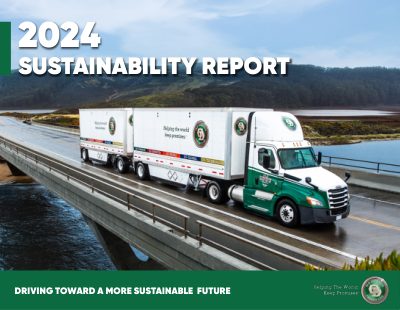
Old Dominion Freight Line / ODFL

Host Hotels & Resorts, Inc.
| Field | Cargill | Old Dominion Freight Line / ODFL | Host Hotels & Resorts, Inc. |
|---|---|---|---|
| Scope 1 and 2 coverage | Not found | Not found | Not found |
| Assurance caveats | Partial | Not found | Not found |
| Assurance conclusion | Not found | Not found | Not found |
| Assurance provider | Partial | Not found | Not found |
| Scope 3 assurance status | Not found | Not found | Not found |
| Assurance method standard | Partial | Partial | Partial |

Ask the Knowledge Hub AI Assistant about this disclosure
Get practical answers for your reporting context.
Check your text
Paste one or two paragraphs. The fragment is used for this check only and is not stored in your conversation.
Peer comparison uses examples on this card, not prevalence in the report corpus.
Advice, not assurance
Framework references
Relevant California requirements and related disclosures
California
SB253-ASSURANCE
within California SB 253: Climate Corporate Data Accountability Act
Related & explore
More in California SB 253 →Browse full catalogue →Search all disclosures →
FAQ
Questions this page answers
Start with the page’s plain-language explainer, then work through the step-by-step preparation section to collect the listed datapoints: Scope 1 and 2 coverage, assurance caveats, assurance conclusion, assurance provider, Scope 3 assurance status and the assurance method standard. The page is designed to help you turn that into a draft, not to replace your own internal process.
The page highlights six datapoints to prepare: Scope 1 and 2 coverage, assurance caveats, assurance conclusion, assurance provider, Scope 3 assurance status and the assurance method standard. Use those as the starting checklist for your draft and evidence pack.
The page does not assign roles for you, but it is set up for practitioner use, so you can use the step-by-step section and workbook to map each datapoint to a named owner. A practical approach is to assign ownership for each item in the evidence pack and for each assurance claim you need to verify.
The page includes an evidence pack with five items to support assurance readiness. Use it alongside the six assurance claims to verify so you can show where each claim comes from and what supports it.
The page says there are six assurance claims to verify, each with a claim, risk and evidence angle. Use them as a review checklist to test whether your draft disclosure is supported and whether any caveats or gaps need to be explained.
The page lists common reporting gaps and mistakes so you can check your draft before it goes to review. Use that section to spot missing coverage, unclear assurance wording or weak evidence before you finalise the disclosure.
The Download Centre includes a Prep & Assurance workbook in .xlsx format and a printable Library Card in .pdf format. Use the workbook to organise the datapoints, evidence and ownership, and use the Library Card as a quick reference while drafting or reviewing.
Yes, the page includes synthetic illustrative example disclosures, including a quantitative table. Treat them as examples of structure and presentation only, and make sure any figures in your own draft are internally consistent.
The draft-output section gives visualisation ideas, narrative starters and a content-index line to help you shape the final text. Use those prompts to turn your prepared data and evidence into a clear draft for internal review.
The page notes ESRS E1 (Climate Change) as the closest correspondence, so the data may be reusable across both. It does not say the requirements are identical, so you should still check the other framework separately.
More questions this page can help with