Short answer
The answer, before the reasoning
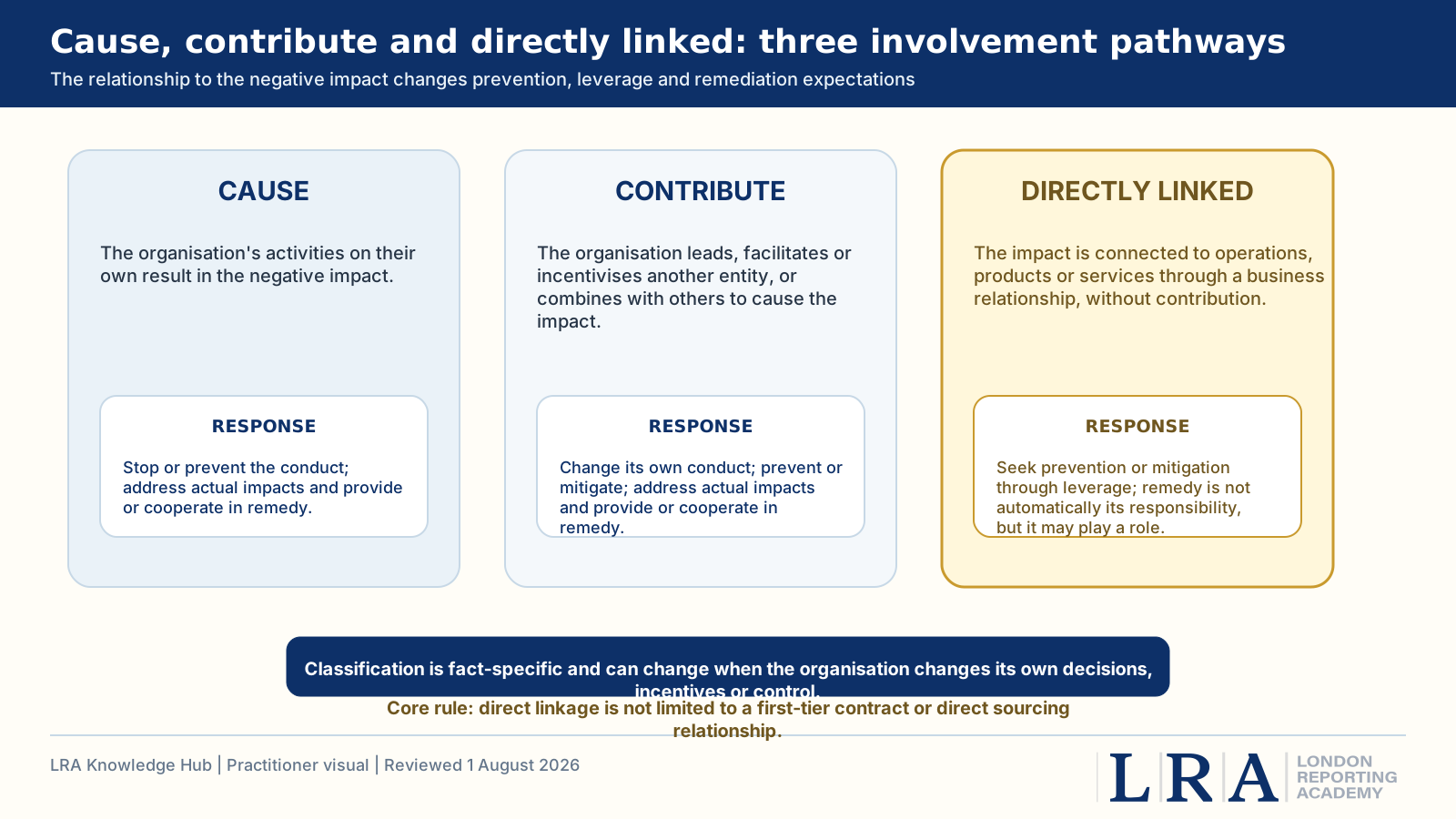
The three concepts describe how an organisation is involved with a negative impact, not how close the business relationship is. It causes an impact when its own activities alone result in the harm.
It contributes when its decisions or omissions lead, facilitate or incentivise another entity, or combine with others to cause the harm. It is directly linked when the impact is connected to its operations, products or services through a business relationship even though it did not cause or contribute. The classification affects the response: cause and contribution require action on the organisation's own conduct and, for actual impacts, provision of or cooperation in remedy; direct linkage calls for prevention or mitigation through leverage, with a possible but not automatic role in remedy.
Rule
GRI-DDH-001
GRI Due Diligence and Business Relationships: Cause, Contribute and Directly Linked How involvement in negative impacts changes prevention, mitigation, leverage, remediation and GRI 3-3 reporting
In practice
Type
| Type | Tier | Audience — Current context |
|---|---|---|
| Deep comparison / decision guide | Tier 4 - Expert Note | Sustainability and human-rights teams, procurement, finance, legal, consultants and reviewers — GRI 1 and GRI 3 due-diligence concepts checked to 1 August 2026 |
Why the distinction matters for GRI reporting
GRI reporting is about the organisation's impacts across activities and business relationships. The same adverse outcome can require different management responses depending on how the organisation became involved. A supplier incident, for example, can be directly linked to a buyer's product, or the buyer can contribute through unrealistic lead times, pricing or purchasing practices.
The distinction therefore changes due-diligence action, the use of leverage, expectations for remediation and the description under GRI 3-3. It should not be used as a labelling exercise designed to distance the organisation from harm.
Quick orientation
Quick orientation
- Applies to
- Actual and potential negative impacts connected to operations, products, services and business relationships.
- Primary decision
- What did the organisation itself do or fail to do, how did that affect the other entity's conduct, and what relationship connects the impact to the organisation?
- Key sources
- GRI 1 section 2.3; GRI 3 Box 3 and Disclosure 3-3 guidance; GRI 2 Disclosures 2-23 to 2-25.
- Common confusion
- Treating directly linked as meaning only a first-tier or direct contract, or assuming lack of control means the impact is outside GRI.
In practice
The three involvement pathways
| Pathway | Core test | Typical evidence — Response implication |
|---|---|---|
| Cause | Would the organisation's own activity or omission, on its own, result in the negative impact? | Operational decisions, site controls, product design, direct employment practice, instructions and incident evidence. — Stop, prevent or mitigate the conduct; address actual impacts and provide or cooperate in legitimate remediation. |
| Contribute | Did the organisation lead, facilitate or incentivise another entity, or combine with others, in a way that materially increased the risk or harm? | Purchasing terms, lead times, pricing, sales incentives, financing conditions, approvals, knowledge, warnings and failure to act. — Change its own conduct, prevent or mitigate, use leverage, and provide or cooperate in remedy for actual impacts. |
| Directly linked | Is the impact connected to the organisation's operations, products or services through a business relationship without evidence of cause or contribution? | Value-chain mapping, product/customer relationship, lending or investment relationship, contracts, supplier tiers and credible external reports. — Seek to prevent or mitigate through leverage; no automatic responsibility to provide remedy, though the organisation may support or participate. |
What GRI requires and recommends
The materiality process identifies actual and potential negative impacts the organisation causes, contributes to or is directly linked to through business relationships.
Direct linkage is not limited to direct contractual relationships or first-tier sourcing.
The way the organisation is involved determines how it should address the impact and whether it is responsible for providing or cooperating in remedy.
For potential negative impacts, the organisation should prevent or mitigate; for actual impacts it caused or contributed to, it should remediate through legitimate processes.
For directly linked impacts, it should seek to prevent or mitigate even when it has not contributed, usually by using or increasing leverage.
Disclosure 3-3 asks the organisation to describe whether impacts arise through activities or business relationships and the actions taken to prevent, mitigate and remediate them.
What the concepts do not mean
Cause is not limited to intentional misconduct; an omission can also cause or contribute.
Contribution is not established merely because the organisation is commercially connected to the entity. The organisation's own conduct must be examined.
Direct linkage does not mean legal liability, ownership or control.
Direct linkage is not limited to tier-one suppliers or direct customers.
The categories are not permanent. New facts, warnings, incentives or decisions can move the analysis from direct linkage towards contribution.
The terminology applies to negative impacts. Positive impacts are assessed through contribution to sustainable development, not this three-part involvement classification.
A practical classification sequence
1. Define the negative impact precisely: affected people or environmental receptor, location, activity, timing and actual or potential status.
2. Identify the organisation's own decisions, actions and failures to act before examining the other entity.
3. Test cause: would those actions alone result in the impact?
4. Test contribution: did they facilitate, incentivise or combine with the other entity in a meaningful way?
5. If neither is supported, test direct linkage through an operation, product or service and the relevant business relationship.
6. Document uncertainty and competing interpretations; do not force a definitive label where the facts are incomplete.
7. Match the response plan to the classification, severity, likelihood, leverage and remediation expectations.
8. Feed the evidence into the impact inventory, significance assessment, material-topic decision and GRI 3-3 disclosure.
In practice
Examples across business relationships
| Relationship | Possible cause / contribution | Possible direct linkage — Evidence to review |
|---|---|---|
| Supplier | The buyer imposes a knowingly impossible delivery schedule that drives excessive overtime. | Child labour is found at a deeper-tier mine supplying material used in the buyer's product, with no evidence the buyer facilitated it. — Purchasing terms, forecasts, pricing, audit history, supplier capacity, worker evidence and escalation records. |
| Contractor | The organisation directs unsafe work methods, withholds necessary equipment or fails to control a hazard at its site. | A contractor independently breaches labour standards in a service linked to the organisation, without contributing conduct by the organisation. — Control of work, instructions, site rules, contract, supervision, incidents and complaints. |
| Customer / product use | Product design, marketing or sales incentives encourage a foreseeable harmful use. | A product or service is connected to a customer's harmful conduct, but the organisation did not facilitate or incentivise it. — Design choices, warnings, sales screening, customer due diligence, known misuse and response actions. |
| Finance | Financing terms, continued support or pressure may materially facilitate or incentivise harmful conduct on the facts. | A financed client's operations create harm connected through the lending or investment relationship without contribution by the financier. — Transaction purpose, covenants, decision records, client engagement, warnings, leverage and exit analysis. |
| Joint venture | The organisation directs, approves or jointly designs the harmful practice. | A minority-held venture causes an impact connected to the organisation's interest, with no evidence of contributing conduct. — Governance rights, reserved matters, board minutes, operating agreements, votes, technical support and knowledge. |
In practice
Response logic: prevention, leverage and remedy
| Impact status / involvement | Primary response | Leverage role — Remedy expectation |
|---|---|---|
| Potential impact caused by the organisation | Stop or redesign the activity so the impact is prevented; mitigate residual risk. | Internal authority is the main lever. — Prepare remediation pathways if the impact occurs. |
| Actual impact caused by the organisation | Cease harmful conduct, prevent recurrence and address root causes. | Use internal authority and resources. — Provide for or cooperate in legitimate remedy. |
| Potential or actual contribution | Change the contributing decision or omission and work with the other entity to prevent or mitigate. | Use and increase commercial, contractual, governance or collaborative leverage. — For actual impacts, provide for or cooperate in remedy. |
| Directly linked impact | Seek prevention or mitigation through the relationship and prioritise according to severity and likelihood. | Use or increase leverage; collaborate; consider responsible disengagement if leverage fails. — No automatic responsibility to provide remedy, but the organisation can support or participate. |
In practice
How due-diligence evidence feeds GRI reporting
| Evidence | Materiality use | GRI 3-3 use |
|---|---|---|
| Business-relationship map and sector/geography screening | Identifies where actual or potential impacts may arise beyond controlled operations. | Explains the types and locations of business relationships connected to the topic. |
| Impact assessments, complaints, audits and external reports | Supports identification and significance assessment. | Supports the description of actual and potential impacts and affected groups. |
| Purchasing, sales, finance or governance decision records | Tests cause and contribution rather than assuming direct linkage. | Explains actions taken on the organisation's own conduct. |
| Leverage assessment and engagement plan | Shows feasible prevention and mitigation routes. | Supports reporting on contractual, commercial, collaborative or governance leverage. |
| Remediation and grievance records | Confirms actual impacts and affected stakeholders. | Supports reporting on remediation processes and outcomes. |
| Classification memo and approval | Records judgement, uncertainty and prioritisation. | Provides a consistent basis for narrative wording and review. |
Hypothetical case: supplier overtime
A hypothetical retailer discovers excessive overtime at a supplier. The first internal note labels the impact 'directly linked'. Procurement records then show that the retailer repeatedly reduced lead times after the supplier warned that capacity was insufficient. The team reassesses the facts and concludes that the retailer may have contributed by incentivising the working-hours impact. The response therefore includes changing forecasting and purchasing practices, using leverage with the supplier, supporting worker remedy where appropriate, and describing the impact and actions under the relevant material topic. The classification remains subject to legal and technical review because contribution depends on the full facts.
Common mistakes
Classifying every supplier or customer impact as directly linked without examining the organisation's own incentives and omissions.
Using lack of ownership or contractual control to exclude an impact.
Treating direct linkage as only a first-tier relationship.
Assuming a code of conduct proves prevention or mitigation.
Discussing leverage without showing how it is used or increased.
Reporting remedy only as a grievance channel rather than actual outcomes for affected stakeholders.
Changing the classification in legal, sustainability and procurement documents without a shared evidence record.
Using the classification to minimise accountability rather than to design the correct response.
Myth
If the organisation did not own or control the entity causing the harm, the impact is outside its GRI materiality assessment.
Reality
GRI requires the impact assessment to extend across business relationships. The absence of ownership affects the involvement analysis and available leverage, not whether a directly linked impact can be significant.
Readiness
Evidence and review checklist
- The impact is defined separately from the broad ESG topic.
- Actual and potential status is recorded.
- The organisation's own decisions and omissions are documented.
- Cause, contribution and direct-linkage tests are applied in sequence.
- The business relationship and position in the value chain are identified.
- Severity and likelihood evidence is available.
- Leverage sources, limitations and escalation options are documented.
- Remediation responsibility and any voluntary role are distinguished.
- The conclusion is approved by sustainability, relevant business owners and legal or specialist reviewers where needed.
- GRI 3-3 wording matches the classification and response evidence.
Finance and joint ventures are business relationships, so the organisation must assess its own financing terms, governance rights, decisions and omissions before classifying an impact. Direction, approval or material facilitation can indicate cause or contribution; a lending, investment or minority-interest connection without such conduct may be direct linkage, requiring prevention or mitigation through leverage.
Self-check
- What would change in the other entity's conduct if the organisation changed its own decision or incentive?
- Is the conclusion based on evidence, or only on distance from the harmful activity?
- Has direct linkage been traced through products or services beyond the first contractual tier?
- Does the response plan address both the organisation's conduct and its leverage over the relationship?
Questions
Questions people ask
What is the difference between cause and contribute?
It causes an impact when its own activities alone result in the harm. It contributes when its decisions or omissions lead, facilitate or incentivise another entity, or combine with others to cause the harm.
What does directly linked mean in GRI?
It is directly linked when the impact is connected to its operations, products or services through a business relationship even though it did not cause or contribute. The classification affects the response: cause and contribution require action on the organisation's own conduct and, for actual impacts, provision of or cooperation in remedy; direct linkage calls for prevention or mitigation through leverage, with a possible but not automatic role in remedy.
Is direct linkage limited to direct suppliers?
It is directly linked when the impact is connected to its operations, products or services through a business relationship even though it did not cause or contribute. The classification affects the response: cause and contribution require action on the organisation's own conduct and, for actual impacts, provision of or cooperation in remedy; direct linkage calls for prevention or mitigation through leverage, with a possible but not automatic role in remedy.
When is an organisation responsible for remedy?
It is directly linked when the impact is connected to its operations, products or services through a business relationship even though it did not cause or contribute. The classification affects the response: cause and contribution require action on the organisation's own conduct and, for actual impacts, provision of or cooperation in remedy; direct linkage calls for prevention or mitigation through leverage, with a possible but not automatic role in remedy.
How do finance and joint ventures fit the GRI due-diligence model?
Finance and joint ventures are business relationships, so the organisation must assess its own financing terms, governance rights, decisions and omissions before classifying an impact. Direction, approval or material facilitation can indicate cause or contribution; a lending, investment or minority-interest connection without such conduct may be direct linkage, requiring prevention or mitigation through leverage.
In practice
Related standards and next learning steps
| Relation | Reference | Why it matters |
|---|---|---|
| Direct | GRI 1 section 2.3 Due diligence | Connects involvement to prevention, mitigation and remediation. |
| Direct | GRI 3 Box 3 | Defines cause, contribution and direct linkage for negative impacts. |
| Direct | GRI 3 Disclosure 3-3 | Requires management reporting for impacts arising through activities and business relationships. |
| Supporting | GRI 2-23 to 2-25 | Policy commitments, embedding and remediation processes. |
| Next step | Positive vs Negative Impacts in GRI Reporting | Separates adverse-impact involvement from evidence of positive contribution. |
Sources
Primary sources
Framework references
Disclosures this page affects
Take it with you
The checklists as a working spreadsheet
Every checklist and table on this page, with empty status, owner and evidence columns for your team to fill in and keep.
✓ Knowledge Hub AI Assistant · Human-in-the-loop

Ask about this guide
It answers from this page, and reaches into the linked disclosure cards when your question is about the standard itself.
Go deeper · GRI
Certified GRI Standards Training
This page settles one disclosure. The GRI Standards Certified Training — two live days, taken as a bundle with an ESRS course — walks the whole cycle: material topics, datapoints, evidence, the Content Index and assurance readiness, with exercises on your own data.
Available as two live training days online or on-site in London, bundled with an ESRS course.