

Disclosure focus
For significant child-labor risks, the organization should identify the relevant types of operations and suppliers and the countries or geographical areas in which they are located.
The disclosure should also describe measures taken during the reporting period that were intended to contribute to the effective abolition of child labor.
Child labor should not be confused with all work performed by persons under 18. The applicable minimum working age depends on compulsory-schooling requirements and the rules established under ILO Convention 138. Young workers are persons above the applicable minimum working age and under 18.
The disclosure is risk-based and does not require a confirmed incident. It also does not require quantitative reporting on incidents of child labor, numbers of young workers or percentages of operations and suppliers assessed.
The public disclosure can use appropriate operation types, supplier types and geographical areas. A detailed list of every individual operation or supplier is not automatically required.
This LRA educational guidance supports disclosure preparation. For the exact requirements, always refer to the official Global Reporting Initiative source.
Prepare
What to collect before drafting
Tick each field as the evidence lands. Owners are the teams that usually hold the source files.
-
Risk-assessment population
Human Rights / ProcurementOperations and suppliers considered through the child-labor due-diligence process.
Evidence Operations register, supplier population and due-diligence scope.
Watch for The published response for risk-assessment population is incomplete or does not match the supporting records.
-
Significant child-labor risk — operations
Human Rights / OperationsOperations considered to have significant risk of child-labor incidents.
Evidence Operation-level risk assessment, audits and recognized external sources.
Watch for The published response for significant child-labor risk — operations is incomplete or does not match the supporting records.
-
Significant child-labor risk — suppliers
Procurement / Human RightsSuppliers considered to have significant risk of child-labor incidents.
Evidence Supplier due diligence, audit findings and sourcing-risk assessment.
Watch for The published response for significant child-labor risk — suppliers is incomplete or does not match the supporting records.
-
Young workers exposed to hazardous work — operations
H&S / HR / OperationsOperations with significant risk of young workers being exposed to hazardous work.
Evidence Age controls, hazardous-task matrices and H&S assessments.
Watch for The published response for young workers exposed to hazardous work — operations is incomplete or does not match the supporting records.
-
Young workers exposed to hazardous work — suppliers
Procurement / Human RightsSuppliers with significant risk of young workers being exposed to hazardous work.
Evidence Supplier audits, labor assessments and corrective-action records.
Watch for The published response for young workers exposed to hazardous work — suppliers is incomplete or does not match the supporting records.
-
Types of operations and suppliers
Human Rights / ProcurementRelevant operation and supplier types associated with significant child-labor risk.
Evidence Risk-classification methodology and item-level mapping.
Watch for The published response for types of operations and suppliers is incomplete or does not match the supporting records.
-
Countries or geographical areas
Human Rights / ProcurementLocations of operations and suppliers considered at significant child-labor risk.
Evidence Country-risk analysis and supplier-location records.
Watch for The published response for countries or geographical areas is incomplete or does not match the supporting records.
-
Measures taken
Human Rights / ProcurementMeasures taken during the reporting period to contribute to the effective abolition of child labor.
Evidence Implementation, audit, training, engagement and remediation records.
Watch for The published response for measures taken is incomplete or does not match the supporting records.
-
Definitions and methodology
Human Rights / LegalApplicable minimum age, young-worker definition, hazardous-work criteria, assessment scope and limitations.
Evidence Methodology and legal or ILO mapping.
Watch for The published response for definitions and methodology is incomplete or does not match the supporting records.
Before you start
- Which operations and suppliers were included in the child-labor risk assessment?
- Which operations and suppliers were considered to have significant risk of child labor?
- Which operations and suppliers were considered to have significant risk of young workers being exposed to hazardous work?
- Have internal age categories been mapped to the applicable minimum working age?
- Have young workers been defined as persons above the applicable minimum working age and under 18?
- Has hazardous work been assessed using the under-18 threshold?
- Which types of operations and suppliers are associated with significant child-labor risk?
- In which countries or geographical areas are those operations and suppliers located?
- Are supplier risks beyond the first tier relevant to the assessment?
- Does the assessment distinguish child labor from lawful youth employment?
- Which measures were taken during the reporting period?
- Were the measures intended to contribute to the effective abolition of child labor?
- Are general ESG or labor risks being incorrectly classified as child-labor risks?
- Can every disclosure statement be traced to the relevant assessment and action records?
How to prepare it
Request the data
Request the disclosure evidence
Translate the disclosure into an internal business question — then adapt it to your organisation's own language.
Please provide the child-labor risk assessment for [reporting period]. For operations and suppliers, include: the operation or supplier type; direct or indirect supplier status, where relevant; country or geographical area; whether significant risk concerns child labor, young workers exposed to hazardous work or both; the applicable minimum-age and hazardous-work basis; the evidence supporting the risk conclusion; and measures taken during the reporting period. Please distinguish significant child-labor risk from general labor, health-and-safety or supplier ESG risk.
Use the organisation's own role and document names, but preserve the defined GRI terms and the scope described above.
Better request
Please provide the child-labor risk assessment for [reporting period]. For operations and suppliers, include: the operation or supplier type; direct or indirect supplier status, where relevant; country or geographical area; whether significant risk concerns child labor, young workers exposed to hazardous work or both; the applicable minimum-age and hazardous-work basis; the evidence supporting the risk conclusion; and measures taken during the reporting period. Please distinguish significant child-labor risk from general labor, health-and-safety or supplier ESG risk.
Draft your disclosure
Notes that turn data into a disclosure
LRA training templates — adapt them to your organisation, and check the official source before sign-off.
Method note
The organization assessed child-labor risk using operation and supplier type, geographical information, applicable minimum-age requirements and hazardous-work criteria. The assessment used [internal sources] and [recognized external sources].
Context note
Keep mandatory GRI Requirements, GRI recommendations and additional LRA preparation controls clearly distinguished. Apply a GRI 1 reason for omission where required information cannot be reported.
Download Centre
Preparation tools & forms
Download preparation tools for GRI 408-1 with free verified email access for 24 hours. Source-report links remain public.
Check
For each claim, check the evidence
We applied the GRI definitions of child labor and young worker.
Risk The published response does not support this human-reviewed assurance check.
Evidence to check Trace the statement to current approved records and the official IFRS source.
We distinguished child labor from lawful youth employment.
Risk The published response does not support this human-reviewed assurance check.
Evidence to check Trace the statement to current approved records and the official IFRS source.
We used the applicable minimum working age rather than one unsupported global age threshold.
Risk The published response does not support this human-reviewed assurance check.
Evidence to check Trace the statement to current approved records and the official IFRS source.
We treated persons under 18 as ineligible for hazardous work.
Risk The published response does not support this human-reviewed assurance check.
Evidence to check Trace the statement to current approved records and the official IFRS source.
We identified operations considered to have significant risk of child labor.
Risk The published response does not support this human-reviewed assurance check.
Evidence to check Trace the statement to current approved records and the official IFRS source.
We identified suppliers considered to have significant risk of child labor.
Risk The published response does not support this human-reviewed assurance check.
Evidence to check Trace the statement to current approved records and the official IFRS source.
We separately identified operations with significant risk of young workers being exposed to hazardous work.
Risk The published response does not support this human-reviewed assurance check.
Evidence to check Trace the statement to current approved records and the official IFRS source.
We separately identified suppliers with significant risk of young workers being exposed to hazardous work.
Risk The published response does not support this human-reviewed assurance check.
Evidence to check Trace the statement to current approved records and the official IFRS source.
The risk conclusions relate specifically to child labor or hazardous work rather than general ESG risk.
Risk The published response does not support this human-reviewed assurance check.
Evidence to check Trace the statement to current approved records and the official IFRS source.
The assessment was not limited to confirmed incidents.
Risk The published response does not support this human-reviewed assurance check.
Evidence to check Trace the statement to current approved records and the official IFRS source.
We did not treat the absence of incidents as sufficient evidence of no significant risk.
Risk The published response does not support this human-reviewed assurance check.
Evidence to check Trace the statement to current approved records and the official IFRS source.
For significant child-labor risks, we identified relevant operation and supplier types.
Risk The published response does not support this human-reviewed assurance check.
Evidence to check Trace the statement to current approved records and the official IFRS source.
For significant child-labor risks, we identified the relevant countries or geographical areas.
Risk The published response does not support this human-reviewed assurance check.
Evidence to check Trace the statement to current approved records and the official IFRS source.
Relevant indirect suppliers identified through due diligence were not automatically excluded.
Risk The published response does not support this human-reviewed assurance check.
Evidence to check Trace the statement to current approved records and the official IFRS source.
We described measures actually taken during the reporting period.
Risk The published response does not support this human-reviewed assurance check.
Evidence to check Trace the statement to current approved records and the official IFRS source.
Each reported measure was intended to contribute to the effective abolition of child labor.
Risk The published response does not support this human-reviewed assurance check.
Evidence to check Trace the statement to current approved records and the official IFRS source.
We did not present general training or supplier screening as a child-labor measure without establishing the connection.
Risk The published response does not support this human-reviewed assurance check.
Evidence to check Trace the statement to current approved records and the official IFRS source.
We did not present counts or percentages as mandatory GRI 408-1 figures.
Risk The published response does not support this human-reviewed assurance check.
Evidence to check Trace the statement to current approved records and the official IFRS source.
The disclosure can be reconciled to the underlying operation and supplier risk assessment.
Risk The published response does not support this human-reviewed assurance check.
Evidence to check Trace the statement to current approved records and the official IFRS source.
Any unavailable required information is addressed through the applicable GRI reason for omission.
Risk The published response does not support this human-reviewed assurance check.
Evidence to check Trace the statement to current approved records and the official IFRS source.
Evidence pack to prepare
Common reporting gaps
- The report states that child labor is prohibited but does not identify operations or suppliers at significant risk.
- The report states that no incidents occurred but provides no risk-assessment conclusion.
- Child labor is confused with all employment of persons under 18.
- The applicable minimum working age is not considered.
- Young workers are not defined as persons above the minimum working age and under 18.
- The hazardous-work risk for persons under 18 is omitted.
- Only child-labor risk is assessed, while young-worker hazardous-work risk is ignored.
- Only operations are addressed and suppliers are omitted.
- Only suppliers are addressed and operations are omitted.
- Only first-tier suppliers are considered despite relevant indirect-supplier risk.
- General labor or supplier ESG risk is treated as child-labor risk.
- The type of operation or supplier is unclear.
- The relevant countries or geographical areas are not identified.
- The report lists individual sites but does not provide the required type and geographic information.
- The report uses higher risk without establishing significant risk.
- Counts or percentages are disclosed without the required qualitative risk information.
- A coverage percentage is presented as though it were a required GRI metric.
- Measures are general policies rather than actions taken during the reporting period.
- General training is presented without a connection to child labor.
- Supplier screening is presented without showing that it addressed child-labor risk.
- Measures are described but their intended contribution to effective abolition is unclear.
- A no-risk conclusion relies only on the absence of detected incidents.
- Required information is omitted without an applicable reason for omission.
Examples
How it reads on the page
Synthetic, written by LRA — not from a company report, not text from any standard.
Illustrative synthetic example — Apparel manufacturing
Cut-and-sew and finishing operations in Countries A and B were considered to have significant risk of child labor because of informal recruitment and weak age-verification controls.
Labor agencies, textile processors and trim suppliers in Countries A, B and C were also considered to have significant risk.
Finishing suppliers using hazardous chemicals were identified separately as having significant risk of young workers being exposed to hazardous work.
During the reporting period, the organization strengthened age-verification controls, revised supplier requirements, completed targeted audits and required remediation from affected suppliers.
Synthetic LRA illustration. Replace every figure and fact with the reporting organisation's evidence.
Illustrative synthetic example — Food processing
Seasonal harvesting and packing operations in Country D were considered to have significant child-labor risk.
Labor brokers, farm-gate aggregators and grower groups in Regions E and F were also considered to have significant risk.
Operations and suppliers involving machinery, pesticides, night work or heavy manual handling were separately assessed for significant risk of young workers being exposed to hazardous work.
Measures taken during the period included stronger age verification, targeted training, supplier audits and corrective-action plans.
Synthetic LRA illustration. Replace every figure and fact with the reporting organisation's evidence.
Illustrative synthetic example — No significant risks identified
The organization assessed its operations and suppliers using applicable minimum-age requirements, activity type and geographical risk information. It did not identify operations or suppliers considered to have significant risk under GRI 408-1.
During the reporting period, the organization continued targeted age-verification and supplier due-diligence measures.
Synthetic LRA illustration. Replace every figure and fact with the reporting organisation's evidence.
Real reports
How 3 companies report it
Examples of full and partial reporting practice. These are evidence-led reviews, not exact disclosure templates to copy.
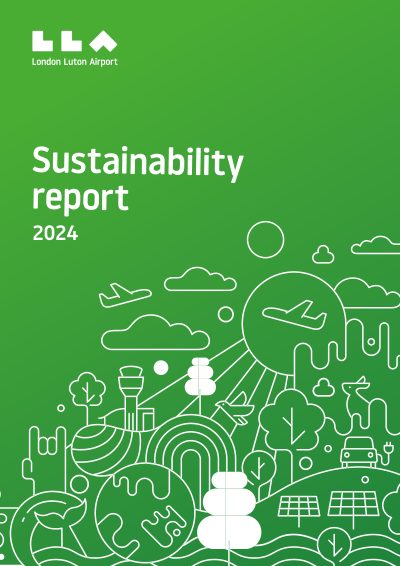
London Luton Airport Operations Ltd.
Review finding
London Luton Airport’s 2024 Sustainability Report explicitly marks GRI 408-1 as N — Not reported in its GRI Index.
View full reviewHide full review
Disclosure gap
The report therefore does not provide the GRI 408-1 information.
Assessment
The card must not state that page 71 contains data on operations and suppliers at significant risk. Report page 140, which appears as PDF page 70, expressly classifies GRI 408-1 as not reported.
Disclosure gap
The numbers of suppliers and supplier spend presented elsewhere in the report do not identify:
- operations or suppliers at significant child-labor risk
- young-worker hazardous-work risk
- operation or supplier types and geographical areas
- current-period measures intended to contribute to the effective abolition of child labor
Bottom line
Classify this report as not reported.
SK Chemicals Co.,Ltd
Review finding
SK Chemicals’ current card does not establish that GRI 408-1 has been substantively reported.
View full reviewHide full review
Assessment
Page 186 appears to be the GRI content index rather than the substantive child-labor disclosure. A reference to the disclosure title in an index is not evidence that all required information is present.
Disclosure gap
Page 118 describes broader supply-chain ESG assessments, corrective action and business-partner capability-building. This information can support the management approach, but it does not by itself establish:
- operations at significant risk of child labor
- suppliers at significant risk of child labor
- operations or suppliers at significant risk of young workers being exposed to hazardous work
- the required operation or supplier types and geographical areas
- measures specifically intended to contribute to the effective abolition of child labor
Disclosure gap
SK Chemicals’ official human-rights materials state that child labor is prohibited, applicant ages are verified and persons under 18 are not assigned hazardous duties. These are relevant controls and management measures, but they do not automatically satisfy the risk-identification elements of GRI 408-1.
Bottom line
Reassess the substantive report pages before classifying the disclosure. Until child-labor-specific risk information is located, classify it as requires substantive reassessment, not full coverage.
China Airlines, Ltd.
Review finding
China Airlines’ 2024 ESG Data and Appendix does not identify significant-risk operations or suppliers under GRI 408-1.
View full reviewHide full review
Assessment
The GRI content index lists GRI 408-1 with Note 7 and no page reference. Note 7 states that there were no relevant incidents.
Assessment
This is not the same as reporting that no operations or suppliers were considered to have significant risk. GRI 408-1 is a risk-based disclosure and is not limited to detected incidents.
Disclosure gap
The report’s Supplier Code of Conduct, supplier assessments and geographical supplier information can support the management approach, but they do not automatically provide:
- operation and supplier types at significant child-labor risk
- countries or geographical areas with those significant risks
- young-worker hazardous-work risk
- measures specifically intended to contribute to the effective abolition of child labor
Disclosure gap
Page 184 is part of the GRI index and does not describe significant risk areas, as the current card claims.
Bottom line
Classify the disclosure as partial or insufficient, unless a separate substantive risk assessment is located.

Ask the Knowledge Hub AI Assistant about this disclosure
Get practical answers for your reporting context.
Check your text
Paste one or two paragraphs. The fragment is used for this check only and is not stored in your conversation.
Peer comparison uses examples on this card, not prevalence in the report corpus.
Advice, not assurance
Framework references
Relevant GRI requirements and related disclosures
GRI
GRI 408-1
within GRI 408: Child Labor
Related & explore
More in GRI 408 →Browse full catalogue →Search all disclosures →