

Disclosure focus
This disclosure asks an organisation to explain how much waste it sends to disposal, rather than to recovery or reuse. In practice, the reporting should cover the organisation’s waste flows in a way that is consistent and complete for the reporting period, so readers can see the scale of waste that ends up being disposed of.
The practical focus is on the organisation’s full operations, not just a few selected sites or flagship locations, unless the reporting boundary is clearly defined that way. The aim is to show where waste is going, so the organisation can present a clear picture of disposal across its activities and avoid giving a misleading impression based on partial coverage.
This LRA educational guidance supports disclosure preparation. For the exact requirements, always refer to the official GRI source.
Before you start
A quick mental checklist before you prepare this disclosure — tick each as you settle it.
Preparation
Key information to prepare
+ Show GRI 306-5 sub-elements (LRA working checklist)
Split the waste total into the composition groups you use, and show each group separately.
Add the supporting context needed to read the figures and understand how they were put together.
State the amount of hazardous waste sent for disposal in total.
State the amount of non-hazardous waste sent for disposal in total.
State the overall amount of waste sent for disposal.
Show the hazardous waste sent for disposal through energy-recovering incineration at offsite facilities.
Show the hazardous waste sent for disposal through incineration without energy recovery.
Show the hazardous waste sent for disposal through incineration without energy recovery at offsite facilities.
Show the hazardous waste sent for disposal through incineration without energy recovery at onsite facilities.
Show the hazardous waste sent for disposal through landfilling.
Show the hazardous waste sent for disposal through landfilling at offsite facilities.
Show the hazardous waste sent for disposal through landfilling at onsite facilities.
Show the hazardous waste sent for disposal through other disposal routes.
Show the hazardous waste sent for disposal through other disposal routes at offsite facilities.
Show the hazardous waste sent for disposal through other disposal routes at onsite facilities.
Show the hazardous waste sent for disposal through energy-recovering incineration.
Show the hazardous waste sent for disposal through energy-recovering incineration at onsite facilities.
Show the non-hazardous waste sent for disposal through energy-recovering incineration.
Show the non-hazardous waste sent for disposal through energy-recovering incineration at offsite facilities.
Show the non-hazardous waste sent for disposal through energy-recovering incineration at onsite facilities.
Show the non-hazardous waste sent for disposal through incineration without energy recovery.
Show the non-hazardous waste sent for disposal through incineration without energy recovery at offsite facilities.
Show the non-hazardous waste sent for disposal through incineration without energy recovery at onsite facilities.
Show the non-hazardous waste sent for disposal through landfilling.
Show the non-hazardous waste sent for disposal through landfilling at offsite facilities.
Show the non-hazardous waste sent for disposal through landfilling at onsite facilities.
Show the non-hazardous waste sent for disposal through other disposal routes.
Show the non-hazardous waste sent for disposal through other disposal routes at offsite facilities.
Show the non-hazardous waste sent for disposal through other disposal routes at onsite facilities.
Show the total waste sent for disposal.
How to prepare it
1Set the reporting boundary first: decide which sites, activities and waste streams are in scope, then keep that boundary consistent across the whole disclosure.
2Agree your waste categories and disposal routes before you start counting, so everyone classifies material in the same way for hazardous and non-hazardous waste, and for each disposal method used.
3Gather source records that support the numbers: weighbridge tickets, contractor returns, internal logs, and any other evidence that shows how much waste went to disposal and where it went.
4Build the disclosure from the source data into the required totals and breakdowns, including the split between hazardous and non-hazardous waste, and the separate on-site and off-site figures where needed.
5Record any exclusions, estimation methods, reclassifications or year-on-year changes so a reviewer can see how the figures were compiled and why any comparatives may not line up exactly.
6Check the finished disclosure against the official source and the table layout, making sure every required line is covered, units are shown where needed, and the narrative explains the data clearly.
Request the data
Request waste disposal data from EHS / site operations
Translate the disclosure into an internal business question — then adapt it to your organisation's own language.
What waste did we send for disposal in the reporting period, split by waste type, treatment route, and whether it was handled on site or by a third party?
Use your own site, waste and contractor terms first, then map them to the reporting categories. Keep the request in the language your team already uses for bins, skips, manifests, consignment notes, contractor pickups and plant waste streams; only translate into the reporting labels at the end. Check the official source before sign-off.
Weak request
Please provide the data for the waste disposal disclosure, including the categories and totals.
Why it fails: This is too close to reporting language and does not tell the owner what they need to pull from their own systems. It leaves out the period, boundary, source records, internal labels, treatment routes, and the on-site / off-site split, so the response is likely to be incomplete or hard to reconcile.
Better request
Please send the waste sent for final treatment in [period] for [sites in scope], using your normal waste register / contractor terms. For each line, include the internal waste label, whether it is classed as hazardous or not, the final treatment route, whether it was handled on site or by an external facility, the tonnes, the source record, and any assumptions used to convert to tonnes. We will map your labels to the reporting categories after receipt.
Industry examples
Draft your disclosure
Notes that turn data into a disclosure
LRA training templates — adapt them to your organisation, and check the official source before sign-off.
Method note
State which waste streams are included in the disposal figures, how hazardous and non-hazardous material are distinguished, and whether the numbers cover only the reporting period and the organisation’s own operations or also any onsite treatment.
Context note
Explain that these figures show the amount of waste the organisation sent for final disposal, with separate totals for hazardous and non-hazardous material and a breakdown by disposal route to show how the waste was managed.
Fluctuation statement
If the mix or total changes materially, link the movement to operational drivers such as changes in waste generation, sorting, treatment route, or the amount handled onsite versus sent elsewhere.
Content index entry
GRI 306-5 Waste directed to disposal — [location / page] / [notes]
Download Centre
Preparation tools & forms
Professional preparation tools for GRI 306-5 — free with an LRA Community membership. Register once (it's free) and every download unlocks, together with the Disclosure Library, templates and the LRA AI Assistant.
Free · Community members
Assurance readiness
For each claim, check the evidence
Evidence pack to prepare
Common reporting gaps
Figures are stated without the supporting narrative, or narrative without figures.Scope is inconsistent between the text and the numbers.The reporting boundary is left undefined.Material changes since the previous period are not disclosed.Estimates and measured values are not distinguished.Source records for the figures are not identified.
Common gaps
Mistakes to avoid when collecting the data
Wrong owner asked
The request goes to a team that handles general waste contracts, while the figures actually sit with site operations, facilities, or the waste contractor.
Framework language used too early
People ask for data in reporting jargon instead of the organisation’s own labels, so the source team cannot map bins, skips, manifests, or invoices to the request.
Scope not pinned down
The collector never states which sites, activities, or waste streams are in scope, so different teams send different slices of the same material.
Period basis mixed up
One source gives calendar-month movements while another gives the reporting year, and the two are combined without a clean cut-off.
Counting basis mixed together
Weights from different measurement methods are merged without separating estimated, weighed, or contractor-reported figures, so the totals are not built on one consistent basis.
Source labels stripped away
The original waste codes, route names, and site tags are removed during consolidation, making it impossible to trace each line back to the first record.
Hazardous and non-hazardous pooled
The collector adds together waste that should stay in separate groups, which hides the split needed for the disposal breakdown.
Onsite and offsite not separated
Material handled at the organisation’s own premises is blended with material sent away, so the disposal route split cannot be checked properly.
Evidence metadata missing
The file arrives without date, source, unit, or version details, so reviewers cannot tell what the number came from or whether it is current.
No sign-off trail
The final dataset is circulated without a named reviewer or approval record, leaving no clear trail for who checked the figures before they were used.
Where judgement is often needed
Set the reporting perimeter after acquisitions and disposals
Use the same cut-off date and inclusion rule across all waste streams, and explain any bought-in or sold-on sites that are partly included so the totals match the period covered.
Choose one country rule where local labels differ
Where national waste labels or treatment categories do not line up neatly, map each site’s records to one internal classification and disclose the mapping rule used.
Decide how to treat sites or teams near the boundary
State whether shared facilities, contractors, joint ventures, or remote operations are counted in full, partly, or not at all, and keep that approach consistent across the table.
Fix the timing basis for when waste is counted
Explain whether amounts are booked when waste leaves the site, when a carrier collects it, or when the final treatment record arrives, and apply the same timing to all entries.
Separate measured amounts from estimates
If some figures come from weighbridge tickets and others from calculated or sampled data, say which lines are direct and which are estimated, including the method used for the estimate.
Handle mixed waste streams with a clear split rule
When one load contains more than one material type or treatment route, disclose the allocation method used so the hazardous and non-hazardous totals can still be traced.
Decide how to classify borderline treatment routes
If a disposal route could reasonably sit in more than one bucket, state the internal rule used to place it under incineration, landfill, or the catch-all category.
Round figures without breaking the totals
Set and disclose a rounding approach that keeps the line items, sub-totals, and grand totals internally consistent, even where small differences arise from rounding.
Aggregate enough to protect sensitive site data
If site-level waste figures could reveal confidential operational details, present them at a higher level of grouping and explain the aggregation choice.
Examples
Illustrative examples
Synthetic, written by LRA — not from a company report, not text from any standard.
Illustrative (synthetic) example — Food processing
: we report the waste we sent for final treatment during the year, split between hazardous and non-hazardous material and by treatment route. The figures below are internally consistent and show the mix of disposal routes used, including a small onsite energy-recovery incineration amount within the hazardous stream.
This example shows how to present disposal volumes as a stacked quantitative table, with hazardous and non-hazardous streams broken down by treatment route. It is illustrative only and should be adapted to the reporter’s own waste records.
Illustrative (synthetic) example — Pharmaceutical manufacturing
: we summarise the waste we directed to disposal, with separate totals for hazardous and non-hazardous material and a route split for each. The table is internally consistent and includes a small onsite energy-recovery incineration figure within the hazardous category.
This example demonstrates a second plausible presentation of the same quantitative disclosure, using a different sector and different values. It remains illustrative and should be replaced with the company’s own measured data.
How companies report GRI 306-5 in practice
Examples of full and partial reporting practice. These are evidence-led reviews, not exact disclosure templates to copy.
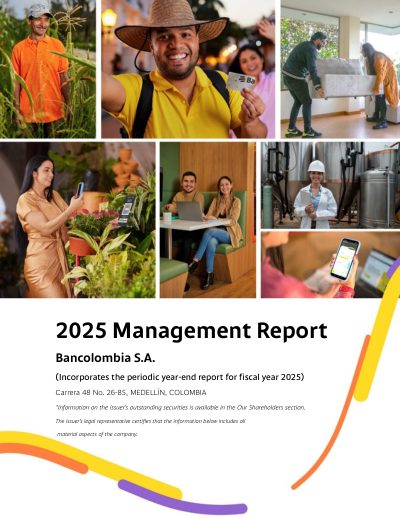
Grupo Cibest S.A.
Banks / Diverse Financials / Insurance · Colombia · 2025
Grupo Cibest S.A.'s 2025 Management Report provides several specific waste-related data points, including the reporting of Waste Electrical and Electronic Equipment (WEEE) such as computer parts and televisions linked to SDG 12.5 on page 302, and a quantified non-hazardous waste total of 0.45 tonnes with 0.25 tonnes disposed of by other means on page 48. Additionally, page 306 notes a waste-related figure of 201.2, though the context is less clear. However, the report lacks detailed weight values for various waste categories (b-i to b-iii, c-ii to c-iv) and does not provide narrative explanations or methodology for some waste weight values, leaving some aspects of waste management unclear.
ASE Technology Holding Co., Ltd.
Semiconductors · Taiwan · 2024
ASE Technology Holding Co., Ltd.'s 2024 CSR Report provides numeric data on waste recycling rates, showing a total recycled and reused rate increasing from 82% to 93% over recent years (p.241), and a non-hazardous waste recycling rate of 90% to 97% (p.104). The report also details hazardous waste management, including incineration with energy recycling and composting of general waste (p.142), and references total general and hazardous waste quantities (p.241). However, specific weight values for recycled or reused hazardous waste without incineration and other detailed waste weight categories are either partially covered or not found, and narrative explanations or methodologies for these figures are unclear or missing.

Bangkok Dusit Medical Services Public Company Limited
Healthcare Providers, Services and Technology · Thailand · 2025
Bangkok Dusit Medical Services Public Company Limited's Sustainability Report 2025 provides specific numeric data on waste management, including the total weight of hazardous waste directed to disposal reported as 5,258.22 tons on page 275, and zero tons for non-hazardous waste directed to disposal on page 276. The report also includes total greenhouse gas emissions (Scope 1 and 2) data on page 220 and some contextual information on waste composition by type on page 236, though no headline values for non-hazardous waste breakdown are given. Notably, narrative explanations or detailed weight values for various waste categories and disposal methods are missing or unclear throughout the report.
✓ LRA AI Assistant · Human-in-the-loop

Ask the Study Studio AI Assistant about this disclosure
Get practical answers for your reporting context. Your first two answers are free — join LRA Community for free to continue without a limit.
TryHow do I prepare GRI 306-5?What data do I need to collect?Where can I see a real-report example?What mistakes should I avoid?
2 free answers
Check your understanding
Scenarios to work through
A manufacturing site sends 18 tonnes of hazardous residues offsite for treatment, split across 5 tonnes for energy-recovering incineration, 7 tonnes for non-energy incineration, 4 tonnes to landfill and 2 tonnes to another disposal route. The waste register also shows 12 tonnes of non-hazardous waste sent offsite, split across 3 tonnes, 2 tonnes, 5 tonnes and 2 tonnes in the same four routes.
QHow should the preparer decide what to enter for the disposal breakdown, and what check is needed before sign-off?
Reveal model answer →Hide answer ↑The preparer should record the total amount sent to disposal for each waste class, then show how that total is split across the four disposal routes. The route figures must add back to the class total, so the hazardous subtotal should be 18 tonnes and the non-hazardous subtotal 12 tonnes; if they do not reconcile, the source records need fixing before the disclosure is finalised.
Why this matters · The breakdown must reconcile to the overall amount for each waste class.
A site manager has one spreadsheet showing 9 tonnes of hazardous waste sent to disposal, but the supporting invoices only identify 6 tonnes as offsite and 3 tonnes as handled in an onsite unit. The preparer is unsure whether to combine them or separate them in the disclosure.
QWhat is the right way to present the figures when disposal happens both on the site and elsewhere?
Reveal model answer →Hide answer ↑The preparer should split the figures between onsite and offsite handling, because the disclosure asks for both the overall amount and the location of the disposal route. In this case, the 9 tonnes should be shown as 3 tonnes onsite and 6 tonnes offsite, with each part then allocated to the relevant disposal route so the totals remain consistent.
Why this matters · Where disposal happens in more than one place, the location split should be shown clearly and consistently.
A warehouse sends 14 tonnes of non-hazardous waste to disposal. Of this, 8 tonnes go to landfill, 4 tonnes to incineration without energy recovery and 2 tonnes to another disposal route; none goes to energy-recovering incineration.
QShould the preparer still show the zero amount for the unused route, or leave it out because there was no activity?
Reveal model answer →Hide answer ↑The preparer should keep the route structure complete and show zero where a route was not used, rather than dropping that line. That makes it clear that the full set of disposal routes was considered and helps readers see that the 14-tonne total is fully explained by the route split.
Why this matters · Use the full route breakdown even when one route has no waste in it.
A preparer has 11 tonnes of hazardous waste sent to disposal, all offsite: 2 tonnes to energy-recovering incineration, 3 tonnes to non-energy incineration, 4 tonnes to landfill and 2 tonnes to another disposal route. The same waste is also described in the notes as ‘mixed industrial waste’ without any further category detail.
QWhat should the preparer do about the waste composition description and the supporting evidence before the disclosure is signed off?
Reveal model answer →Hide answer ↑The preparer should include a plain description of the waste mix used for the figure and keep evidence that supports both the total and the route split. If the category description is too vague to explain what the 11 tonnes covers, it should be clarified so the reader can understand how the data was compiled and what the numbers relate to.
Why this matters · A clear waste category description and supporting records are needed to make the figures understandable.
Framework references
Relevant GRI requirements and related disclosures
Available framework references and nearby disclosures relevant to preparing this requirement.
Primary
Related & explore
FAQ
Questions this page answers
For GRI 306-5 Waste, what data do I need to pull together before I start drafting the disclosure?+−
The page lists the datapoints to prepare, including total disposal weight, waste composition category, disposal waste weight, and the split between hazardous and non-hazardous disposal routes. It also includes onsite and offsite treatment categories plus waste reporting notes, so you can build the disclosure from a complete data set rather than a single total.
How should I set the scope for GRI 306-5 Waste so the numbers are consistent?+−
Use the page’s step-by-step preparation section to define the reporting boundary before collecting figures, then keep the same scope across total disposal weight, hazardous and non-hazardous totals, and the onsite/offsite breakdowns. The page is designed to help you avoid mixing different scopes in one draft.
What is the easiest way to organise the waste data owner’s inputs for GRI 306-5 Waste?+−
The page is set up around a clear list of datapoints, so a data owner can work through the totals, category splits, treatment routes, and notes in a structured way. That makes it easier to assign each line to the right source and avoid missing a required field in the draft.
What should go into the evidence pack for GRI 306-5 Waste if I want to be assurance-ready?+−
The page includes an evidence pack for assurance readiness, with five items to assemble alongside the disclosure draft. Use it to keep the underlying records, calculations, and supporting notes together so a reviewer can trace the reported figures back to source.
What are the six assurance claims on the GRI 306-5 Waste page and how do I use them?+−
The page says there are six assurance claims to verify, each with a claim, risk, and evidence prompt. Use them as a checklist to test whether the disclosure is complete, internally consistent, and supported by documentation before it goes to review.
What are the common reporting gaps or mistakes to watch for in GRI 306-5 Waste?+−
The page includes a section on common reporting gaps and mistakes, which is there to help you spot missing totals, incomplete splits, or weak supporting notes before publication. It is useful as a final quality check against the datapoints and the evidence pack.
How do I use the Prep & Assurance workbook for GRI 306-5 Waste?+−
The Download Centre includes a Prep & Assurance workbook in .xlsx format, which is intended to help you organise the disclosure inputs and assurance checks. Use it to capture the datapoints, track evidence, and turn raw data into a draft more efficiently.
What can I do with the printable Library Card for GRI 306-5 Waste?+−
The Download Centre also provides a printable Library Card in .pdf format. It is a practical companion for keeping the disclosure checklist, key datapoints, and review points in one place while you work through the draft.
How do I turn the GRI 306-5 Waste data into a draft disclosure?+−
The page has a draft-output section with visualisation ideas, narrative starters, and a GRI content-index line. That gives you a starting point for turning the collected data into a readable draft and a simple index entry for the report.
Can I use the GRI 306-5 Waste page to compare my data with ESRS E5?+−
Yes, the page notes ESRS E5 (Resource Use and Circular Economy) as the closest correspondence, so the data you collect here may be reusable across both reporting processes. The page does not say the requirements are identical, so treat it as a practical data-reuse check rather than a one-to-one mapping.
More questions this page can help with
GRI 306-5 Waste datapoints checklist for total disposal weight and treatment splitsHow to collect hazardous and non-hazardous waste disposal data for GRI 306-5What onsite and offsite waste treatment categories are needed for GRI 306-5 Waste?How to document waste reporting notes for GRI 306-5 WasteGRI 306-5 Waste assurance evidence pack checklistHow to use the GRI 306-5 Prep & Assurance workbookGRI 306-5 Waste common mistakes and reporting gapsHow to write a draft narrative for GRI 306-5 WasteGRI 306-5 Waste visualisation ideas for a report draftGRI 306-5 Waste content index line exampleESRS E5 and GRI 306-5 Waste data reuseWhere to find real company report examples for GRI 306-5 Waste
How this library is built
312 published reports indexed
63171 pages with page-level citations
272 practitioner guides
Free · LRA Community
Get your GRI 306-5 tools — free
Your preparation tools are free for LRA Community members and students. Register once (it's free) and your download starts right away — plus the Disclosure Library, templates and the LRA AI Assistant.
✓
You're in — your download is starting
Your file is downloading now. Your Community Cabinet — with the Disclosure Library, templates and the LRA AI Assistant — is ready too.
Open your Cabinet →