

Disclosure focus
This asks an organisation to report the climate data needed for international reporting in a way that is complete and usable across the business. In practice, the emphasis is on providing information that reflects the organisation’s full footprint, rather than only selected locations or a few high-profile sites.
The practical focus is therefore on coverage and consistency: the data should be gathered across relevant operations, activities and entities so that the reported picture is not distorted by partial sampling. Where there are differences between sites or parts of the business, the organisation should make sure the reporting approach captures them in a coherent way.
This LRA educational guidance supports disclosure preparation. For the exact requirements, always refer to the official MOCCAE source.
Before you start
A quick mental checklist before you prepare this disclosure — tick each as you settle it.
Preparation
Key information to prepare
+ Show Art.7(3)(b)-3 sub-elements (LRA working checklist)
Use the required data submission format for this disclosure.
State whether the item is included in the national report.
Specify the reporting cycle that applies.
How to prepare it
1Set the reporting period first, so the figures and narrative you prepare clearly relate to the correct cycle.
2Decide the submission format you will use, and make sure the information is arranged to fit that format.
3Confirm whether the item is being included in the national report, and record that decision consistently in your working papers.
4Gather the supporting records that back up the reported information, so each entry can be traced to evidence.
5Prepare the final figures or written explanation from those records, keeping the content aligned with what you have chosen to report.
6Note any exclusions, adjustments, or changes in approach, then check the completed disclosure against the official source before filing.
Request the data
Request the climate-reporting pack from Legal / Company Secretariat
Translate the disclosure into an internal business question — then adapt it to your organisation's own language.
Which reporting cycle, submission format, and national-report status should we use for this climate-reporting disclosure?
Use your organisation’s own names for the report pack, filing route, and reporting cycle first, then map them to the fields below. This is a possible LRA training template; adapt it to your organisation and check the official source before sign-off.
Weak request
Please provide the disclosure wording for UAE-LAW-11-2024:Art.7(3)(b)-3 and confirm compliance.
Why it fails: This asks for framework wording rather than the underlying business information. It does not tell the owner what internal records to pull, which period to cover, or what evidence fields are needed for review.
Better request
Please send the current climate-reporting pack for [period], using your team’s own labels. We need the reporting cycle name, the submission format, and whether the item was included in the national report, together with the source reference, version, and confirmer.
Industry examples
Draft your disclosure
Notes that turn data into a disclosure
LRA training templates — adapt them to your organisation, and check the official source before sign-off.
Method note
Define each field in plain terms before drafting the disclosure: explain what counts as the submission format, how the yes/no inclusion flag is applied, and how the reporting cycle is determined from the source records.
Context note
Use the figures to show how the information is organised for filing, whether each item is carried into the national report, and which reporting period each record belongs to.
Fluctuation statement
If the pattern changes across cycles, note whether the shift comes from a different submission format, a change in inclusion decisions, or a move to a new reporting period.
Content index entry
Art.7(3)(b)-3 Data for international climate reporting — [location / page] / [notes]
Download Centre
Preparation tools & forms
Professional preparation tools for Art.7(3)(b)-3 — free with an LRA Community membership. Register once (it's free) and every download unlocks, together with the Disclosure Library, templates and the LRA AI Assistant.
Free · Community members
Assurance readiness
For each claim, check the evidence
Evidence pack to prepare
Common reporting gaps
The information is presented without a date or as-at point.The scope or boundary of the statement is left undefined.Key terms are used inconsistently across the report.Material changes since the previous period are not disclosed.Assertions are made without supporting detail or a source record.Boilerplate is used that does not actually answer what is asked.
Common gaps
Mistakes to avoid when collecting the data
Wrong owner
Chasing the policy team or sustainability lead for the data can miss the operational team that actually sends the filing and tracks the reporting cycle.
Framework language
Asking for the information in law-style terms can confuse colleagues, so they return a generic answer instead of the organisation's own filing format, cycle and yes/no status.
No boundary set
If you do not define which business units, sites or subsidiaries are in scope, different teams may collect different populations and the final dataset will not line up.
Wrong period basis
Pulling figures from a different reporting cycle or an ad hoc date range can make the submission format and the yes/no status refer to different periods.
Mixed counting basis
Combining one-off submissions with recurring cycle data, or mixing draft and final records, can produce a dataset that does not match a single reporting basis.
Source labels lost
Copying values into a spreadsheet without keeping the original file names, system tags or source notes makes it hard to trace where the reporting cycle and status came from.
Merged populations
Putting together data for separate legal entities or separate filing streams can hide which record belongs to the national report and which does not.
Missing evidence trail
Collecting the answer without the supporting file, date stamp and approver name leaves no clear sign-off trail for later review.
Where judgement is often needed
Set the reporting perimeter after a buy-in or sale
If a business unit has been added or removed during the cycle, state the cut-off date and explain whether the submission covers the full period, only the time in scope, or a restated view, so the basis is clear.
Handle country-by-country definitions with one chosen rule
Where local reporting labels or calculation methods differ, pick one consistent approach for the submission, describe the rule used, and note any country-level exceptions that were translated into the same reporting basis.
Decide how to treat borderline operations and shared activities
For sites, teams, or assets that sit partly inside and partly outside the reporting boundary, explain the inclusion test used and whether partial activity was counted, excluded, or rolled up into a broader operational group.
Choose the timing basis and keep it consistent
State whether the figures follow the period when activity happened, when it was recorded, or another internal cut-off, and disclose any timing mismatch that could affect how the cycle is read.
Separate measured figures from estimates
If some inputs were directly captured and others were modelled or approximated, identify which parts were estimated, the method used to fill gaps, and any material assumptions that shaped the final submission.
Round numbers without obscuring the underlying total
Use a rounding approach that does not change the overall picture, and if rounded figures are shown, explain the convention so readers can understand any small differences in totals.
Aggregate sensitive data before sharing it
When privacy or confidentiality means individual records cannot be shown, combine them to a level that protects people or counterparties, and disclose the aggregation level used so the submission remains interpretable.
Align the reporting cycle with the source records
If internal records run on a different timetable from the climate submission cycle, explain how the source data were mapped to the chosen period and whether any bridging adjustments were made.
Explain any restatement after boundary or method changes
When a prior-period figure is updated because the organisation changed its scope, timing basis, or calculation method, say what changed and why the revised number is the one used for the submission.
Examples
Illustrative examples
Synthetic, written by LRA — not from a company report, not text from any standard.
Illustrative (synthetic) example — Manufacturing
We would send our annual climate file in the regulator’s required digital template, and that package would be folded into the country-level return. For this reporting year, our group would submit once, covering the 12-month period from 1 January to 31 December. - Delivery route: the prescribed electronic template - National return: yes, our submission would be included - Cycle: annual reporting
This example shows how a company might describe the filing route, whether its data feeds the national return, and the reporting rhythm, without naming the organisation.
Illustrative (synthetic) example — Financial services
Our group would provide the information through the official online submission channel, and it would be counted in the national compilation. We would report on a yearly basis, using the same 12-month cycle as our wider sustainability filing. - Delivery route: online submission channel - National return: yes, included - Cycle: yearly
This example uses a different sector and a different way of describing the same three datapoints, while staying fully synthetic and first-person.
How companies report Art.7(3)(b)-3 in practice
Examples of full and partial reporting practice. These are evidence-led reviews, not exact disclosure templates to copy.
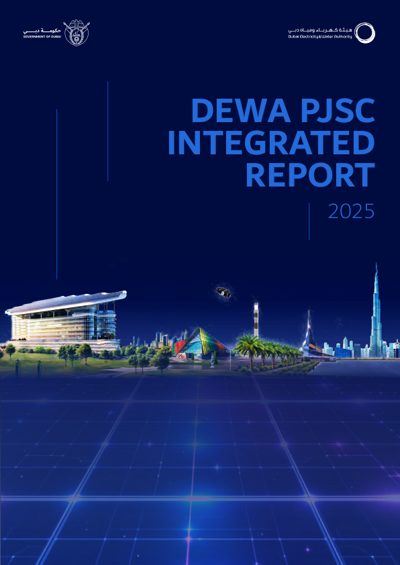
DEWA (Dubai Electricity & Water Authority)
None · United Arab Emirates · 2025
DEWA’s 2025 Integrated Report shows full data submission for the 2025 reporting cycle, with a 100% submission rate noted on page 172. However, the report does not provide clear evidence regarding inclusion in a national report or specify the reporting cycle details elsewhere. Other relevant information, such as materiality assessments and financial disclosures, is present but unrelated to this specific disclosure.

TAQA (Abu Dhabi National Energy Company)
None · United Arab Emirates · 2024
TAQA’s 2024 Integrated Report includes a reported value relevant to the disclosure in Chapter 2 (Overview) as noted on page 266. The report also references governance practices and sustainability management systems, such as energy management and human rights policies, on pages 140, 290, and 291. However, there is no evidence found regarding the data submission format or the reporting cycle within the report.

First Abu Dhabi Bank (FAB)
None · United Arab Emirates · 2024
First Abu Dhabi Bank’s ESG Report 2024 includes references to inclusion and access, financial health and inclusion, and management of material topics related to these areas, with mentions on pages 56, 58, 66, 68, and 72. The report also provides some data on loans outstanding under programmes promoting small business inclusion (p.66). However, there is no evidence found regarding the data submission format, inclusion in a national report, or reporting cycle for the disclosure.
✓ LRA AI Assistant · Human-in-the-loop

Ask the Study Studio AI Assistant about this disclosure
Get practical answers for your reporting context. Your first two answers are free — join LRA Community for free to continue without a limit.
TryHow do I prepare Art.7(3)(b)-3?What data do I need to collect?Where can I see a real-report example?What mistakes should I avoid?
2 free answers
Check your understanding
Scenarios to work through
A sustainability team is preparing a climate data pack for a ministry submission. They have the figures ready, but the file could be sent as a spreadsheet, a PDF extract, or loaded into a portal, depending on the receiving channel.
QWhat should the preparer confirm before finalising the pack?
Reveal model answer →Hide answer ↑They should make sure the submission is set out in the format expected for that reporting route, rather than assuming any file type will do. The team should also keep the evidence showing how the data was packaged and sent, so the chosen format can be traced later.
Why this matters · The way the information is presented matters, so the format should match the reporting route and be supportable from records.
A group reporting team has prepared climate information for an overseas filing and is unsure whether the same dataset will also feed the country-level climate return. One draft says “for internal use only”, while another version is marked for inclusion in the national filing.
QHow should the preparer decide whether this item is treated as part of the country submission?
Reveal model answer →Hide answer ↑They need to check whether the data is actually being used in the national climate return, and record that status clearly. If it is included, the answer should be yes; if it is not part of that filing, it should be no. The key is to align the flag with the real reporting use, not with an internal label.
Why this matters · The yes/no status should reflect whether the data feeds the national filing, not how the file is labelled internally.
A reporting manager is compiling climate data for a cross-border disclosure and has figures from two different periods: one set covers the latest calendar year, while another follows the organisation’s own financial year. The receiving authority has asked for the reporting cycle to be stated alongside the data.
QWhich period should the preparer identify, and what should they avoid doing?
Reveal model answer →Hide answer ↑They should state the cycle that the submission is actually based on, using the same period that the data was prepared for. They should not mix periods or leave the cycle vague, because the reader needs to know the time basis of the information being sent.
Why this matters · The reporting cycle should be stated plainly and should match the period used to prepare the data.
A preparer is reviewing a climate reporting file before sign-off. The file includes the figures and a note that the data will be used in an international submission, but the team has not yet documented the exact submission format or the reporting cycle in the working papers.
QWhat is the prudent next step before the file is approved?
Reveal model answer →Hide answer ↑They should complete the missing documentation so the file shows the submission format, whether it is included in the national report, and the reporting cycle. That way, the data can be understood and traced if it is later checked by reviewers or authorities.
Why this matters · Before sign-off, the submission details should be documented clearly enough for later review and traceability.
Framework references
Relevant UAE requirements and related disclosures
Available framework references and nearby disclosures relevant to preparing this requirement.
UAE
Art.7(3)(b)-3
within UAE Federal Decree-Law 11/2024: Federal Decree-Law No. (11) of 2024 on the Reduction of Climate Change Effects
Open official source →Related & explore
FAQ
Questions this page answers
For Art.7(3)(b)-3, what do I need to have ready before I start drafting the disclosure?+−
The page says to prepare three datapoints up front: the submission file format, whether the national report is included, and the reporting period. It also has a step-by-step preparation section you can use to turn those inputs into a draft.
How do I use the Art.7(3)(b)-3 step-by-step preparation section in practice?+−
Use it as a working guide to move from the basic datapoints into a draft disclosure. The page is designed to help you prepare the disclosure, collect the right data, and get to a usable output rather than just read the topic in theory.
What evidence should I gather for Art.7(3)(b)-3 if I want to be assurance-ready?+−
The page includes an evidence pack with five items to support assurance readiness, plus five assurance claims to verify using a claim/risk/evidence approach. Use those together to build a file that shows what was checked, what could go wrong, and what supports the final disclosure.
What are the five assurance claims on the Art.7(3)(b)-3 page and how should I use them?+−
The page provides five claims to verify, each paired with a risk and evidence prompt. They are there to help you test the disclosure before sign-off and to make the evidence trail clearer for reviewers.
What common mistakes does the Art.7(3)(b)-3 page warn about?+−
It includes a list of common reporting gaps and mistakes so you can check for missing or weak inputs before drafting. Use that list as a pre-submission quality check, especially if you are coordinating between ESG, HR, finance, or another data owner.
How do I use the Art.7(3)(b)-3 workbook download?+−
The Download Centre includes a Prep & Assurance workbook in .xlsx format. The page positions it as a practical tool for preparing the disclosure, organising evidence, and working towards an assurance-ready draft.
What is the printable Library Card PDF for Art.7(3)(b)-3 used for?+−
The Download Centre also provides a printable Library Card in PDF format. It is meant as a quick reference alongside the workbook and the page content when you are preparing the disclosure or checking your evidence pack.
Can I use the synthetic example disclosure on the Art.7(3)(b)-3 page as a template for my own draft?+−
Yes, as a drafting aid only. The page includes synthetic illustrative example disclosures, including a quantitative table, to show how the disclosure can be turned into a draft without treating the example as a real company report.
How do I turn the Art.7(3)(b)-3 page into a draft disclosure with narrative and visuals?+−
The draft-output section gives visualisation ideas, narrative starters, and a content-index line. Use those to shape the final wording and presentation once your data and evidence are in place.
What does the Art.7(3)(b)-3 page say about using company report examples?+−
It has a 'From company reports' table that links to real published reports at the pages where the topic is disclosed. That is useful for seeing how others present similar information, but you still need to adapt the approach to your own data and reporting context.
How does the Art.7(3)(b)-3 page relate to ESRS E1, and can I reuse data across both?+−
The page says the closest ESRS correspondence is ESRS E1 (Climate Change). You can use that as a cross-check and reuse data where it fits your reporting process, but the page does not say the requirements are identical.
More questions this page can help with
Art.7(3)(b)-3 submission file format: what should I check before I send the disclosure?Art.7(3)(b)-3 national report inclusion: how do I confirm whether the report is included?Art.7(3)(b)-3 reporting period: how do I set the period consistently for the draft?Art.7(3)(b)-3 evidence pack: what five items should I keep for audit trail purposes?Art.7(3)(b)-3 assurance claims: how do I map claim, risk and evidence in the workbook?Art.7(3)(b)-3 common gaps: what are the typical mistakes to avoid when drafting?Art.7(3)(b)-3 workbook: how do I use the .xlsx to track preparation and assurance?Art.7(3)(b)-3 library card PDF: what is the quickest way to use it in review meetings?Art.7(3)(b)-3 example disclosure: how do I adapt the synthetic table into my own numbers?Art.7(3)(b)-3 narrative starters: how do I turn the prompts into a first draft?Art.7(3)(b)-3 content-index line: what should I include in the index entry?Art.7(3)(b)-3 company reports table: how do I use the linked examples without copying them?
How this library is built
312 published reports indexed
63171 pages with page-level citations
272 practitioner guides
Free · LRA Community
Get your Art.7(3)(b)-3 tools — free
Your preparation tools are free for LRA Community members and students. Register once (it's free) and your download starts right away — plus the Disclosure Library, templates and the LRA AI Assistant.
✓
You're in — your download is starting
Your file is downloading now. Your Community Cabinet — with the Disclosure Library, templates and the LRA AI Assistant — is ready too.
Open your Cabinet →