

Disclosure focus
This disclosure is about whether the organisation has had its greenhouse gas reporting checked by an independent third party, and what that review covered. In practice, the organisation should explain the assurance arrangement in a way that makes clear which emissions information was reviewed, how far through the business the review reached, and whether the check was limited to selected parts of the inventory or applied more broadly.
The practical focus is on coverage and credibility, not just the fact that assurance exists. A useful explanation should help a reader understand whether the assurance covered the organisation’s full operations or only certain entities, sites, or emissions scopes, and whether the review was designed to support confidence in the reported figures as a whole or only in a narrower subset.
This LRA educational guidance supports disclosure preparation. For the exact requirements, always refer to the official CARB source.
Before you start
A quick mental checklist before you prepare this disclosure — tick each as you settle it.
Preparation
Key information to prepare
+ Show SB253-ASSURANCE sub-elements (LRA working checklist)
State the assurance level applied to Scope 1 and Scope 2 data.
Set out any limits, caveats, or exceptions attached to the assurance work.
Provide the assurance provider’s overall conclusion or opinion.
Name the assurance framework or method that was used.
Identify the external, independent party that carried out the assurance.
Explain whether Scope 3 information has been assured, and if so, to what extent.
How to prepare it
1Start by pinning down what the assurance covers: identify the emissions areas, the level of assurance, and whether any separate treatment applies to Scope 3. Keep the scope statement aligned to the item you will report.
2Confirm who carried out the work and what method they used. Record the external assurance provider and the assurance framework or approach named in the report, using the same source documents throughout.
3Gather the supporting material behind the assurance result. This should include the evidence the provider relied on, plus the underlying records needed to support the stated level, status, and conclusion.
4Prepare the disclosure text itself in clear business language. Set out the assurance level for Scope 1 and Scope 2, the conclusion reached, and any note on Scope 3 status, making sure each item matches the source evidence.
5Add any caveats or boundaries that affect how the assurance should be read. If the provider set limits, exceptions, or qualifications, describe them plainly and keep them tied to the relevant part of the assurance statement.
6Before finalising, check the disclosure against the official source and the provider’s report. Make sure the wording, figures, and narrative are consistent, and that nothing material has been omitted or changed in translation.
Request the data
Request the assurance pack from Finance
Translate the disclosure into an internal business question — then adapt it to your organisation's own language.
What third-party assurance evidence do we have for our Scope 1, Scope 2, and any Scope 3 emissions reporting, and who provided it?
Use your organisation’s own labels first, then map them to the reporting fields. For example, ask for the assurance letter, review note, or external verification pack in the terms your team already uses, rather than using framework wording in the request.
Weak request
Please provide the third-party assurance evidence for the disclosure.
Why it fails: This is too framework-led and vague. It does not tell the owner which reporting period, which emissions areas, which document type, or which caveats matter, so the response may be incomplete or hard to use.
Better request
Please send the signed external assurance or verification document for [reporting period] covering our emissions reporting, plus the provider name, what parts of the inventory it covers, the conclusion, and any limitations or qualifications. Use your team’s usual document names and include the file link.
Industry examples
Draft your disclosure
Notes that turn data into a disclosure
LRA training templates — adapt them to your organisation, and check the official source before sign-off.
Method note
State which emissions areas were reviewed, who carried out the external check, what assurance framework they used, and whether any limits or qualifications were attached to the review.
Context note
Explain what the assurance result means for readers by clarifying the level of confidence reached for the reported emissions data and whether Scope 3 was included or left outside the review.
Fluctuation statement
If the assurance outcome changed from the prior period, note whether the shift reflects a different review scope, a change in the external reviewer or framework, or the removal or addition of any qualifications.
Content index entry
SB253-ASSURANCE Third-party assurance — [location / page] / [notes]
Download Centre
Preparation tools & forms
Professional preparation tools for SB253-ASSURANCE — free with an LRA Community membership. Register once (it's free) and every download unlocks, together with the Disclosure Library, templates and the LRA AI Assistant.
Free · Community members
Assurance readiness
For each claim, check the evidence
Evidence pack to prepare
Common reporting gaps
The information is presented without a date or as-at point.The scope or boundary of the statement is left undefined.Key terms are used inconsistently across the report.Material changes since the previous period are not disclosed.Assertions are made without supporting detail or a source record.Boilerplate is used that does not actually answer what is asked.
Common gaps
Mistakes to avoid when collecting the data
Wrong owner asked
The team chases the sustainability lead for assurance evidence when the audit, finance, or external provider team actually holds the working papers and sign-off trail.
Framework labels used too early
People ask for the data in disclosure language instead of the organisation’s own process terms, so the source team cannot map the request to its normal records.
Scope not pinned down
The collector never states whether the check covers only Scope 1 and Scope 2 or also the Scope 3 status field, so different teams send different slices of data.
Wrong reporting period
Evidence is pulled from a different cut-off date or reporting window than the one used for the disclosure pack, which makes the assurance record inconsistent with the rest of the filing.
Counting basis mixed up
One source gives a status flag while another gives a narrative note, and the collector merges them without keeping the same basis for each field.
Source labels stripped out
The original file names, system tags, or document titles are lost during consolidation, so the reviewer cannot trace each item back to its first record.
Separate populations merged
Assurance details for different entities, sites, or reporting streams are combined into one file even though they should stay separate for review.
Evidence metadata missing
The pack arrives without the provider name, date, version, or other trace details, leaving no way to show where the assurance information came from.
No sign-off trail kept
The final dataset is circulated without a clear approval record, so nobody can show who checked the assurance level, limitations, opinion, standard used, or provider details before submission.
Where judgement is often needed
What counts as the covered emissions set after a buy-in or sale
If the reporting boundary changed during the year, explain which sites, entities and activity data were included in the assurance work and how you dealt with any opening or closing-period changes.
Using different country methods for the same activity
Where local data systems or calculation methods differ across countries, state which approach was used for each location and why the final assurance view still gives a like-for-like picture.
Borderline cases for people, assets or operations near the boundary
For items close to the inclusion line, set out the rule you used to include or leave them out and disclose any material judgement made by management or the assurer.
Choosing the cut-off date and data basis
If the assurance work uses a different timing basis, reporting date or data cut-off from the underlying operational records, explain the basis chosen and any effect on comparability.
Measured figures versus estimates or proxies
When direct measurement was not available, disclose where estimates, models or proxy data were used, why they were needed, and whether the assurer treated them differently from measured figures.
Rounding and presentation of the final numbers
State the rounding rule used for the assured figures and make sure the published totals still reconcile to the underlying unrounded data within the chosen presentation approach.
Protecting sensitive data by grouping or masking
If privacy or confidentiality means some detail is combined or hidden, explain what was aggregated, the level of grouping used, and any impact on the assurance conclusion.
Different assurance coverage for direct and value-chain emissions
Where the assurance work covers direct emissions but not the wider value chain, make clear the split, the reason for any partial coverage, and how that limitation is described in the conclusion.
Examples
Illustrative examples
Synthetic, written by LRA — not from a company report, not text from any standard.
Illustrative (synthetic) example — manufacturing
We have included this synthetic example to show how our group might describe external review of its climate data. For the year ended 31 December 2025, an independent assurance firm reviewed our Scope 1 and Scope 2 emissions at a limited level of assurance, using ISAE 3000 (Revised) together with ISAE 3410; the conclusion was that nothing came to the reviewer’s attention to suggest the figures were materially misstated. Scope 3 was not covered in the same review, and the report noted a few boundaries and estimation points that narrowed the work performed.
Illustrative only: this example shows how a reporter can explain who performed the review, what level of confidence was reached for direct and purchased-energy emissions, which framework was used, whether indirect value-chain emissions were included, and any caveats on scope or methods.
Illustrative (synthetic) example — transport and logistics
This synthetic example shows one way we might report our external check of emissions information. For 2025, an independent third party provided reasonable assurance over our Scope 1 and Scope 2 figures under ISAE 3000 (Revised), and the conclusion was positive with no material issues identified; however, the reviewer set out a few qualifications linked to data gaps at two sites and excluded Scope 3 from the engagement.
Illustrative only: this example demonstrates a different sector voice while still covering the reviewer, the confidence level for direct and purchased-energy emissions, the assurance framework, the outcome, the limits noted, and the fact that value-chain emissions were outside the review.
How companies report SB253-ASSURANCE in practice
Examples of full and partial reporting practice. These are evidence-led reviews, not exact disclosure templates to copy.

Cargill
Food Production — Agricultural · United States · 2025
Cargill’s 2025 Impact Report provides assurance specifically for Fiscal Year 2025 Scope 1 and Scope 2 market-based and location-based greenhouse gas (GHG) emissions, as stated on page 109. The assurance provider is identified as KPMG N.V., offering limited assurance on selected sustainability KPIs, though the report only partially details this on page 75. Notably, the report lacks a clear assurance opinion or conclusion, does not provide assurance status for Scope 3 emissions, and does not specify the assurance standard used, leaving these aspects unclear or missing.
Old Dominion Freight Line / ODFL
Ground Transportation — Trucking · United States · 2024
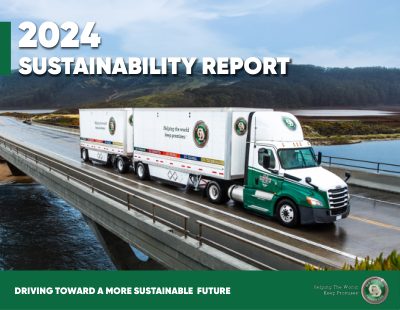
Old Dominion Freight Line’s 2024 Sustainability Report includes assurance on its scope 1 and 2 greenhouse gas emissions reporting, as noted on page 6, with reference to a 2024 GHG Inventory Verification Opinion mentioned on page 23. The report also references alignment with the GHG Protocol Corporate Standard on page 19, though the assurance standard is not clearly disclosed. Notably, the report does not provide information on assurance limitations, the assurance provider, assurance opinion or conclusion, or the status of scope 3 emissions assurance.

Host Hotels & Resorts, Inc.
Real Estate · United States · 2025
Host Hotels & Resorts, Inc.'s 2025 Corporate Responsibility Report includes verified data on Scope 1, Scope 2, and Scope 3 greenhouse gas emissions, with Scope 3 emissions specifically verified by AET, as noted on page 54. The report references assurance of its GHG emissions and environmental inventory data for the calendar year 2024, with related assurance statements found on pages 54-55 and 62. However, the report does not provide clear information on the assurance level, limitations, opinion, provider, or the specific assurance standard used, as these datapoints are either not found or unclear.
✓ LRA AI Assistant · Human-in-the-loop

Ask the Study Studio AI Assistant about this disclosure
Get practical answers for your reporting context. Your first two answers are free — join LRA Community for free to continue without a limit.
TryHow do I prepare SB253-ASSURANCE?What data do I need to collect?Where can I see a real-report example?What mistakes should I avoid?
2 free answers
Check your understanding
Scenarios to work through
A reporting team has a signed assurance report for its Scope 1 and Scope 2 figures. The report names the external reviewer, states the level of review reached, and includes a conclusion, but the team is unsure whether to mention that the reviewer also noted a scope restriction on one site visit.
QWhat should the preparer decide to include when summarising the external review for this disclosure?
Reveal model answer →Hide answer ↑The summary should cover the outside reviewer’s identity, the level reached for Scope 1 and Scope 2, the conclusion, the method or framework used, and any limits or caveats attached to the work. If the report contains a restriction, that limitation should be carried through rather than omitted.
Why this matters · Capture the reviewer, the level reached, the conclusion, the method used, and any caveats together so the picture is complete.
An organisation has obtained external review for its direct emissions and purchased electricity data, but its Scope 3 work is still being checked internally and no outside review has started. The draft narrative currently says only that the wider value-chain figures are “under review”.
QHow should the preparer describe the position on Scope 3 assurance?
Reveal model answer →Hide answer ↑The disclosure should make the status of Scope 3 external review clear in plain language, so readers can tell whether it has not started, is in progress, or has been completed. A vague phrase like “under review” is not enough if it does not clearly show the current assurance position.
Why this matters · State the current assurance status for Scope 3 plainly, so users can see where the process stands.
A company engaged a specialist firm to review its emissions data, but the draft note does not say whether that firm was independent. The preparer argues that the firm’s name and report title are enough because the reviewer is well known in the market.
QWhat judgement should the preparer make about identifying the assurance provider?
Reveal model answer →Hide answer ↑The disclosure should identify the outside reviewer in a way that shows it was an independent third party, not just a generic service provider. Naming the firm alone may not be enough if the reader cannot tell from the disclosure that the reviewer was external and independent.
Why this matters · Make it clear that the review came from an outside, independent provider.
The assurance report says the emissions data were reviewed using a recognised assurance framework and gives a conclusion with a qualification about one data source. The sustainability team wants to shorten the disclosure by leaving out the framework name and the qualification because the conclusion is already “limited assurance”.
QWhat should the preparer do with the framework used and the qualification?
Reveal model answer →Hide answer ↑Both pieces of information should stay in the disclosure: the framework or approach used for the review, and any qualification or limitation that affects the conclusion. The conclusion alone does not replace those details, because readers need to understand both the basis of the work and any constraints on it.
Why this matters · Do not rely on the conclusion alone; keep the review basis and any limitations visible.
Framework references
Relevant California requirements and related disclosures
Available framework references and nearby disclosures relevant to preparing this requirement.
California
SB253-ASSURANCE
within California SB 253: Climate Corporate Data Accountability Act
Open official source →Related & explore
FAQ
Questions this page answers
SB253-ASSURANCE: what should I gather before I start the disclosure draft and how do I use the page’s step-by-step preparation section?+−
Start with the page’s plain-language explainer, then work through the step-by-step preparation section to collect the listed datapoints: Scope 1 and 2 coverage, assurance caveats, assurance conclusion, assurance provider, Scope 3 assurance status and the assurance method standard. The page is designed to help you turn that into a draft, not to replace your own internal process.
SB253-ASSURANCE: which data points does this page say I need to prepare for the disclosure?+−
The page highlights six datapoints to prepare: Scope 1 and 2 coverage, assurance caveats, assurance conclusion, assurance provider, Scope 3 assurance status and the assurance method standard. Use those as the starting checklist for your draft and evidence pack.
SB253-ASSURANCE: how do I decide who owns the data for this disclosure across sustainability, HR, finance or operations?+−
The page does not assign roles for you, but it is set up for practitioner use, so you can use the step-by-step section and workbook to map each datapoint to a named owner. A practical approach is to assign ownership for each item in the evidence pack and for each assurance claim you need to verify.
SB253-ASSURANCE: what evidence pack do I need to make this assurance-ready?+−
The page includes an evidence pack with five items to support assurance readiness. Use it alongside the six assurance claims to verify so you can show where each claim comes from and what supports it.
SB253-ASSURANCE: what are the six assurance claims to verify and how should I use them?+−
The page says there are six assurance claims to verify, each with a claim, risk and evidence angle. Use them as a review checklist to test whether your draft disclosure is supported and whether any caveats or gaps need to be explained.
SB253-ASSURANCE: what common reporting gaps or mistakes does the page warn about?+−
The page lists common reporting gaps and mistakes so you can check your draft before it goes to review. Use that section to spot missing coverage, unclear assurance wording or weak evidence before you finalise the disclosure.
SB253-ASSURANCE: how do I use the Prep & Assurance workbook and printable Library Card?+−
The Download Centre includes a Prep & Assurance workbook in .xlsx format and a printable Library Card in .pdf format. Use the workbook to organise the datapoints, evidence and ownership, and use the Library Card as a quick reference while drafting or reviewing.
SB253-ASSURANCE: does the page include an example disclosure I can copy into my draft?+−
Yes, the page includes synthetic illustrative example disclosures, including a quantitative table. Treat them as examples of structure and presentation only, and make sure any figures in your own draft are internally consistent.
SB253-ASSURANCE: how can I turn the page content into a draft disclosure and content-index line?+−
The draft-output section gives visualisation ideas, narrative starters and a content-index line to help you shape the final text. Use those prompts to turn your prepared data and evidence into a clear draft for internal review.
SB253-ASSURANCE: can I reuse data from this page for ESRS E1 (Climate Change)?+−
The page notes ESRS E1 (Climate Change) as the closest correspondence, so the data may be reusable across both. It does not say the requirements are identical, so you should still check the other framework separately.
More questions this page can help with
SB253-ASSURANCE workbook: what should I fill in first for SB253-ASSURANCE?SB253-ASSURANCE evidence pack: how do I build assurance support from the five items on the page?SB253-ASSURANCE step-by-step preparation: what order should I follow?SB253-ASSURANCE common mistakes: what should I check before sending the draft for review?SB253-ASSURANCE assurance claims: how do I test claim, risk and evidence?SB253-ASSURANCE draft output: how do I use the narrative starters and content-index line?SB253-ASSURANCE illustrative example: how should I use the synthetic table without copying it?SB253-ASSURANCE data owner: who should own Scope 1 and 2 coverage, caveats and assurance conclusion?SB253-ASSURANCE Scope 3 assurance status: what should I capture in the draft?SB253-ASSURANCE assurance provider: what information does the page say to include?SB253-ASSURANCE assurance method standard: how should I record it in the disclosure?SB253-ASSURANCE ESRS E1: how can I reuse the same climate data across frameworks?
How this library is built
312 published reports indexed
63171 pages with page-level citations
272 practitioner guides
Free · LRA Community
Get your SB253-ASSURANCE tools — free
Your preparation tools are free for LRA Community members and students. Register once (it's free) and your download starts right away — plus the Disclosure Library, templates and the LRA AI Assistant.
✓
You're in — your download is starting
Your file is downloading now. Your Community Cabinet — with the Disclosure Library, templates and the LRA AI Assistant — is ready too.
Open your Cabinet →