

Disclosure focus
This disclosure asks an organisation to explain how it has thought about resilience in relation to sustainability-related risks and opportunities. In practice, that means describing whether and how the organisation has assessed its ability to withstand, adapt to, and continue operating through those matters over time, rather than simply listing the risks themselves.
The practical focus is on the organisation’s own judgement and evidence of resilience across the business as a whole. It should not be limited to a few flagship sites or isolated examples unless those are genuinely representative; the explanation should reflect the parts of the organisation that matter most to understanding how resilient the wider operations, strategy, and business model are.
This LRA educational guidance supports disclosure preparation. For the exact requirements, always refer to the official IFRS source.
Before you start
A quick mental checklist before you prepare this disclosure — tick each as you settle it.
Preparation
Key information to prepare
+ Show s1-41-42 sub-elements (LRA working checklist)
Set out what the results mean for the organisation’s strategy and operating model.
State the main assumptions used in the assessment.
Describe the approach used, including scenario analysis where that is relevant.
Summarise the non-numeric findings from the assessment.
Provide any figures or ranges from the assessment, where relevant.
Specify the period over which the assessment was carried out.
Confirm whether a resilience check was completed.
How to prepare it
1Set the assessment boundary first: decide which parts of the business, which time period, and which future outlook you are covering, so the response is anchored to one clear scope.
2Agree the working definitions before you start drafting: confirm what you will treat as the relevant business effects, the assumptions behind the assessment, and the method you used to reach the result, including whether a scenario-based approach was used where that applies.
3Gather the support behind the assessment: collect the papers, models, calculations, management papers, and other source material that show how the conclusions were reached and what evidence sits behind them.
4Prepare the actual disclosure content: write the narrative on how the assessment affects strategy and the operating model, state the main assumptions, explain the approach taken, and include the qualitative conclusions together with any numbers or ranges where they are relevant.
5Record any limits or changes clearly: note any exclusions, judgement calls, changes in approach, or updates to assumptions so readers can see what was left out and what moved since the last assessment.
6Check the draft back to the source material: make sure the final wording matches the underlying evidence, the assessment period, and the official source, and confirm that the disclosure says whether a resilience assessment was carried out.
Request the data
Request the resilience assessment evidence
Translate the disclosure into an internal business question — then adapt it to your organisation's own language.
Has the business tested how the current strategy and operating model hold up under different future conditions, and what did it find?
Use your organisation’s own language first, then map it to the disclosure terms. For example, if your teams talk about stress tests, outlook reviews, business planning scenarios, or long-range planning, use those labels in the request and only translate them later for reporting.
Weak request
Please provide the resilience disclosure evidence for the sustainability report, including whether the entity performed a resilience assessment, the method used, assumptions, time horizon, qualitative findings, quantitative findings or ranges, and implications for strategy and business model.
Why it fails: This is too close to reporting language and does not tell the owner what internal material to pull. It also mixes disclosure labels with the practical evidence source, so the recipient has to translate the ask before they can respond.
Better request
Please send the latest strategy or planning pack that tested how our current plan holds up under different future conditions for [business unit] and [period]. Include the internal method name, horizon, assumptions, main findings, any numbers or ranges, and the file version/date/owner. If your team uses different labels, keep them in your own terms and I’ll map them later.
Industry examples
Draft your disclosure
Notes that turn data into a disclosure
LRA training templates — adapt them to your organisation, and check the official source before sign-off.
Method note
Set out the basis of the review by naming the approach used, the period covered, the main assumptions applied, and whether the business tested resilience at all.
Context note
Explain what the results mean for the business by linking the findings to strategy and the operating model, and by summarising both the narrative and numerical outputs.
Fluctuation statement
If the results changed materially, point to the assumptions, time period, or method choices that drove the shift, and note whether the business impact became stronger or weaker.
Content index entry
s1-41-42 Resilience — [location / page] / [notes]
Download Centre
Preparation tools & forms
Professional preparation tools for s1-41-42 — free with an LRA Community membership. Register once (it's free) and every download unlocks, together with the Disclosure Library, templates and the LRA AI Assistant.
Free · Community members
Assurance readiness
For each claim, check the evidence
Evidence pack to prepare
Common reporting gaps
The information is presented without a date or as-at point.The scope or boundary of the statement is left undefined.Key terms are used inconsistently across the report.Material changes since the previous period are not disclosed.Assertions are made without supporting detail or a source record.Boilerplate is used that does not actually answer what is asked.
Common gaps
Mistakes to avoid when collecting the data
Wrong owner
The request goes to the board pack owner or another unrelated team, so the person who actually ran the assessment never confirms the facts.
Framework words instead of business terms
The data request uses technical labels from the reporting framework, and the operational team cannot map them to the way they describe the work internally.
Scope left vague
No one states which part of the business, which activities, or which assessment cycle the data should cover, so different teams send different slices of information.
Wrong timing basis
The team pulls figures from a different period or cut-off than the one used for the assessment, which makes the evidence and the narrative inconsistent.
Mixed counting basis
Headcounts, totals, and ranges are combined without agreeing the same counting rule first, so the numbers cannot be reconciled cleanly.
Source labels lost
Original file names, system tags, or document references are stripped out during collation, making it hard to trace each point back to the source.
Separate populations merged
Data for different business units, scenarios, or assessment horizons is rolled together even though it should stay separate for analysis.
Evidence trail incomplete
The pack is assembled without the supporting notes, version history, or sign-off record needed to show who checked the inputs and when.
Where judgement is often needed
Choosing the assessment cut-off after a deal or disposal
Set a clear cut-off date for the review period, explain whether newly bought or sold operations were included, and note any material change in the picture because the group boundary moved.
Aligning local business units that use different risk labels
Use one internal mapping where country teams describe the same issue in different ways, disclose the translation rule you applied, and explain any areas where local wording could not be matched exactly.
Deciding how to handle operations near the edge of scope
State the inclusion rule for sites, entities or activities that sit just inside or outside the review perimeter, and explain any exclusions or partial coverage that could affect the result.
Picking the basis for the assessment period
Make clear whether the review uses the latest year-end position, an average over the period, or another stated cut-off, and explain why that basis best fits the way the business is run.
Using modelled outputs versus direct measurements
Say where the conclusion comes from estimates, proxy data or scenario modelling rather than direct observation, and describe the main assumptions and any known limits on confidence.
Rounding and presentation of ranges
Apply one rounding rule consistently across the disclosure, explain it if it affects the headline result or range, and avoid presenting precision that the underlying data do not support.
Aggregating sensitive workforce or customer information
Combine small or sensitive data groups where needed to protect privacy, explain the aggregation rule, and note any effect on the level of detail available for the resilience view.
Reconciling different time horizons used in the review
If short-, medium- and longer-term views are assessed separately, explain how each horizon was defined, how they were compared, and which horizon drove the main conclusion.
Examples
Illustrative examples
Synthetic, written by LRA — not from a company report, not text from any standard.
Illustrative (synthetic) example — Electricity generation and supply
We carried out a forward-looking check of how our business would hold up under a low-carbon transition and a hotter, more volatile weather pattern, using scenario-based modelling over the next 10 years and a separate longer-range view to 2050.
- Our main planning choices were to accelerate grid-balancing investment, retire the least efficient plant earlier, and shift more capital towards flexible generation and storage.
- The assessment assumed carbon prices rise steadily, demand grows more slowly than in our base plan, and outage risk increases during peak summer periods; under the adverse case, 18% of annual output is at risk of curtailment by 2035 versus 6% in our base case.
- Overall, we judged the group to remain viable, but with lower margins and a need to re-time some projects; the review was completed and we concluded the strategy is resilient within the tested range, although the most exposed assets need active management.
Synthetic, illustrative narrative showing a resilience review, the approach used, the main assumptions, the time periods considered, the practical effect on strategy, and the qualitative and quantitative outcome.
Illustrative (synthetic) example — Commercial property and real estate services
We tested how our portfolio would perform under a severe heat-and-flood pathway and a higher-cost financing environment, using stress testing and scenario analysis across a 5-year operating horizon and a 15-year capital planning view.
- The exercise pointed to a need to prioritise flood defences, upgrade cooling systems, and slow the pace of acquisitions in the most exposed locations.
- We assumed insurance premiums rise by 30% over the period, tenant demand weakens in the most climate-sensitive submarkets, and refurbishment costs increase by 12%; in the downside case, 9 of 60 assets would fall below our target return threshold, compared with 2 of 60 in the base case.
- We completed the review and found the portfolio broadly robust, but with a narrower buffer in older buildings and a clear concentration of risk in low-lying sites; the findings informed our capital allocation and asset-management plan.
Synthetic, illustrative narrative showing a completed resilience check, the method, the planning horizons, the assumptions, the business implications, and the qualitative and quantitative results.
How companies report S1-41-42 in practice
Examples of full and partial reporting practice. These are evidence-led reviews, not exact disclosure templates to copy.
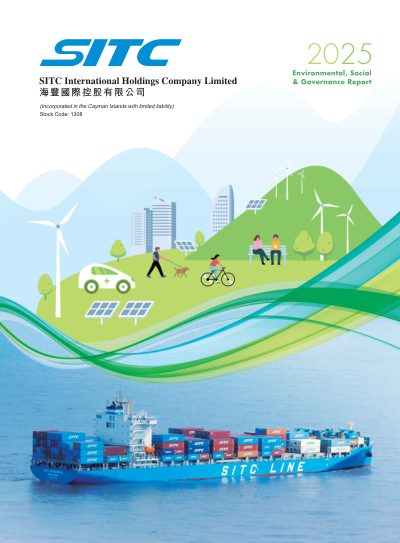
SITC International Holdings Company Limited
Water Transportation · Hong Kong · 2025
SITC International Holdings Company Limited’s 2025 Environmental, Social and Governance Report includes coverage of the method used for assessing sustainability-related risks through scenario analysis (p.190) and reports on the time horizon used in its resilience assessment (p.195). The report also indicates that a resilience assessment of the strategy and business model was performed, including qualitative and potentially quantitative elements (p.189). However, clear disclosures on the entity’s capacity to adjust or adapt its strategy and business model, key assumptions made in the analysis, and qualitative findings are unclear or not explicitly presented (pp.188, 195), and no quantitative findings or ranges were found.

Hang Lung Properties Limited
Real Estate · Hong Kong · 2025
Hang Lung Properties Limited’s Sustainability Report 2025 includes evidence of assessing the resilience of its strategy and business model to climate-related changes, with specific mention of the entity’s capacity to adjust or adapt its strategy and business model to climate change (p.218, p.226). The report also describes the use of scenario analysis to identify climate-related risks (p.228). However, the report does not clearly disclose key assumptions underlying the analysis (p.227) or the time horizon of the assessment (p.218), and it lacks qualitative or quantitative findings related to the resilience assessment.

Bank of America
None · United States · 2025
Bank of America's 2025 report provides covered disclosures on the method used, specifically scenario analysis, to identify climate-related opportunities and assess climate resilience (p.28), as well as the time horizon of assessment across multiple pathways (p.11). It also covers whether a resilience assessment was performed, describing how climate-related scenario analysis informs this process (p.27). However, the report is unclear on the implications for the company’s strategy and business model (p.27) and on key assumptions underlying the analysis (p.22), while qualitative and quantitative findings or ranges are not found.
✓ LRA AI Assistant · Human-in-the-loop

Ask the Study Studio AI Assistant about this disclosure
Get practical answers for your reporting context. Your first two answers are free — join LRA Community for free to continue without a limit.
TryHow do I prepare s1-41-42?What data do I need to collect?Where can I see a real-report example?What mistakes should I avoid?
2 free answers
Check your understanding
Scenarios to work through
A reporting team has tested how the business would cope if carbon costs rise faster than planned and a key supplier is delayed for six months. The draft note says the company is 'well placed for the future' but does not explain what was tested or what changed in the plan.
QShould the disclosure spell out the assessment approach, the main assumptions, and what the test means for the strategy and operating model?
Reveal model answer →Hide answer ↑Yes. The write-up should explain whether a resilience check was carried out, describe the method used, set out the main assumptions, and then link the findings back to the strategy and business model in plain terms. If the team used a forward-looking stress test or similar tool, that should be identified, and the result should show what parts of the plan look robust and what parts may need adjustment.
Why this matters · A resilience disclosure should connect the testing approach to the practical effect on strategy and the way the business is run.
A finance team has modelled two future paths over a five-year period: one with stable demand and one with a sharp fall in sales in year three. The paper includes the numbers, but it does not say which assumptions drove the outcome or whether the result was a single figure or a range.
QHow should the team present the findings so readers can understand the judgement behind them?
Reveal model answer →Hide answer ↑The team should explain the key assumptions that shaped the assessment and present the outcome in a way that matches the analysis. If the result is not a single point estimate, a range is acceptable, provided it is clear what the range represents and why it was used. The explanation should make it possible to see how the assumptions feed into the conclusion about resilience.
Why this matters · Readers need to see both the assumptions and the form of the result so they can judge how robust the conclusion is.
A preparer has only done a qualitative review because the business has not yet built a full numerical model. The draft says the company 'considered resilience' but gives no time period and no detail on what the review found.
QCan the disclosure stop at a general statement, or does it need to say more about the period assessed and the nature of the findings?
Reveal model answer →Hide answer ↑It needs more than a general statement. The disclosure should say whether a resilience assessment was performed, identify the time period covered, and summarise the qualitative outcome in a way that is useful to users. If no numerical output is available, the narrative still needs to explain what the review showed about the business's ability to cope with the conditions considered.
Why this matters · Even when the assessment is mainly narrative, the period covered and the substance of the findings still need to be clear.
A group has run a scenario exercise and found that, under one adverse path, margins fall by 8% in year two and capital spending must be delayed by 12 months. The draft report mentions the numbers but does not explain whether the exercise was actually used to assess resilience or how the result affects the business model.
QWhat should the preparer check before finalising the note?
Reveal model answer →Hide answer ↑The preparer should confirm that the method is described in a way that shows how the assessment was done, not just the numbers produced. If scenario analysis was the tool used, that should be made clear, along with the main assumptions, the quantitative outcome or range, and the practical implications for strategy and the business model. The note should read as an assessment of resilience, not just a list of outputs.
Why this matters · A good disclosure shows the method, the assumptions, the result, and the business implications as one connected story.
Framework references
Relevant IFRS / ISSB requirements and related disclosures
Available framework references and nearby disclosures relevant to preparing this requirement.
IFRS / ISSB
s1-41-42
within IFRS S1: General Requirements for Disclosure of Sustainability-related Financial Information
Open official source →Related & explore
FAQ
Questions this page answers
For s1-41-42, what data do I need to gather before I start drafting the disclosure?+−
The page says to prepare seven datapoints: strategy impacts, planning assumptions, assessment method, assessment findings, assessment ranges, assessment period and the resilience check. Use those as your starting checklist before you draft anything.
How do I use the step-by-step preparation section for s1-41-42 in practice?+−
Use it as a working sequence for getting from raw information to a draft disclosure. The page is set up to help you define scope, collect the right inputs, and then turn them into a report-ready narrative.
What should I include in the evidence pack for s1-41-42 if I want to be assurance-ready?+−
The page includes an evidence pack with five items to support assurance readiness. Build your file set around those items so you can show where the numbers and narrative came from if someone reviews them.
What are the six assurance claims I need to verify for s1-41-42?+−
The page says there are six assurance claims to check, each with a claim, risk and evidence angle. Use that section to test whether your draft is supported and whether the evidence pack is complete enough for review.
What are the common reporting gaps or mistakes on the s1-41-42 page, and how do I avoid them?+−
The page lists common gaps and mistakes to watch for when preparing the disclosure. Use that list as a pre-submission check so you can spot missing scope, weak evidence or unclear methodology before the draft goes out.
How do I use the synthetic example disclosure on s1-41-42 without copying it into my report?+−
Treat the example as a model for structure, level of detail and how the narrative can connect to the data table. It is synthetic and illustrative, so it is there to help you draft your own version, not to be reused as-is.
What is the best way to turn the s1-41-42 example table into my own draft output?+−
Use the example table to see how quantitative information can be presented alongside the narrative. The page also gives visualisation ideas, narrative starters and a content-index line to help you turn the inputs into a draft.
How do I use the Prep & Assurance workbook for s1-41-42?+−
The Download Centre includes a Prep & Assurance workbook in .xlsx format. Use it to organise the preparation steps, track the evidence you need and keep the disclosure work moving toward an assurance-ready draft.
What is the printable Library Card PDF for s1-41-42 for?+−
The Download Centre includes a printable Library Card in PDF format. Use it as a quick reference while you work through the disclosure, especially if you want a paper checklist alongside the workbook.
Can I reuse data from an ESRS 2 General Disclosures process for s1-41-42?+−
The page notes ESRS 2 as the closest correspondence, so the data may be reusable where your internal information already covers the topic. It does not say the frameworks are identical, so you still need to check the page’s own datapoints and evidence needs.
More questions this page can help with
s1-41-42 IFRS S1 general requirements disclosure checklist for sustainability managers1-41-42 what evidence do I need for assurance readinesss1-41-42 how to prepare the disclosure step by steps1-41-42 workbook download prep and assurance xlsxs1-41-42 printable library card pdfs1-41-42 common reporting mistakes and gapss1-41-42 synthetic example disclosure tables1-41-42 narrative starters and content index lines1-41-42 assessment method and assessment findings data pointss1-41-42 resilience check planning assumptions assessment rangess1-41-42 evidence pack five itemss1-41-42 closest ESRS correspondence general disclosures
How this library is built
312 published reports indexed
63171 pages with page-level citations
272 practitioner guides
Free · LRA Community
Get your s1-41-42 tools — free
Your preparation tools are free for LRA Community members and students. Register once (it's free) and your download starts right away — plus the Disclosure Library, templates and the LRA AI Assistant.
✓
You're in — your download is starting
Your file is downloading now. Your Community Cabinet — with the Disclosure Library, templates and the LRA AI Assistant — is ready too.
Open your Cabinet →