

Disclosure focus
This disclosure asks an organisation to explain how management is involved in overseeing and carrying out sustainability-related governance responsibilities. In practice, it is about showing where management has real responsibility, what it does, and how that role connects to the wider governance structure rather than leaving the topic only at board level.
The practical focus is on the organisation’s actual arrangements across the business: who is responsible, what decisions or monitoring they handle, and whether this applies broadly or only in certain parts of the organisation. A useful response should make clear the scope of management involvement, including whether it covers the whole organisation, specific business units, or only selected sites or functions.
This LRA educational guidance supports disclosure preparation. For the exact requirements, always refer to the official IFRS source.
Before you start
A quick mental checklist before you prepare this disclosure — tick each as you settle it.
Preparation
Key information to prepare
+ Show s1-27-b sub-elements (LRA working checklist)
Set out the controls and procedures that are used.
Identify any management role or committee that has been given this task.
Show how this work is linked with risk, finance, legal, internal audit, or similar functions.
Explain how the board or other oversight group keeps watch over the delegated role.
How to prepare it
1Map the controls and procedures you actually use for this disclosure, so you can show the process rather than a generic description.
2Identify who carries the delegated management responsibility, or which committee does so, and note the role in plain business terms.
3Set out how that work connects with risk, finance, legal, internal audit, or any other relevant team, using the wording your organisation uses internally.
4Gather the supporting evidence for each point, such as meeting papers, approvals, process notes, or other records that show the arrangement in practice.
5Prepare the final figures or narrative, then record any exclusions, changes in approach, or updates so the reader can see what was included and why.
6Check the draft against the official source to confirm you have covered the required items and have not added, missed, or misstated anything.
Request the data
Request board delegation and oversight evidence
Translate the disclosure into an internal business question — then adapt it to your organisation's own language.
How is day-to-day sustainability oversight delegated, connected to other control functions, and kept under board supervision?
Use your organisation’s own governance terms first (for example, board, committee, executive forum, delegated lead, control functions), then map them to the disclosure. Keep the request in your internal language and check the source text before sign-off.
Weak request
Please provide the governance disclosure wording for management role in governance.
Why it fails: This asks for framework language rather than the underlying internal evidence. It does not tell the owner what records to pull, which governance bodies or control teams matter, or what period and entity boundary to cover.
Better request
Please send the board or committee papers, delegation note, and any reporting pack for [reporting period] that show which internal forum handles day-to-day sustainability oversight, how it connects with risk, finance, legal, internal audit, or other control teams, and how the board keeps watch over that arrangement. Please include the source documents, dates, and any changes during the period.
Industry examples
Draft your disclosure
Notes that turn data into a disclosure
LRA training templates — adapt them to your organisation, and check the official source before sign-off.
Method note
Describe the practical basis used to identify the controls, procedures, delegated responsibilities and oversight links included in the disclosure, and explain how you decided which governance arrangements to count or describe.
Context note
Explain what the governance setup shows about how sustainability matters are managed in practice, including where responsibility sits and how the different business functions support it.
Fluctuation statement
If the governance picture changed from the prior period, note whether that was due to a new control, a revised delegated role, stronger links with other functions, or a change in oversight arrangements.
Content index entry
s1-27-b Management role in governance — [location / page] / [notes]
Download Centre
Preparation tools & forms
Professional preparation tools for s1-27-b — free with an LRA Community membership. Register once (it's free) and every download unlocks, together with the Disclosure Library, templates and the LRA AI Assistant.
Free · Community members
Assurance readiness
For each claim, check the evidence
Evidence pack to prepare
Common reporting gaps
The information is presented without a date or as-at point.The scope or boundary of the statement is left undefined.Key terms are used inconsistently across the report.Material changes since the previous period are not disclosed.Assertions are made without supporting detail or a source record.Boilerplate is used that does not actually answer what is asked.
Common gaps
Mistakes to avoid when collecting the data
Asking the board team instead of the process owner
The request goes to directors’ support staff when the real evidence sits with the manager who runs the control, so the file comes back incomplete or second-hand.
Using framework labels instead of the business term
People are asked for a governance phrase they do not use internally, and they cannot map it to the committee, role or process they actually track.
Leaving the scope too loose
The team never pins down which business units, committees or delegated roles are in scope, so different contributors send data from different populations.
Mixing periods or cut-off dates
One source is pulled for the current quarter while another is taken from a later sign-off pack, which makes the evidence set inconsistent.
Combining unlike counting bases
Headcount-style totals, named-role lists and process descriptions are merged into one extract, even though they need to stay separate for clean review.
Dropping the original source labels
The extract loses the document titles, version marks or system tags that show where each item came from, so reviewers cannot trace it back.
Skipping evidence metadata
The pack contains the answer but not the date, owner, version or location of the underlying record, which leaves no audit trail for checking.
No sign-off trail on the draft
The collected material is circulated without a clear reviewer and approver record, so nobody can show who checked the inputs before drafting.
Where judgement is often needed
Newly acquired or sold parts of the business
Set a clear cut-off for when a business unit starts or stops being included, and explain any change in the management role narrative where the reporting perimeter has moved during the period.
Different local job titles for the same management role
Use one organisation-wide label for the delegated role or committee, then note any country-specific titles only where they help readers understand the same function across locations.
Mixed reporting lines across functions
If the role draws on risk, finance, legal, internal audit or other teams in different ways, describe the actual working arrangement rather than forcing a single structure that does not fit every unit.
Partial coverage of the organisation
Where the management role is only in place for some operations, explain which parts are covered, which are not, and why the boundary is set that way.
Timing of changes during the year
Choose a consistent point for reflecting a new delegation, committee change or oversight arrangement, and disclose that timing so readers can see whether the description is based on year-end or an earlier state.
Judgement between direct evidence and management estimate
If the description relies on interviews, policy review or other indirect evidence rather than a single formal record, say so and explain the basis used to support the wording.
Aggregation to protect sensitive people data
When naming individuals or small teams would create privacy issues, summarise the role at a higher level and state that the detail has been grouped to avoid identifying people.
Rounding and level of detail in role descriptions
If you simplify counts, dates or reporting lines for readability, keep the method consistent and make clear that the figures or descriptions are rounded or summarised.
Different governance practices by country
Where local entities use different control or oversight arrangements, explain whether the disclosure reflects the group-wide model, local practice, or a blend of both, and keep that choice consistent.
Examples
Illustrative examples
Synthetic, written by LRA — not from a company report, not text from any standard.
Illustrative (synthetic) example — Manufacturing
Our board receives a quarterly control pack that combines policy updates, incident trends, and assurance findings, and it uses that pack to steer how sustainability matters are handled across the group.
- Day-to-day coordination sits with a cross-functional sustainability steering group chaired by a senior executive, with members from risk, finance, legal, and internal audit.
- That group prepares recommendations, tracks actions, and escalates material issues to the board, while the board keeps formal oversight through scheduled reviews, challenge sessions, and approval of key decisions.
This example shows a board using regular reporting and a formal committee-style forum to manage sustainability work, with clear links into risk, finance, legal, and internal audit, and with directors retaining oversight of the delegated group.
Illustrative (synthetic) example — Retail
We run a monthly management dashboard that brings together control testing results, compliance updates, and finance impacts so that sustainability topics are reviewed alongside other business priorities.
- Operational ownership is delegated to a sustainability and compliance committee led by a senior manager, with input from risk, legal, finance, and internal audit teams.
- The board’s audit and risk committee receives a standing update from that committee, checks progress against agreed actions, and intervenes where issues need escalation or extra scrutiny.
This example shows a management committee carrying the operational workload, supported by several control functions, while the board’s committee keeps watch over the delegated arrangement and steps in when needed.
How companies report S1-27-b in practice
Examples of full and partial reporting practice. These are evidence-led reviews, not exact disclosure templates to copy.

Hang Lung Properties Limited
Real Estate · Hong Kong · 2025
Hang Lung Properties Limited’s Sustainability Report 2025 provides evidence that management uses controls and procedures to support the oversight of climate-related risks and opportunities, as detailed on page 188. The report also describes how oversight is exercised through a delegated management-level role or committee on page 222. However, the specific role of the Board Executive Committee in delegated management and the integration of these controls with other internal functions such as risk, finance, legal, or internal audit remain unclear, with related context found on pages 25 and 188 but without explicit disclosure.
Westports Holdings Berhad
Water Transportation — Ports and Services · Malaysia · 2025
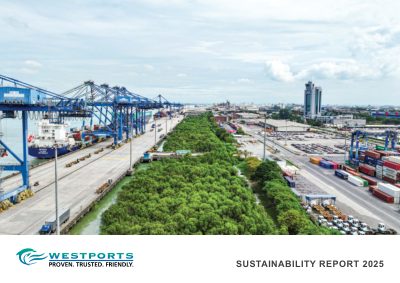
Westports Holdings Berhad’s 2025 Sustainability Report provides evidence of structured controls and procedures supporting oversight responsibilities, including audits and risk assessments, with management committees such as the Sustainability Committee playing a dedicated role (p.13). The report also indicates that sustainability-related risks and opportunities are embedded within Board oversight and the Enterprise Risk Management framework, influencing strategic planning and business decisions (pp.6, 16, 17). However, there is no clear evidence regarding integration with risk, finance, legal, internal audit, or other functions, nor is there specific information on oversight over delegated roles.

Hyundai Engineering & Construction Co.,Ltd.
Construction and Engineering · South Korea · 2025
Hyundai Engineering & Construction Co., Ltd.’s 2025 Sustainability Report provides coverage on the delegated management role committee and the oversight exercised over that role, both detailed on page 140. The report also references management’s role in governance processes, controls, and procedures used to monitor and manage climate-related risks and opportunities (p.140). However, disclosures on the specific controls and procedures used and the integration of sustainability-related risks with risk, finance, legal, or internal audit functions remain unclear, with only related context found on pages 138 and 140.
✓ LRA AI Assistant · Human-in-the-loop

Ask the Study Studio AI Assistant about this disclosure
Get practical answers for your reporting context. Your first two answers are free — join LRA Community for free to continue without a limit.
TryHow do I prepare s1-27-b?What data do I need to collect?Where can I see a real-report example?What mistakes should I avoid?
2 free answers
Check your understanding
Scenarios to work through
A finance director has asked the sustainability lead to run the day-to-day climate reporting process, with input from risk and internal audit. The board wants to know how that arrangement is controlled and who checks the work.
QWhat should the preparer explain about the way this delegated role is set up and monitored?
Reveal model answer →Hide answer ↑Describe the practical controls and checks around the delegated role, including how it links with other functions such as risk, finance, legal or internal audit, and how the board or its committees keep oversight of the work. The explanation should show both the assignment of the task and the supervision around it, using wording adapted to the organisation and checked against the source before sign-off.
Why this matters · Show both the delegation itself and the control framework around it, not just who does the work.
A sustainability committee has been given responsibility for preparing the climate section, while the main board receives a summary only at year end. The reporting team is unsure whether that committee arrangement is enough to describe in governance disclosures.
QHow should the team decide what to say about the committee’s role?
Reveal model answer →Hide answer ↑State clearly that a committee or similar management group has been given the task, and explain what part of the reporting process it handles. Keep the description factual and specific to the organisation, and make sure it is clear how that group sits within the wider governance setup before finalising the wording.
Why this matters · Name the delegated group and its job in plain language, with enough detail for readers to understand its place in the process.
The legal team reviews external climate claims, the finance team checks assumptions in the numbers, and internal audit tests the reporting controls. The sustainability manager is unsure whether these links need to be described together or separately.
QWhat is the right way to present the involvement of these other functions?
Reveal model answer →Hide answer ↑Bring out how the delegated reporting role is connected to the relevant support functions, whether that is risk, finance, legal, internal audit or another part of the business. The point is to show the joined-up process around the management role, not to list departments without explaining their contribution.
Why this matters · Explain the cross-functional links that support the delegated role and make the process credible.
A board committee has delegated climate reporting to management, but the board only receives a short dashboard and does not review the underlying controls. The reporting team is drafting governance text and is unsure whether that limited review is enough to mention.
QWhat should the disclosure make clear about oversight of the delegated role?
Reveal model answer →Hide answer ↑Explain how the board or its committees keep watch over the delegated work, including what they review and how they stay informed. If oversight is limited, describe it honestly and in a way that matches the organisation’s actual practice, then check the source wording before sign-off.
Why this matters · The disclosure should show real oversight of the delegated role, not just the existence of delegation.
Framework references
Relevant IFRS / ISSB requirements and related disclosures
Available framework references and nearby disclosures relevant to preparing this requirement.
IFRS / ISSB
s1-27-b
within IFRS S1: General Requirements for Disclosure of Sustainability-related Financial Information
Open official source →Related & explore
FAQ
Questions this page answers
For s1-27-b, what data do I need to gather before I start drafting the disclosure?+−
The page says to prepare four datapoints: controls and checks, delegated role or committee, cross-functional integration, and delegated role oversight. Use those as the starting checklist before you draft anything.
How do I use the step-by-step 'how to prepare' section for s1-27-b in practice?+−
Use it as a working sequence for collecting the right inputs, checking what evidence exists, and turning that into a draft. The page is designed to help you move from preparation to a report-ready output.
What should I include in the evidence pack for s1-27-b if I want to be assurance-ready?+−
The page includes an evidence pack with five items to support assurance readiness. Build it around the claims, risks and evidence approach shown on the page so you can show how the disclosure was prepared and checked.
What are the five assurance claims I need to verify for s1-27-b?+−
The page says there are five assurance claims to verify, each framed around a claim, risk and evidence. Use that structure to test whether your draft is supported and whether the evidence pack is complete.
What are the common reporting gaps or mistakes to avoid when drafting s1-27-b?+−
The page lists common reporting gaps and mistakes so you can spot weak spots before sign-off. Use that section as a pre-submission check against missing evidence, unclear ownership or incomplete drafting.
How should I assign ownership for the s1-27-b disclosure across HR, ESG and other teams?+−
The page points you to delegated role or committee, cross-functional integration, and delegated role oversight. In practice, that means you should show who owns the work, who contributes, and how oversight is tracked.
What does 'cross-functional integration' mean for the s1-27-b data collection process?+−
The page treats cross-functional integration as one of the datapoints to prepare, so it is something you should evidence rather than assume. Use it to show how different teams feed into the disclosure and how the information is coordinated.
How do I turn the s1-27-b page into a draft disclosure with narrative and visuals?+−
The draft-output section gives visualisation ideas, narrative starters and a content-index line. Use those to move from raw inputs to a structured draft that is easier to review and finalise.
Which download should I use for s1-27-b: the Prep & Assurance workbook or the printable Library Card?+−
The Download Centre offers both a Prep & Assurance workbook in .xlsx format and a printable Library Card in .pdf format. Use the workbook for working through the disclosure and the PDF if you want a quick reference copy.
Can I use the 'From company reports' table to find real examples for s1-27-b?+−
Yes. The page includes a table linking to real published reports at the pages where the topic is disclosed, which can help you see how others have presented similar information.
Is there an ESRS cross-reference for s1-27-b, and can I reuse the same data?+−
The page says the closest ESRS correspondence is ESRS 2 (General Disclosures). You can treat that as a useful cross-framework reference point and reuse the same underlying data where it fits your reporting process, but the page does not say the requirements are identical.
More questions this page can help with
s1-27-b disclosure checklist for controls and checks, delegated role or committee, cross-functional integration and delegated role oversightHow to build an evidence pack for s1-27-b IFRS S1 disclosures1-27-b assurance-ready workbook how to use the download centreWhat are the common mistakes in s1-27-b reporting and how do I avoid them?s1-27-b draft narrative starters and content index line examplesHow do I map ownership for s1-27-b across ESG, HR and data owners?What does the s1-27-b plain-language explainer cover?s1-27-b synthetic illustrative example disclosure tableWhere can I find company report examples for s1-27-b?s1-27-b ESRS 2 General Disclosures data reuseHow do I use the Prep & Assurance workbook for s1-27-b?s1-27-b assurance claims claim risk evidence
How this library is built
312 published reports indexed
63171 pages with page-level citations
272 practitioner guides
Free · LRA Community
Get your s1-27-b tools — free
Your preparation tools are free for LRA Community members and students. Register once (it's free) and your download starts right away — plus the Disclosure Library, templates and the LRA AI Assistant.
✓
You're in — your download is starting
Your file is downloading now. Your Community Cabinet — with the Disclosure Library, templates and the LRA AI Assistant — is ready too.
Open your Cabinet →