

Disclosure focus
This disclosure asks an organisation to explain whether it has formal policies that address how it manages impacts on affected communities, and what those policies cover in practice. The focus is on showing that the organisation has thought through the ways its activities can affect local people and communities, and that it has set out a consistent approach rather than relying on ad hoc responses.
In practical terms, the reporting should make clear how far those policies apply across the organisation’s activities, sites and value chain, not just at a few flagship locations. It should also help a reader understand whether the policy framework is embedded across relevant operations, how it is applied where community impacts are most likely, and whether there are any important gaps in coverage.
This LRA educational guidance supports disclosure preparation. For the exact requirements, always refer to the official European Commission source.
Before you start
A quick mental checklist before you prepare this disclosure — tick each as you settle it.
Preparation
Key information to prepare
+ Show S3-1 sub-elements (LRA working checklist)
Identify which community groups the policy applies to.
State the geographic area covered by the policy.
Set out the policy’s aims in plain terms.
Give the policy its formal name.
Describe the communities and locations within scope.
Say whether particular communities are covered.
List the kinds of communities included.
Indicate whether free, prior and informed consent is included.
Indicate whether there is a policy on Indigenous peoples.
Set out any specific provisions that apply.
How to prepare it
1Start by naming the policy or approach you are reporting on, then set out the area it applies to in business terms: which communities it covers and where those communities are located.
2List the kinds of communities included in the policy, using plain language that matches your own operating context rather than the standard’s labels.
3State the policy’s purpose in practical terms, so a reader can see what it is meant to achieve for the communities in scope.
4If the policy is aimed at particular communities, make that clear with a simple yes/no answer, then describe those community groups and the places they relate to.
5For any policy that addresses Indigenous peoples, confirm whether such coverage exists, then summarise the specific provisions it contains and whether it includes free, prior and informed consent.
6Before finalising, check your wording against the source material to make sure the scope, community types, geography, Indigenous coverage and consent point are all captured accurately, and note any exclusions or changes in a way that stays consistent with the official source.
Request the data
Request the community policy details from the policy owner
Translate the disclosure into an internal business question — then adapt it to your organisation's own language.
Which community-related policies apply, where do they apply, which community groups do they cover, what are they meant to achieve, and do they include any special provisions for Indigenous communities or free, prior and informed consent?
Use your organisation’s own policy names and internal labels first, then map them to the reporting fields. Avoid framework wording in the request unless that is already how your team talks internally. Check the source documents before sign-off.
Weak request
Please provide the ESRS S3:S3-1 policy disclosures for affected communities, including the policy scope, community types, objectives, Indigenous provisions, and FPIC coverage.
Why it fails: It uses framework language instead of the organisation’s own policy terms, so the owner may not know which documents to pull. It also bundles the request in reporting jargon rather than asking for the actual policy names, coverage, and wording used internally.
Better request
Please send the current community policy pack for [reporting period] across [boundary]. For each policy, include the policy name, where it applies, which community groups it covers, what it is meant to achieve, and whether it includes any Indigenous-specific wording or any mention of free, prior and informed consent. Add the source document, version, approval date, and owner.
Industry examples
Draft your disclosure
Notes that turn data into a disclosure
LRA training templates — adapt them to your organisation, and check the official source before sign-off.
Method note
Describe how the organisation defined the communities in scope, the places covered, and any separate treatment for Indigenous communities, including whether free, prior and informed consent was built into the policy.
Context note
Explain what the figures show about the organisation’s approach to community-related impacts, including which groups are covered, where the policy applies, and whether Indigenous communities are addressed separately.
Fluctuation statement
If the coverage changed from the prior period, note whether the change came from a wider or narrower geographic reach, a revised list of communities, or the addition or removal of Indigenous-specific provisions.
Content index entry
S3-1 Policies (Affected Communities) — [location / page] / [notes]
Download Centre
Preparation tools & forms
Professional preparation tools for S3-1 — free with an LRA Community membership. Register once (it's free) and every download unlocks, together with the Disclosure Library, templates and the LRA AI Assistant.
Free · Community members
Assurance readiness
For each claim, check the evidence
Evidence pack to prepare
Common reporting gaps
The information is presented without a date or as-at point.The scope or boundary of the statement is left undefined.Key terms are used inconsistently across the report.Material changes since the previous period are not disclosed.Assertions are made without supporting detail or a source record.Boilerplate is used that does not actually answer what is asked.
Common gaps
Mistakes to avoid when collecting the data
Wrong policy owner
People often ask the wrong team for the source policy, so the data comes from a group that does not actually hold the community policy record.
Framework language instead of business terms
Teams sometimes ask for the information using reporting jargon, which confuses the business owner and leads to an answer that does not match how the organisation names the policy.
Scope left undefined
The collector may fail to pin down which communities and which places are in scope, so the source data is gathered on an inconsistent boundary.
Timing basis not fixed
Data is sometimes pulled from the wrong date or period, which means the policy snapshot does not match the reporting cut-off used elsewhere.
Counting basis mixed up
One request can blend different ways of grouping communities, so the same population is counted under more than one basis and the result is not comparable.
Source labels stripped out
Original file names, system tags, or local category labels are often removed during collection, making it hard to trace the data back to the first record.
Separate groups merged
Distinct community groups are sometimes rolled into one combined dataset, which hides differences that should stay separate for the disclosure.
Evidence trail incomplete
The team may save the figures but not the supporting metadata, so there is no clear record of where the data came from or who checked it.
No sign-off record
Collection can finish without a documented review trail, leaving no proof of who approved the source data before it moved forward.
Where judgement is often needed
What counts as in-scope communities after a buy or sell transaction
Set the policy boundary using the group structure and sites you control for the reporting period, then explain any additions or removals linked to acquisitions or disposals and the date from which they were treated as covered.
How to handle different local labels for the same community group
Map local legal or social labels to one internal category set, disclose the mapping you used, and note where the same population is described differently across countries.
Communities near the edge of a site or project footprint
Decide and explain the rule for people who are close enough to be affected but not inside the core area, and state whether you included them because the policy is meant to cover likely impact rather than only direct neighbours.
Whether a policy applies to all affected communities or only named groups
If the policy is limited to certain community types or places, say which groups are covered and which are left out, and make clear the basis for that selection.
Using a current-year view versus a longer-term view for coverage
Choose one timing basis for the policy description, such as the position at period end or the average position over the year, and disclose that basis so readers can compare periods consistently.
Relying on estimates where site-level records are incomplete
Use the best available internal records or reasonable estimates where direct counts are missing, identify which parts are estimated, and explain the method used to fill the gaps.
Rounding small community counts or locations
Apply one rounding rule across the disclosure, keep subtotals and totals internally consistent, and note the rule if rounding changes the apparent coverage of small groups.
Protecting personal data when the community list is sensitive
Aggregate the information enough to avoid identifying individuals or small groups, explain the level of grouping used, and make clear that privacy protection shaped the way the policy coverage was presented.
Examples
Illustrative examples
Synthetic, written by LRA — not from a company report, not text from any standard.
Illustrative (synthetic) example — Utilities
We set out a community engagement policy that applies across our operations and project areas in three countries, covering nearby residents, local businesses and other affected groups. The policy aims to guide how we identify, consult and support those communities; it also states that it applies to named local areas where we have major sites, and it includes a separate section for Indigenous peoples, with a commitment to free, prior and informed consent where relevant.
- Policy name: community engagement and local impact policy
- Coverage: communities around our operating sites and development projects in the UK, Ireland and Spain
- Community groups covered: residents, small enterprises and civic groups; Indigenous peoples are covered under the dedicated section
- Purpose: to shape consultation, impact management and benefit-sharing with affected communities
- Named communities: yes, for 4 local areas out of 4 covered areas (100%)
- Indigenous provisions: yes, including cultural heritage protection, tailored consultation steps and FPIC where applicable
This is a synthetic, practitioner-style example showing how a reporter might describe a community policy in plain language while still covering the required points.
Illustrative (synthetic) example — Food and agriculture
Our land and community relations policy applies to farming clusters, processing sites and transport corridors in two regions, and it focuses on households, seasonal workers and local service providers who may be affected by our activities. It also has a dedicated Indigenous peoples section, with extra safeguards for culturally important places, a process for early dialogue and a commitment to free, prior and informed consent where our work could affect those communities.
- Policy name: land and community relations policy
- Coverage: communities linked to our farms, mills and logistics routes in two regions
- Community groups covered: households, seasonal workers and local service providers; Indigenous peoples are addressed separately
- Purpose: to manage social impacts, maintain access to livelihoods and support respectful engagement
- Named communities: yes, for 3 of 5 local community groups identified (60%)
- Indigenous provisions: yes, including protection for culturally important places, early dialogue and FPIC where relevant
This is a second synthetic example with a different sector and a different mix of community groups, while still covering the same disclosure points.
How companies report S3-1 in practice
Examples of full and partial reporting practice. These are evidence-led reviews, not exact disclosure templates to copy.
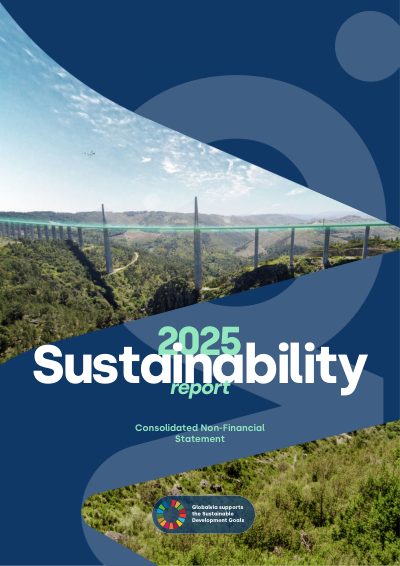
Globalvia
Ground Transportation — Highways and Railtracks · Spain · 2025
Globalvia’s 2025 Sustainability Report includes a Human Rights and Community Relations Policy relevant to affected communities, explicitly referenced on page 76. The report also mentions processes for engaging with communities and channels for affected communities to raise concerns, though the disclosure on remediation processes is unclear (p.107, p.121). However, the report lacks clear headline values or detailed quantitative data on affected communities, with only partial context on geographic scope and population groups provided on page 19.

Redeia Corporación, S.A.
Electric Utilities / IPP / Energy Traders · Spain · 2025
Redeia Corporación’s 2025 report provides covered disclosure on policies related to affected communities, processes for engaging with them about impacts, and remediation procedures, notably detailed on page 152. There is partial supporting context on community engagement and inclusion in purchasing policies on page 179, but no headline values are provided. Several datapoints remain unclear or not found, including a clear disclosure of management mechanisms (p.4) and other narrative items with no quotable evidence throughout the report.

Saipem SpA
Oil and Gas · Italy · 2025
Saipem SpA’s 2025 Consolidated Sustainability Statement provides some evidence on engagement with communities, including indigenous populations, and local initiatives such as construction projects, as noted on page 35. The report mentions adapting company strategies through annual Local Community Initiatives Plans, but this is presented in a related context without clear disclosure of specific actions or outcomes (p.35). Notably, there is no direct, quotable evidence found elsewhere in the report explicitly addressing affected communities or detailed policies, indicating limited coverage of this disclosure overall.
✓ LRA AI Assistant · Human-in-the-loop

Ask the Study Studio AI Assistant about this disclosure
Get practical answers for your reporting context. Your first two answers are free — join LRA Community for free to continue without a limit.
TryHow do I prepare S3-1?What data do I need to collect?Where can I see a real-report example?What mistakes should I avoid?
2 free answers
Check your understanding
Scenarios to work through
A preparer is drafting the community policy summary for a mining site and has a short internal note that names the policy, the districts it covers, the local groups included, and the aim of the policy. The note also mentions a separate line for nearby villages, but it does not say whether that line is part of the same policy or a different one.
QShould the disclosure clearly separate the policy name, where it applies, which community groups it covers, and what it is meant to achieve?
Reveal model answer →Hide answer ↑Yes. The write-up should let a reader see the policy title, the places it applies to, the kinds of communities it covers, and the purpose behind it as distinct pieces of information. If the organisation has a separate policy or a narrower add-on for a particular area or group, that should be identified rather than blended into a vague summary.
Why this matters · Keep the policy label, coverage, community groups and purpose distinct so the reader can understand the scope at a glance.
A company operates in three countries and has one group-wide community policy, but only two of the countries have communities that the policy was written to address directly. The draft report currently says the policy applies everywhere, without naming the places or the community types it was designed for.
QHow should the preparer decide whether the policy is presented as broad group coverage or as something aimed at particular communities and geographies?
Reveal model answer →Hide answer ↑The preparer should match the description to how the policy actually works in practice. If it is a general policy, say so and describe the overall coverage. If it is aimed at particular communities or locations, identify those communities and the relevant geography rather than implying universal coverage that the policy does not have.
Why this matters · Describe the real reach of the policy, not a broader reach than the document supports.
An organisation has a policy for local residents near its facilities, and a separate section in the draft says it also covers Indigenous peoples. The team is unsure whether to include a yes/no statement for Indigenous coverage and, if yes, whether to add any special provisions and mention free, prior and informed consent where relevant.
QWhat should the preparer do when the policy includes Indigenous peoples in scope?
Reveal model answer →Hide answer ↑The preparer should state that Indigenous peoples are covered, then explain any specific provisions that apply to them. If the policy includes a provision on free, prior and informed consent, that should also be identified. The point is to show both the inclusion and the extra safeguards or rules that sit alongside it.
Why this matters · When Indigenous peoples are covered, show both the inclusion and any extra protections or process steps tied to them.
A sustainability team has a draft policy for affected communities, but the wording only says the company aims to be a good neighbour. It does not explain whether the policy is meant to prevent harm, support engagement, or guide how the business responds to community concerns, and it does not say which community types or places are in scope.
QWhat level of detail should the preparer include so the policy can be understood as more than a general statement of intent?
Reveal model answer →Hide answer ↑The preparer should add enough detail to show what the policy is for, who it covers, and where it applies. That means naming the community groups in scope, the relevant geography, and the practical aim of the policy, rather than leaving it as a broad goodwill statement with no operational meaning.
Why this matters · A policy summary should explain purpose, coverage and location so it reads as a working policy, not a slogan.
Framework references
Relevant ESRS requirements and related disclosures
Available framework references and nearby disclosures relevant to preparing this requirement.
Primary
Related & explore
FAQ
Questions this page answers
How do I use the S3-1 Affected Communities page to draft the disclosure from scratch?+−
Start with the plain-language explainer, then work through the step-by-step preparation section and the datapoints list. The page also gives draft-output ideas, so you can turn the collected information into a first-pass narrative rather than starting from a blank page.
What data do I need to collect for S3-1 Affected Communities before I start writing?+−
The page lists the datapoints to prepare: policy title, community coverage, covered community groups, policy aims, community coverage flag, community categories, place coverage, Indigenous policy flag, Indigenous provisions, and FPIC coverage flag. Use that list as your collection checklist so you can see what is already available and what still needs to be requested from data owners.
How should I decide the scope for S3-1 Affected Communities in practice?+−
Use the page’s coverage fields to define scope consistently: community coverage, covered community groups, community categories, place coverage, and the relevant flags. The page is designed to help you set a clear boundary for what is included in the disclosure before you draft the narrative.
Who should own the S3-1 Affected Communities inputs in my organisation?+−
The page is set up for use by sustainability/ESG managers, HR or data owners, and assurance reviewers, so ownership should sit with the people who can confirm the policy details and coverage fields. In practice, assign each datapoint to a named owner so the evidence pack can be assembled without last-minute chasing.
What should I put in the evidence pack for S3-1 Affected Communities?+−
The page includes an evidence pack with five items for assurance readiness, so use that as the core file set supporting the disclosure. Build the pack around the policy document, coverage information, and any supporting records that show how the datapoints were determined.
What are the six assurance claims I need to verify for S3-1 Affected Communities?+−
The page says there are six assurance claims to verify, each with a claim, risk and evidence prompt. Use those claims to test whether the disclosure is complete, internally consistent, and backed by documents before it goes to review.
What are the common reporting gaps or mistakes on the S3-1 Affected Communities page?+−
The page lists common reporting gaps and mistakes to help you spot weak points before submission. Use that section as a pre-check against missing datapoints, unclear scope, or unsupported statements in the draft.
How do I use the workbook download for S3-1 Affected Communities?+−
The Download Centre includes a Prep & Assurance workbook in .xlsx format. Use it to organise the datapoints, track evidence, and prepare the disclosure in a way that is easier to review and assure.
What is the printable Library Card PDF for S3-1 Affected Communities used for?+−
The Download Centre also includes a printable Library Card in PDF format. It is a quick reference version of the page content, useful when you want the disclosure checklist and key prompts in a compact format.
How can I turn the S3-1 Affected Communities data into a draft narrative?+−
Use the draft-output section, which provides visualisation ideas, narrative starters, and a content-index line. That lets you move from the datapoints and evidence into a structured draft that is easier to sense-check and finalise.
More questions this page can help with
What should I check before I mark the community coverage flag in S3-1 Affected Communities?How do I make sure the covered community groups and community categories are consistent in the S3-1 Affected Communities workbook?What evidence should I keep to support the Indigenous policy flag and Indigenous provisions fields?How do I use the FPIC coverage flag when preparing the S3-1 Affected Communities disclosure?What is the best way to assign each S3-1 Affected Communities datapoint to a data owner?How do I use the synthetic illustrative example on the S3-1 Affected Communities page without copying it into my report?What should I do if my S3-1 Affected Communities draft is missing one of the listed datapoints?How can an assurance reviewer use the six claims and evidence pack on the S3-1 Affected Communities page?Where do I find real company report examples for S3-1 Affected Communities on the page?How do I use the content-index line from the S3-1 Affected Communities page in a draft report?What is the quickest way to move from the plain-language explainer to a first draft for S3-1 Affected Communities?How do I avoid common reporting gaps when preparing S3-1 Affected Communities?
How this library is built
312 published reports indexed
63171 pages with page-level citations
272 practitioner guides
Free · LRA Community
Get your S3-1 tools — free
Your preparation tools are free for LRA Community members and students. Register once (it's free) and your download starts right away — plus the Disclosure Library, templates and the LRA AI Assistant.
✓
You're in — your download is starting
Your file is downloading now. Your Community Cabinet — with the Disclosure Library, templates and the LRA AI Assistant — is ready too.
Open your Cabinet →