MAS Sets Transition Planning Baseline
The new MAS guidelines give financial institutions a clearer supervisory reference point for transition planning. They place the subject within environmental risk management, not only within disclosure.
The Monetary Authority of Singapore (MAS) has issued final transition planning guidelines for banks, insurers and asset managers. MAS has now moved from consultation to published supervisory expectations, giving financial institutions a clearer regulatory reference point for how transition planning should be integrated into environmental risk management.
The MAS Package
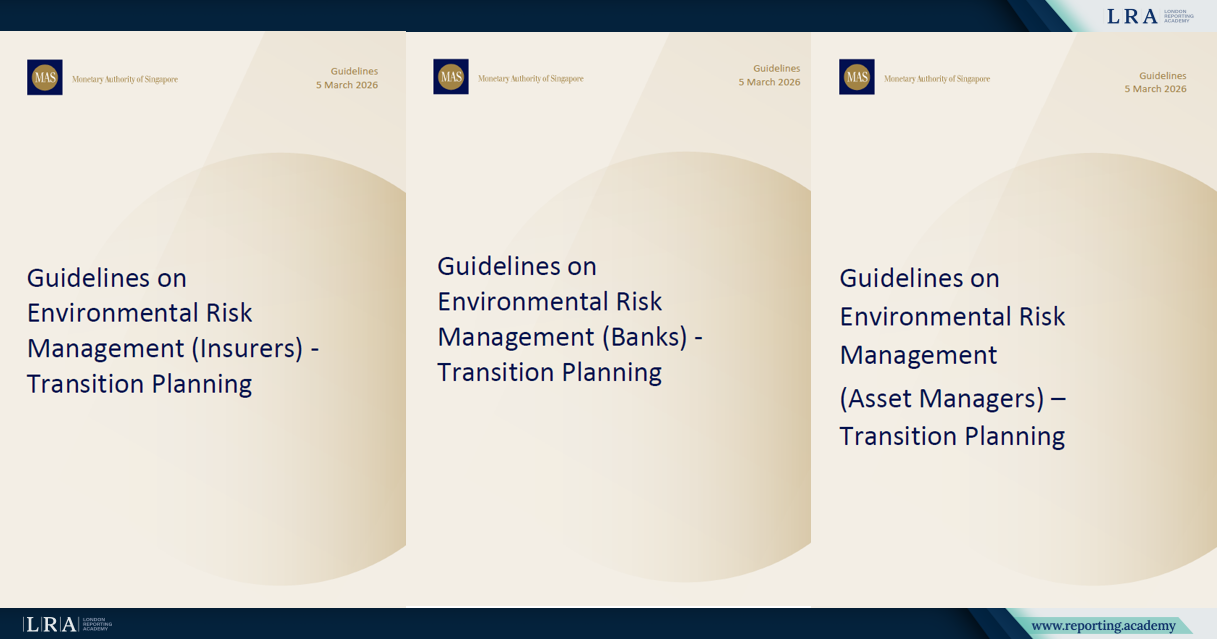
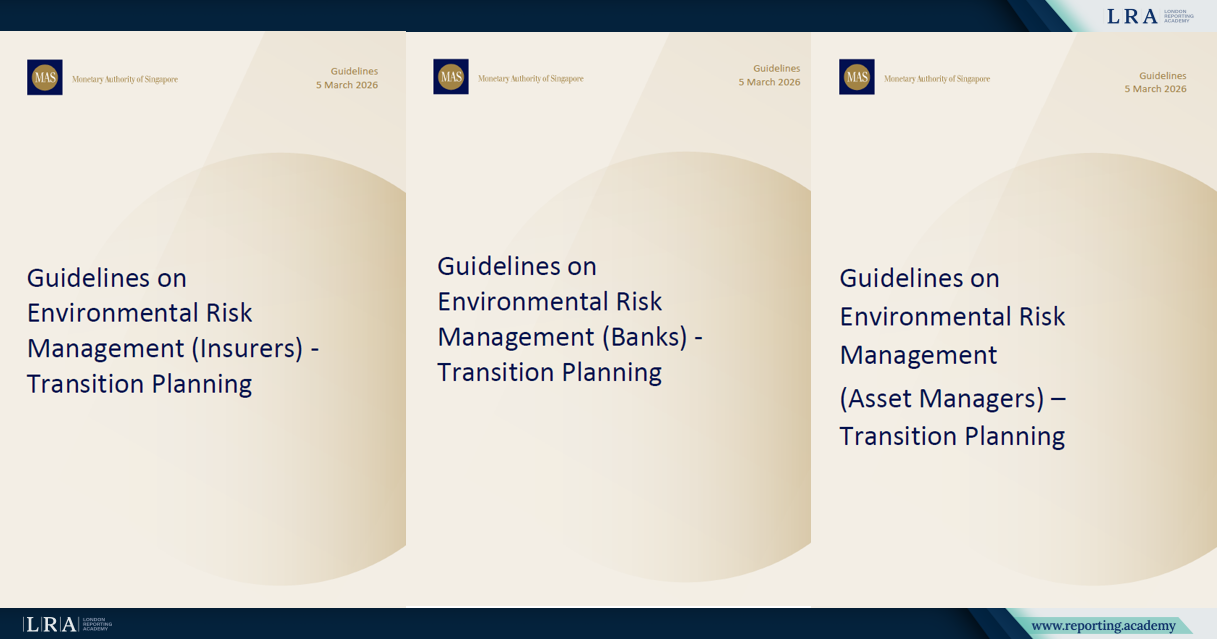
On 5 March 2026, MAS announced guidelines on transition planning for financial institutions and published sector-specific documents for banks, insurers and asset managers. In the source materials, these appear as the Guidelines on Environmental Risk Management (Banks) - Transition Planning, Guidelines on Environmental Risk Management (Insurers) - Transition Planning, and Guidelines on Environmental Risk Management (Asset Managers) - Transition Planning. MAS presents them as addenda to the Guidelines on Environmental Risk Management issued in 2020.
The documents sit within MAS’ environmental risk management framework, not as a separate reporting statute. The sources describe them as setting out MAS’ supervisory expectations for institutions to have a sound transition planning process that supports effective climate change mitigation and adaptation and addresses transition and physical risks.
A transition plan, as described in the guidelines, is a documented output of the transition planning process and may sit in internal documents or be externally disclosed.
Status and Enforceability
The current status is clear: these are final guidelines, not proposals.
The package does not create a new standalone legal duty to publish a public transition plan in a prescribed format. It shows a supervisory model in which institutions should establish a transition planning process in a risk-proportionate manner, with implementation expected to mature as practices, data and methodologies evolve. The emphasis is on the process MAS expects institutions to build, with disclosure treated as a possible output rather than the sole objective.
Scope and Timing
The package is sectoral in scope. MAS has issued separate transition planning guidelines for banks, insurers and asset managers, signalling that expectations are being applied through sector-specific environmental risk management guidance rather than through a single cross-sector rulebook.
MAS says financial institutions should establish the process in a risk-proportionate manner, taking account of factors such as the institution’s risk profile. The guidelines will take effect from September 2027, after an 18-month transition period.
The timing is both practical and defined. MAS acknowledges limits in current data and methodologies, while still setting a clear date from which the guidelines take effect.
How MAS Frames Transition Planning
The significance lies less in the release of another climate-related document than in how MAS frames transition planning. MAS places it within supervised environmental risk management, not as a stand-alone disclosure exercise.
If transition planning can generate either internal documentation or external disclosure, disclosure is only one possible output of the process. This means the quality of any external communication will depend on governance, decision-making and evidence upstream.
MAS’ language on mitigation, adaptation, and transition and physical risks also indicates that the subject is broader than a net zero statement or a financing target.
Operational Implications
The MAS package does not prescribe a public format. Its practical effect is to clarify the transition planning process financial institutions are expected to establish. MAS positions transition planning within environmental risk management as a supervisory expectation, which points institutions first to governance, ownership and decision-making before disclosure considerations.
A second implication concerns evidence and methodology. MAS says institutions should establish the process in a risk-proportionate manner and also recognises that practices, data and methodologies will continue to evolve. That places weight on how institutions support transition planning with evidence, explain assumptions, and account for current limitations in data and methods.
Disclosure remains relevant, but as one possible output of the process rather than its only purpose. The guidelines describe a transition plan as a documented output of transition planning that may remain internal or be externally disclosed. The key issue is how any external narrative connects back to governance, decision-making and evidence.
The sector split also matters. MAS has issued separate guidance for banks, insurers and asset managers, while stating that institutions should establish the process in a risk-proportionate manner, taking account of factors such as risk profile. This suggests that institutions should interpret the expectation through their own business model and exposures rather than assume a single operational template across all three sectors.
Sequencing matters too. The guidance points first to establishing a sound transition planning process and then to the documented output of that process, not to a prescribed public template. Institutions will therefore need to decide what should be settled in governance and risk management before deciding how transition planning is reflected externally.
Next Points to Monitor
The focus now shifts to implementation ahead of September 2027. Institutions will need to use the transition period to organise governance, evidence and disclosure choices around a single transition planning process, while data and methodologies continue to evolve.