ISSB Updates SASB Guidance for Three Industries
The ISSB’s latest proposals to update the SASB Standards and IFRS S2 industry-based guidance mark a further shift towards a more coherent global baseline for sustainability reporting and clarify how industry-specific disclosures complement the requirements of IFRS S1 and IFRS S2 for investors.
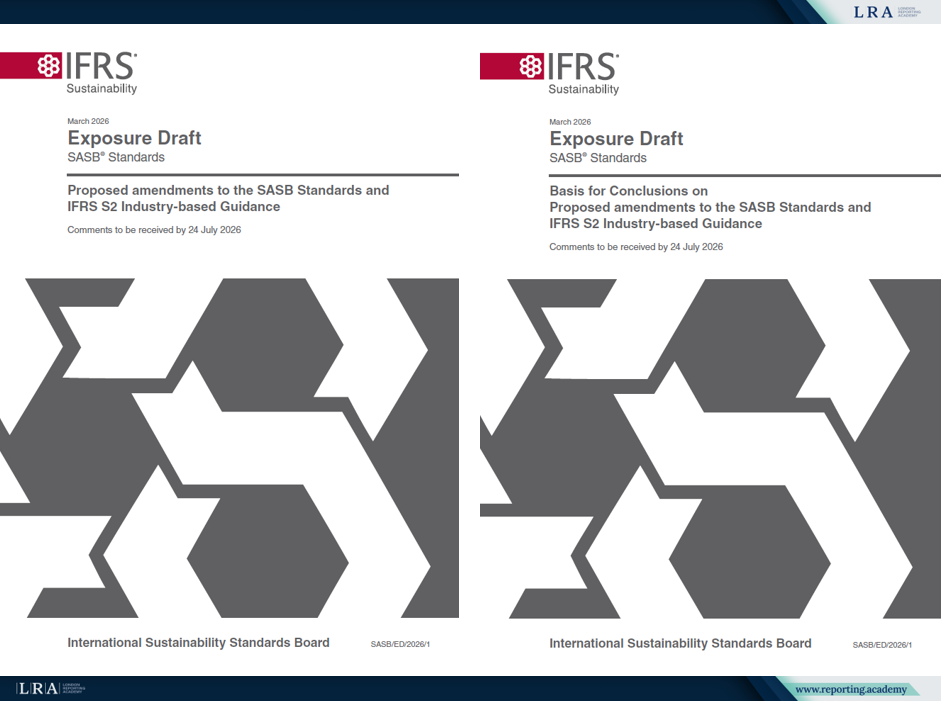
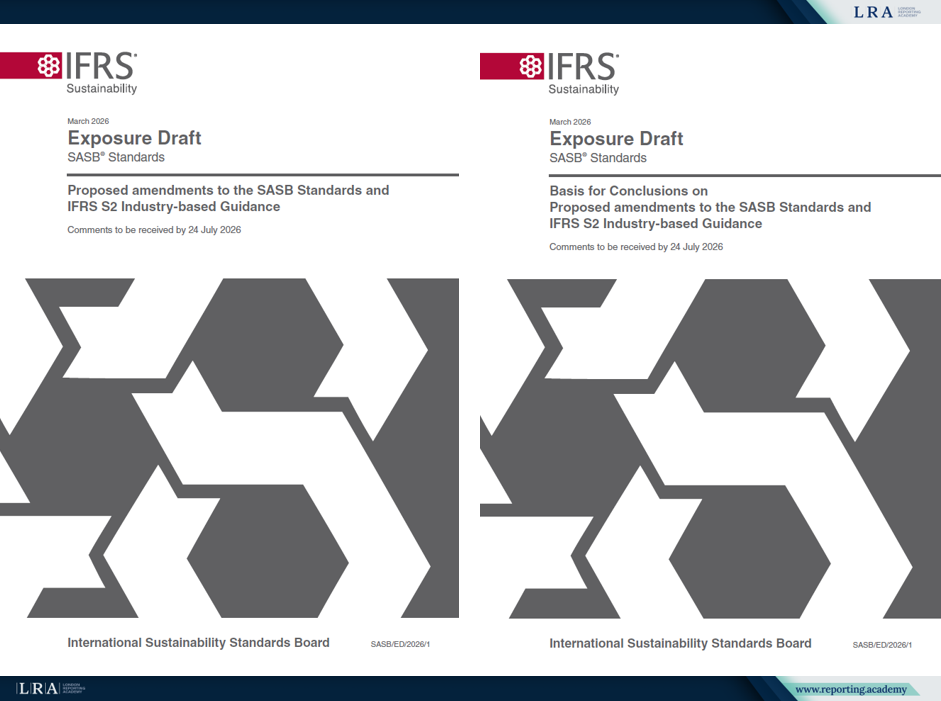
The International Sustainability Standards Board (ISSB) has opened a public consultation on proposed amendments to three Sustainability Accounting Standards Board (SASB) Standards, together with related changes to the Industry-based Guidance on Implementing IFRS S2 Climate-related Disclosures. The consultation, which runs until 24 July 2026, forms part of the ISSB’s 2024–2026 work plan to enhance the SASB Standards and support high-quality application of IFRS S1 and IFRS S2.
The proposal represents a further step in aligning industry-based SASB Standards with IFRS Sustainability Disclosure Standards, with the aim of supporting more consistent climate-related and sustainability disclosures across industries.
Exposure Draft: Focus and Content
In March 2026, the ISSB published an Exposure Draft setting out proposed amendments to three SASB Standards: Agricultural Products, Meat, Poultry & Dairy, and Electric Utilities & Power Generators. The Exposure Draft also includes proposed consequential amendments to the IFRS S2 industry-based guidance so that it remains aligned with the climate-related content in the SASB Standards.
These three Standards form part of a group of 12 prioritised SASB Standards that the ISSB selected for staged enhancement as part of its project on Enhancing the SASB Standards. Nine of these Standards were already the subject of a July 2025 Exposure Draft, and the March 2026 proposals complete the set of enhancements for this initial group. Across the three industries now in focus, the ISSB proposes to revise and expand disclosure topics and metrics in areas such as:
- greenhouse gas emissions,
- water management,
- land use and ecological impacts,
- workforce topics,
- environmental and social supply chain management,
- food loss and waste,
- animal health and welfare,
- energy affordability,
- demand-side management,
- operational resilience.
The amendments are drafted on the basis that entities would use the SASB Standards as a source of industry-based guidance when applying IFRS S1 General Requirements for Disclosure of Sustainability-related Financial Information and IFRS S2 Climate-related Disclosures. The proposals seek to enhance the international applicability of the Standards, improve clarity and conciseness for preparers, and align concepts and terminology more closely with IFRS Sustainability Disclosure Standards.
Status, Timing and Scope
The Exposure Draft has been ratified by the ISSB and is open for comment until 24 July 2026. Until the ISSB considers feedback and issues final amendments, the proposals have no mandatory effect.
The ISSB proposes that the amendments to the SASB Standards and the related consequential amendments to the IFRS S2 industry-based guidance would become effective 12 to 18 months after issuance, with early application permitted. The Board intends to decide on the specific effective date after reviewing stakeholder comments on the Exposure Draft.
The proposals apply to entities that use the SASB Standards for the Agricultural Products, Meat, Poultry & Dairy, and Electric Utilities & Power Generators industries as a source of guidance in meeting the requirements of IFRS S1 and IFRS S2. The ISSB continues to use the Sustainable Industry Classification System (SICS) to group entities into industries with shared sustainability-related risks and opportunities and has kept that structure as the basis for the proposed amendments.
In Agricultural Products and Meat, Poultry & Dairy, the ISSB proposes to revise industry descriptions and activity metrics, broaden the scope to reflect direct farming operations where relevant, and update disclosure topics and metrics on areas such as greenhouse gas emissions, water and land use, food safety, food loss and waste, labour conditions, workforce health and safety, environmental and social supply chain management and, for Meat, Poultry & Dairy, animal health and welfare and product innovation. In Electric Utilities & Power Generators, the proposals cover topics including greenhouse gas emissions and energy resource planning, air and water management, hazardous waste, ecological impacts, community relations and Indigenous Peoples’ rights, energy affordability, workforce topics, demand-side management, supply chain management, critical incident risk management and operational resilience and system reliability.
Across all three industries, the ISSB emphasises that the proposed amendments are intended to result in decision-useful information about sustainability-related risks and opportunities that could reasonably be expected to affect entities’ prospects, while remaining cost‑effective for preparers.
Implications for Reporting Work
For reporting teams, the proposals sharpen how SASB topics and metrics can be used under IFRS S1 and IFRS S2 by focusing on industry-specific risks and opportunities that could reasonably be expected to affect entities’ prospects. The project is intended to keep SASB disclosure topics and metrics aligned with evolving sustainability-related risks, practices and measurement approaches, and with the language and concepts in IFRS Sustainability Disclosure Standards.
In practical terms, entities using SASB Standards as industry-based guidance will need to compare the revised topics and metrics with their current SASB-based information and identify where updates would change the sustainability-related information they provide to investors in the three industries. Teams will also need clarity on internal responsibilities for applying updated SASB content under IFRS S1 and IFRS S2 and on how the final effective date and any early application decision might affect their reporting cycles.
Because IFRS S1 and IFRS S2 already rely on the idea of using all reasonable and supportable information available without undue cost or effort, that proportionality concept would continue to frame how entities use the amended SASB Standards as guidance. This offers a familiar reference point when judging the extent of data collection and reporting for revised metrics.
Interoperability and Next Steps
Interoperability with other sustainability-related standards and frameworks is a prominent feature of the project. The ISSB has highlighted opportunities to enhance alignment between the SASB Standards and the GRI Standards and the recommendations of the Taskforce on Nature-related Financial Disclosures (TNFD), in line with Memoranda of Understandingagreed with those organisations.
The Basis for Conclusions notes that some proposed amendments draw on disclosures specified in GRI Standards or on TNFD recommendations, particularly in areas related to nature and human capital, where the ISSB is also undertaking separate research and standard-setting projects. An appendix to the Basis for Conclusions summarises where interoperability and alignment considerations have played a prominent role, focusing on those areas where shared disclosures can address investor information needs while reducing duplication and complexity for preparers.
For entities that already combine SASB Standards with other frameworks, this approach should make it easier to reuse common disclosures and keep industry-based information aligned with the requirements of IFRS S1 and IFRS S2. Throughout the project, the ISSB has also consulted with the EFRAG Secretariat on the European Sustainability Reporting Standards (ESRS), in particular to leverage analysis related to the previously proposed ESRS sector standards and to explore how future interoperability with ESRS could further reduce reporting costs and fragmentation.
During the development of the proposed amendments to the three prioritised SASB Standards, ESRS was subject to a simplification process under the European Commission’s Omnibus Package, with EFRAG publishing a draft simplified ESRS in November 2025 following public consultation. Given the timing, the ISSB has not yet incorporated ESRS interoperability considerations into the proposed amendments for these three Standards; instead, it will use feedback on the Exposure Draft to determine how ESRS requirements can help address stakeholder comments and to identify opportunities for closer alignment in subsequent phases of the SASB enhancement project.