EFRAG Releases Complementary Materials for the Draft Simplified ESRS
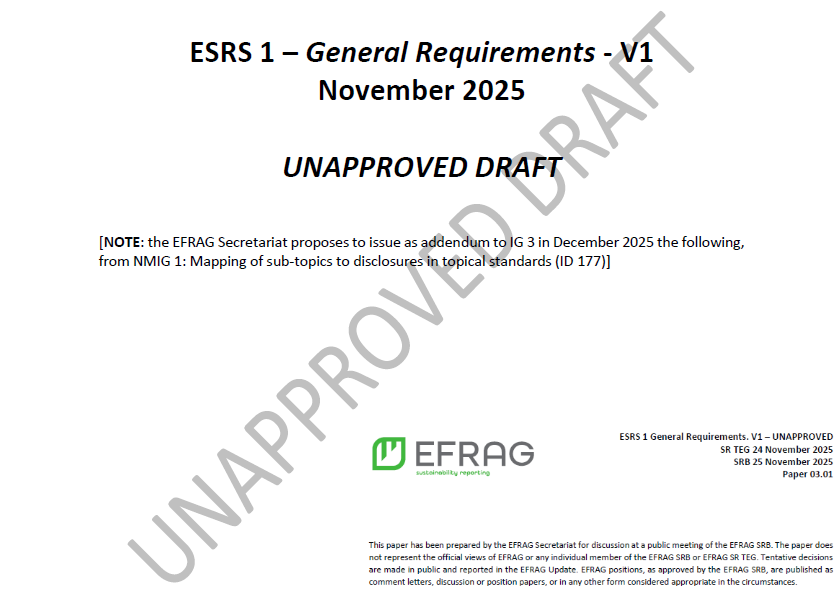
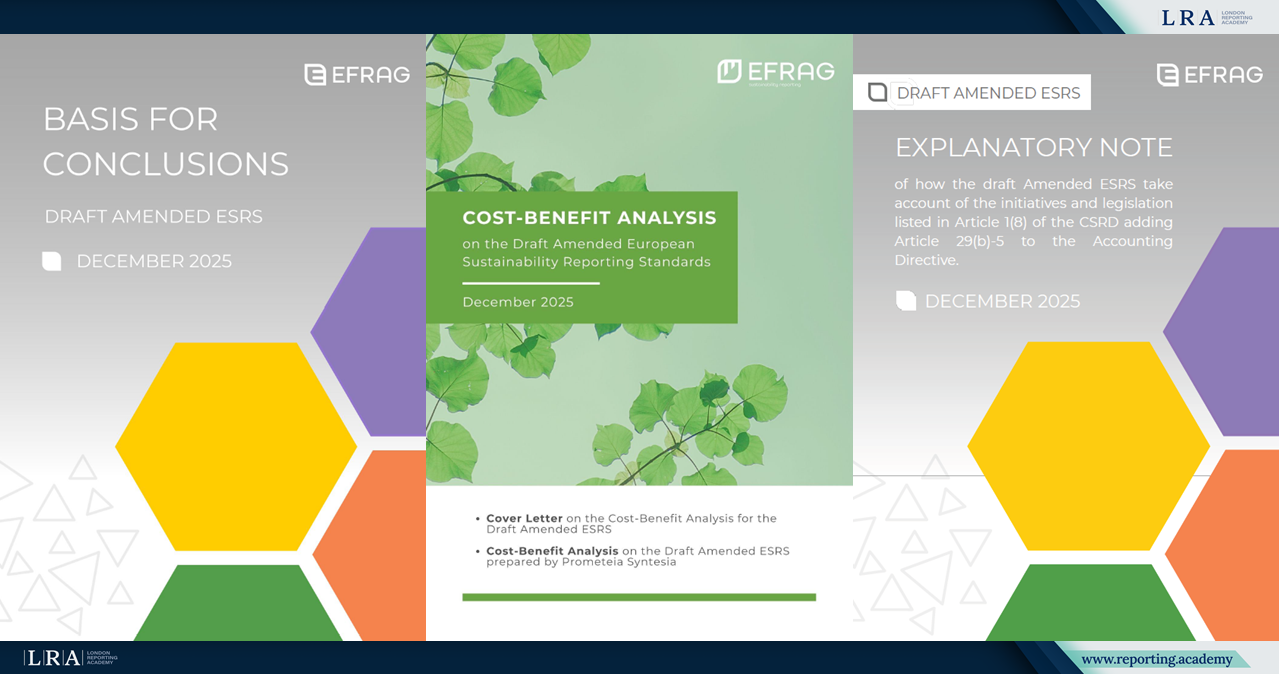
EFRAG has supplemented its draft simplified ESRS package with additional documentation aimed at improving transparency of the amendment process and supporting practical implementation work. The materials provide a structured route to follow consultation feedback, compare successive text versions and understand the accompanying analysis.
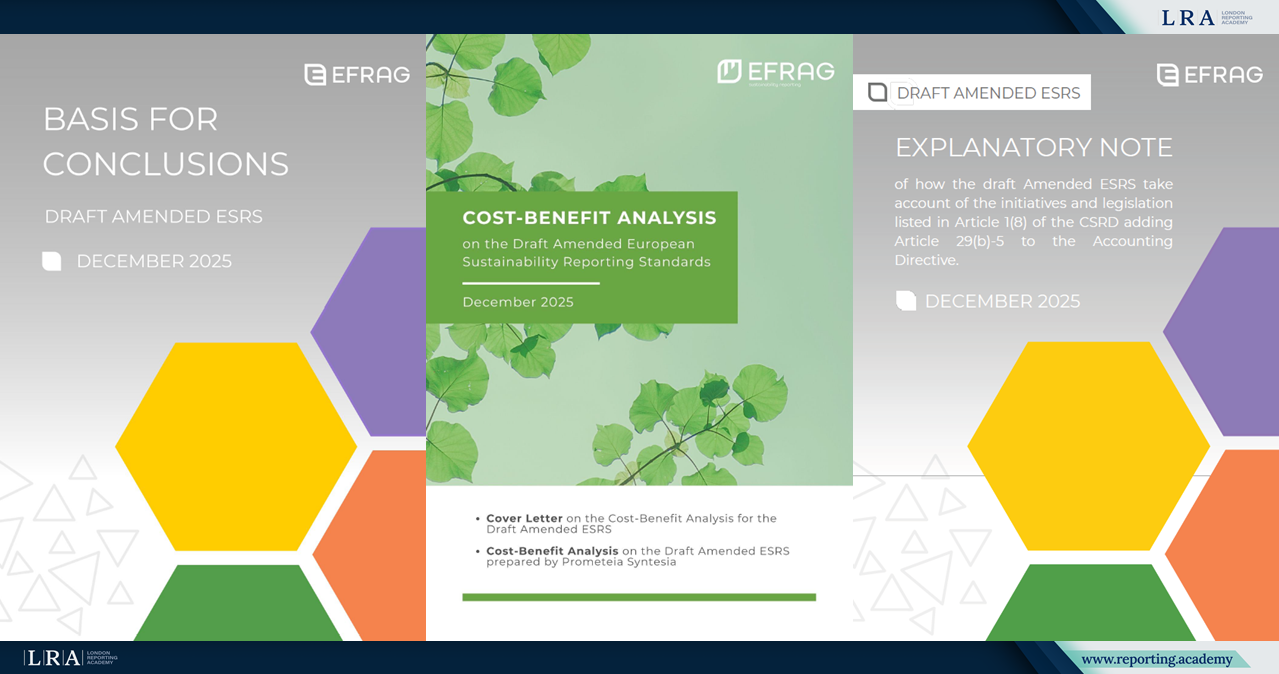
On 19 December 2025, EFRAG published complementary materials supporting the draft simplified ESRS. In our earlier article, we reviewed the draft simplified ESRS published by EFRAG on 3 December 2025. This update focuses on the accompanying documentation and how it supports traceability across versions.
EFRAG listed five categories of materials:
- Basis for Conclusions
- Cost-benefit analysis
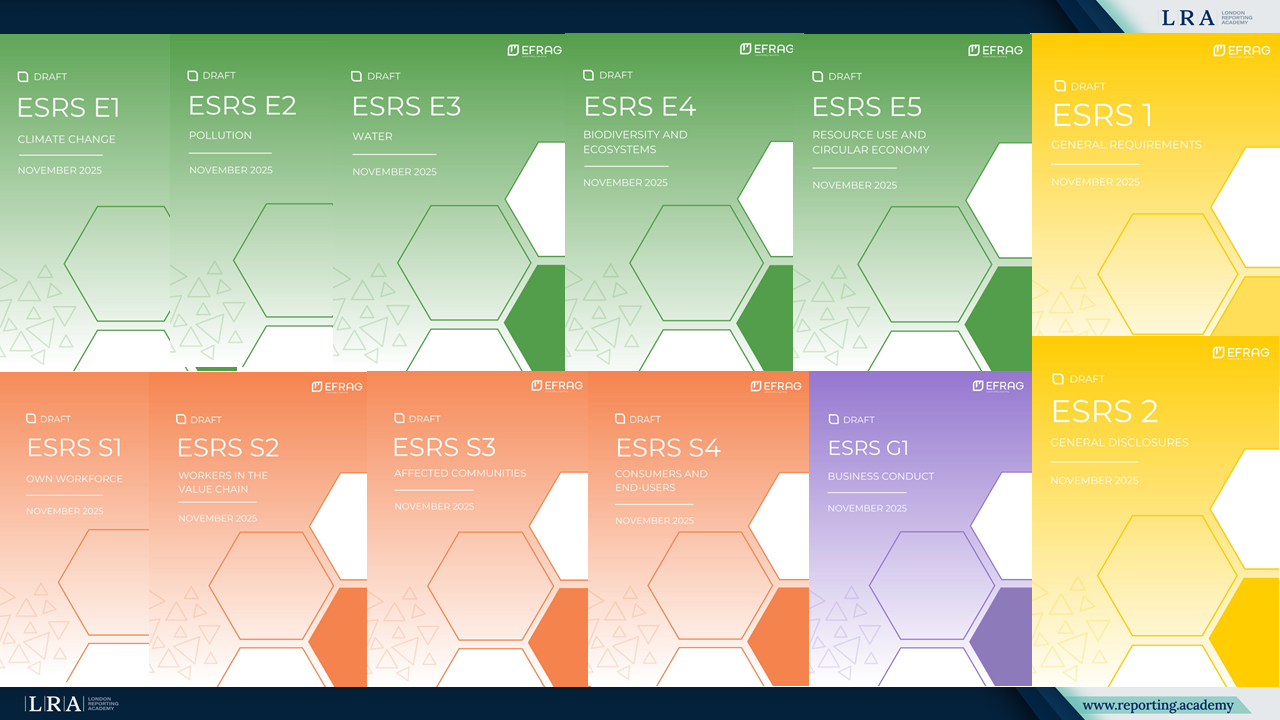
- Logs of amendments for the 12 standards and for Annex II
- Comparative tables for the 12 standards and for Annex II
- Explanatory note on Article 29b and its Annex
Annex II is described as Aggregated acronyms and glossary of terms.
Basis for Conclusions: Evidence Base and Drafting Outcomes
EFRAG presents the Basis for Conclusions as a feedback statement explaining how input from the public consultation on the Amended ESRS Exposure Draft was considered and reflected in the draft amended ESRS. It summarises the evidence base for simplification, including a public call for input launched on 8 April 2025 with 823 stakeholders and around 16,000 comments. It also refers to implementation feedback captured through the ESRS Q&A Platform, as well as one-to-one interviews and stakeholder workshops.
EFRAG notes that flexibility in structuring the sustainability statement raised concerns about connectivity with financial statements when this was not mandatory in the Exposure Draft, and that stakeholders called for the connectivity requirement to be reinstated as mandatory. Using the ESRS counting methodology, EFRAG reports that for ESRS 2 and topical standards excluding Minimum disclosure requirements (MDRs) and General Disclosure Requirements (GDRs), total shall datapoints were reduced from 803 to 314 (60.9%), and total may datapoints were reduced from 270 to 0. EFRAG adds that final datapoint counts can only be assessed once a new IG3 List of Datapoints is completed.
The Basis for Conclusions also describes drafting conventions that affect how requirements are read. Voluntary disclosures are removed, and Application Requirements are described as mandatory. EFRAG describes the introduction of the undue cost or effort concept from IFRS S1 with an expanded scope. It also notes that the data quality relief is not available for ESRS E1-8 GHG emissions. While stating a general principle of no new datapoints, EFRAG identifies three datapoints added as exceptions, referencing ESRS S1-9 (benchmarks for adequate wages), ESRS E1-1 (key assumptions) and ESRS E5-5 (waste destination unknown).
Logs of Amendments and Comparative Tables
EFRAG positions the Logs of Amendments and Comparative Tables as paragraph-level traceability tools linking ESRS as enacted in 2023, the Exposure Drafts published on 31 July 2025 and the technical advice text in the draft amended ESRS for each of the 12 standards and for Annex II. The Logs of Amendments provide a structured record of edits across disclosure requirements and application material. The Comparative Tables provide a text comparison view across the three reference points, supporting line-by-line verification and internal mapping when updating reporting processes and documentation.
Cost-benefit Analysis: Reported Savings
EFRAG’s Cost-benefit Analysis was prepared by Prometeia and Syntesia. The report assesses the amended ESRS as level 2 regulation only for 2027 to 2031 and reports stakeholder consultation with more than 200 responses. Net savings for preparers are presented as €3.7 billion over 2027 to 2031 (34% of baseline costs) and about €4.7 billion (44%) when value chain-related savings are included. EFRAG notes that benefits for users of sustainability statements are harder to quantify and are therefore mainly assessed qualitatively.
Explanatory Note on Article 29b and its Annex
EFRAG’s Explanatory Note to Article 29b(5) accompanies, but is not part of, the draft amended ESRS and states that it does not reflect the position of the European Union or the European Commission. It also states that it updates the Explanatory Note issued in November 2022 and includes an annex mapping Article 29b(5)(a) to (j) to sources and their reflection in the amended standards.
For SFDR principal adverse impact indicators, EFRAG states that Principal Adverse Impacts (PAI) datapoints were scrutinised for relevance and usefulness, resulting in selected deletions and amendments. It states that undertakings should disclose a table indicating where SFDR datapoints are addressed in the sustainability statement or, where assessed as not material, that they are not material. Appendix A of ESRS 2 General disclosures is described as marking the corresponding SFDR datapoints across the amended standards.