


Disclosure focus
This disclosure is about explaining how your sustainability-related strategy is put together and how it is used in practice. In simple terms, it asks you to describe the main parts of the strategy, how they connect to each other, and how they support decision-making, rather than just listing ambitions or isolated initiatives.
The practical focus is on showing the strategy as it applies across the organisation, not only at a few flagship sites or headline projects. A useful explanation would make clear whether the approach covers the whole business, specific business units, or selected operations, and how consistently it is applied in day-to-day planning and oversight.
This LRA educational guidance supports disclosure preparation. For the exact requirements, always refer to the official IFRS source.
Before you start
A quick mental checklist before you prepare this disclosure — tick each as you settle it.
Preparation
Key datapoints to prepare
+ Show s1-29 sub-elements (LRA working checklist)
Describe the part of the business model and value chain that is relevant to the matter.
Set out the financial effects linked to the matter.
Explain how the matter affects the organisation’s ability to stay resilient.
Identify the risks and opportunities connected with the matter.
Show how the matter is considered in strategy and in decision-making.
How to prepare it
1Set the reporting boundary first: decide which parts of the business and value chain you will cover, and make sure the same scope is used across all five blocks.
2Define what each block will include in practice. Separate the material on the business model and value chain, the financial effects, resilience, risks and opportunities, and strategy and decision-making so each item is clearly identifiable.
3Gather support for every block before drafting. Pull together the underlying records, analyses, working papers, and other source material that back the statements you plan to report.
4Prepare the final content in the form needed for each block. For some items this will be narrative explanation; for others it may be figures, depending on what the disclosure asks you to present.
5Record any exclusions, scope changes, or methodological shifts. Explain what was left out, what changed from the prior period, and why the reported information should be read in that context.
6Check the draft against the official source before sign-off. Confirm that each required block is covered, the wording matches the underlying requirement in substance, and nothing important has been missed or overstated.
Request the data
Request the strategy pack and supporting evidence
Translate the disclosure into an internal business question — then adapt it to your organisation's own language.
What material do we already hold that shows how sustainability matters are built into our strategy, planning, and decision-making, and how they connect to our business model, risks, opportunities, resilience, and financial impacts?
Use your organisation’s own planning and strategy language first, then map it to the reporting categories. For example, ask for the board pack, strategy deck, investment case, risk register, scenario work, or planning memo that your teams already use. This is a possible LRA training template only; adapt it to your organisation and check the official source before sign-off.
Weak request
Please provide the sustainability strategy disclosure evidence for the period.
Why it fails: It uses framework language only, so the owner may not know which internal pack, meeting papers, or planning outputs to pull. It also does not say which business area, period, boundary, or source documents are needed, so the response is likely to be incomplete or inconsistent.
Better request
Please send the latest strategy, planning, and decision papers for [reporting period] that show how [internal topic name] is built into our business model, risk and opportunity tracking, resilience work, financial planning, and management decisions. Include the source file, version/date, owner, boundary, and any assumptions used. This is a possible LRA training template only; adapt it to your organisation and check the official source before sign-off.
Industry examples
Draft your disclosure
Notes that turn data into a disclosure
LRA training templates — adapt them to your organisation, and check the official source before sign-off.
Method note
Explain the basis used to group the collected information into the five blocks, including how each block was defined and how the underlying data were assembled for the draft disclosure.
Context note
Set out what the figures and descriptions mean in practice by linking the business model, value-chain, financial effects, resilience, risks and opportunities, and strategy information into one connected picture.
Fluctuation statement
Point to the main reasons any reported changes moved up or down, such as shifts in the business model, value-chain exposure, financial effects, resilience assessment, risk profile, or strategic response.
Content index entry
s1-29 Strategy disclosure architecture — [location / page] / [notes]
Download Centre
Preparation tools & forms
Professional preparation tools for s1-29 — free with an LRA Community membership. Register once (it's free) and every download unlocks, together with the Disclosure Library, templates and the LRA AI-assistant.
Free · Community members
Assurance readiness
For each claim, check the evidence
Evidence pack to prepare
Common reporting gaps
The information is presented without a date or as-at point.The scope or boundary of the statement is left undefined.Key terms are used inconsistently across the report.Material changes since the previous period are not disclosed.Assertions are made without supporting detail or a source record.Boilerplate is used that does not actually answer what is asked.
Common gaps
Mistakes to avoid when collecting the data
Wrong owner
The team asks someone who only knows one function, so the evidence comes from the wrong part of the business and misses the people who actually hold the source records.
Framework language first
The request is written in reporting jargon instead of the organisation’s own terms, so the data owner cannot map it cleanly to the systems and files they use day to day.
No scope set
The collector never fixes which entities, activities or value-chain parts are in scope, so different teams send data for different boundaries and the final pack cannot be reconciled.
Wrong period basis
Inputs are pulled for the wrong date range or cut-off point, so the numbers do not match the reporting period used elsewhere in the pack.
Mixed counting basis
Headcounts, totals and other measures are gathered using different counting rules, so like-for-like figures are blended and the result is not comparable.
Source labels lost
The original file names, system tags or record labels are stripped away during collection, so no one can trace each figure back to the source it came from.
Separate populations merged
Data for groups that should stay apart is combined too early, so the team can no longer split the evidence into the five strategy blocks cleanly.
No evidence trail
The pack is assembled without keeping the supporting files, version history and sign-off record together, so there is no clear trail showing who checked what and when.
Where judgement is often needed
Boundary shift after a deal closes
If a purchase, sale, or internal reorganisation changes what sits inside the reporting perimeter, explain which parts of the story use the old set-up and which use the new one, and make the cut-off point clear.
Different country labels for the same issue
Where local teams use different names or groupings for the same business matter, pick one organising logic for the disclosure, explain the mapping, and show how the local views roll into the group narrative.
Near-boundary operations and joint arrangements
For sites, entities, or activities that sit partly inside and partly outside the reporting perimeter, state the inclusion rule you used and why that treatment best reflects the organisation’s own operating picture.
Choosing the timing basis
If the information is assembled at a different date from the reporting date, disclose the date used, why it was chosen, and whether later events were considered or left out.
Measured figures versus informed estimates
When direct measurement is not available, use a reasoned estimate, say so plainly, and explain the main assumptions, inputs, and any known limits on confidence.
Rounding and presentation consistency
If numbers are rounded or grouped for readability, keep the method consistent across the disclosure and make sure the rounded presentation does not distort the underlying message.
Privacy limits on small-population detail
Where naming a small team, site, or customer group could expose personal or commercially sensitive information, aggregate the data enough to protect privacy while still giving a useful picture of the issue.
Mixed internal definitions across functions
If finance, operations, and risk teams track the same topic differently, choose the version that best fits the disclosure purpose, explain the differences, and reconcile the main gaps in the narrative.
Partial-year effects from scope changes
When a new acquisition or disposal affects only part of the year, state whether the disclosure reflects the full year, the post-change period, or another basis, and keep that basis clear throughout.
Overlapping strategy, risk, and action content
If one topic could sit in more than one part of the strategy story, place it where it best supports the overall explanation and cross-refer only where needed so the reader can follow the logic without duplication.
Examples
Illustrative examples
Synthetic, written by LRA — not from a company report, not text from any standard.
Illustrative (synthetic) example — manufacturing
We explain how our business makes money, where the main upstream and downstream links sit, and which parts of the chain matter most for this reporting period. We also set out the main sustainability-related matters that could help or hurt performance, how those matters feed into choices made by management and the board, and what we have done to test whether our current plan still holds up under different future conditions. - We describe the parts of the group that create value, the key suppliers and customers we rely on, and the stages of the chain where the most significant effects arise. - We summarise the expected or observed financial consequences from those matters, including a current-year impact of £18 million of extra operating cost, of which £11 million relates to energy and £7 million to logistics. - We explain the scenarios we used to check durability, including a base case and two stressed cases, and note that the most severe case reduces forecast 2030 operating profit by 14% versus the base case. - We identify the main downside and upside matters, such as input-price volatility and demand for lower-carbon products, and describe how they influence priorities, capital allocation and risk controls.
This synthetic example shows how a reporter can connect the operating model, material sustainability matters, financial consequences, stress-testing of the plan, and the way those matters shape decisions without using standard wording.
Illustrative (synthetic) example — retail and distribution
We set out how our group sources, moves and sells goods, and we describe the parts of the chain that are most relevant to the current report. We then explain the sustainability-related matters that may create value or downside, the way those matters are reflected in planning and oversight, and the checks we have run to see whether the strategy remains workable over time. - We outline our trading model, the main supplier and logistics links, and the points in the chain where labour, packaging and transport issues are most significant. - We report the related financial effect, including £9 million of one-off transition spending and £4 million of avoided cost from efficiency actions, with the subset included in the total. - We describe our resilience testing using three future paths, and note that under the low-demand path revenue in 2028 is 6% below the central case while gross margin is 2 percentage points lower. - We summarise the key threats and chances, such as tighter regulation and stronger demand for circular products, and explain how they inform board papers, investment choices and operational priorities.
This synthetic example shows a second plausible reporter using different sector language while still covering the operating model, financial effects, resilience testing, material matters, and decision-use of the information.
How companies report s1-29
Real reports where this topic is disclosed. These are report practice, not exact disclosure templates to copy.
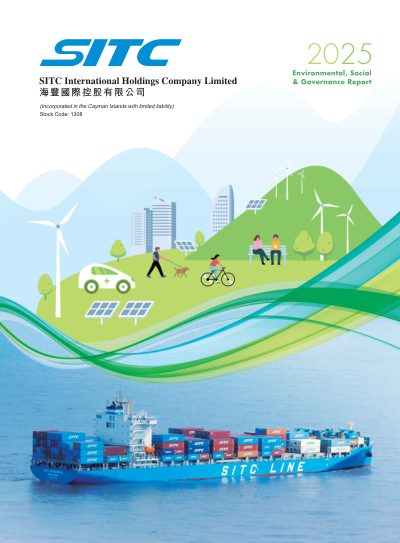
SITC International Holdings Company Limited
Water Transportation · Hong Kong · 2025
SITC International Holdings Company Limited’s 2025 Environmental, Social and Governance Report provides coverage of the financial effects of sustainability-related risks and opportunities on the entity’s financial position, performance, and cash flows (p.189). It also addresses the current and anticipated effects of these risks and opportunities on the business model (p.188), as well as the company’s strategy and decision-making processes related to sustainability risks (p.189). However, the report offers unclear disclosures regarding the business model and value chain description (p.188) and the entity’s resilience to climate-related changes and uncertainties (p.195).
✓ LRA AI Assistant · Human-in-the-loop

Ask Study Studio AI assistant about this disclosure
Get practical answers for your reporting context. Your first two answers are free — join LRA Community for free to continue without a limit.
TryHow do I prepare s1-29?What data do I need to collect?Where can I see a real-report example?What mistakes should I avoid?
2 free answers
Check your understanding
Scenarios to work through
A manufacturer is drafting its climate-related strategy note. The team has a strong section on supply chain impacts, but the draft leaves out how those issues feed into the business model and the way goods move from suppliers to customers.
QShould the note include a separate part that explains the business model and value-chain angle, rather than folding everything into one general strategy narrative?
Reveal model answer →Hide answer ↑Yes. The disclosure should be organised so a reader can see how the organisation’s operating model and wider chain of activities are affected, alongside the other strategy elements. If that link is only implied in a broad narrative, the structure is too weak for a clear review. A possible LRA training template would be to add a distinct subsection for the operating model and chain of activities, then adapt this to your organisation and check the source text before sign-off.
Why this matters · Keep the strategy note split into clear blocks so the reader can follow the business model link on its own.
A services group has quantified expected cost increases from heat-related disruption, but the draft only says the issue is “material” and does not explain the likely financial effect in the period or over time.
QDo you need a dedicated section that sets out the expected financial effect, rather than leaving the point as a general risk statement?
Reveal model answer →Hide answer ↑Yes. The strategy disclosure should separately explain the expected financial consequences, not just mention the underlying issue. A reader should be able to see what the effect is, how it arises, and why it matters to the numbers. A possible LRA training template would be to create a financial-effects block with the key impacts described in plain language, then adapt this to your organisation and check the source text before sign-off.
Why this matters · A risk description is not enough on its own if the financial effect has not been set out clearly.
An energy business has discussed transition plans and board oversight, but the draft does not say whether the strategy is built to withstand different future conditions or how management tested that robustness.
QShould the note include a resilience block that explains how the strategy holds up under different conditions?
Reveal model answer →Hide answer ↑Yes. The disclosure should show how the strategy performs when conditions change, so the reader can judge whether it is robust rather than assumed to work only in one scenario. That means the resilience discussion needs to stand as its own block, not be hidden inside a general strategy summary. A possible LRA training template would be to add a resilience section that explains the main assumptions and stress points, then adapt this to your organisation and check the source text before sign-off.
Why this matters · The strategy story should show how the plan behaves under change, not just what the plan is.
A retailer has prepared a detailed risk register and a separate paper on capital allocation, but the sustainability note does not connect those items to strategic choices or explain how management uses them when making decisions.
QDo you need a distinct strategy-and-decision-making block that links the sustainability issues to actual management choices?
Reveal model answer →Hide answer ↑Yes. The disclosure should make the connection between the sustainability matters and the decisions taken by management, so the reader can see how the issues influence strategy in practice. If the link sits only in internal papers, the external note is incomplete. A possible LRA training template would be to add a decision-making block that explains how the issues feed into planning and allocation choices, then adapt this to your organisation and check the source text before sign-off.
Why this matters · Show how sustainability matters affect real decisions, not just how they are tracked.
Framework references
Related framework references
How this disclosure maps across the major reporting frameworks.
IFRS / ISSB
s1-29
within IFRS-S1: IFRS S1 - General Requirements for Disclosure of Sustainability-related Financial Information
Open official source →Related & explore
FAQ
Questions this page answers
For s1-29, what should I gather before I start drafting the disclosure?+−
The page says to prepare a business model map, a financial impact summary, a future robustness view, a risk and upside register, and a board action record. Use the step-by-step preparation section to turn those inputs into a draft.
How do I use the s1-29 page to build the disclosure from scratch?+−
Start with the plain-language explainer, then work through the step-by-step preparation section and the draft-output section. The page is set up to help you move from source material to a narrative, visuals, and a content-index line.
What data owner inputs do I need for s1-29, and who should own them?+−
The page points you to business model, financial impact, future robustness, risk and upside, and board action information, so those are the main inputs to assign across owners. It also includes a board action record, which is useful for showing governance ownership in the evidence pack.
What evidence should I keep ready for assurance on s1-29?+−
The page includes five assurance claims to verify and an evidence pack with five items for assurance readiness. Use those sections together so each claim has a clear risk and supporting evidence trail.
What are the common mistakes to avoid when drafting s1-29?+−
The page has a list of common reporting gaps and mistakes, so use that as a pre-submission check. It is especially useful for spotting missing inputs, weak evidence, or a draft that does not line up with the preparation steps.
How can I use the s1-29 workbook and printable card in practice?+−
The Download Centre includes a Prep & Assurance workbook in .xlsx format and a printable Library Card in .pdf format. Use the workbook to organise the inputs and assurance checks, and the PDF as a quick reference while drafting.
What does the synthetic example on s1-29 help me do?+−
The page includes synthetic illustrative example disclosures, including a quantitative table. Use them as a drafting aid to see how the information can be presented, but keep your own figures and narrative tied to your company’s evidence.
How do I turn the s1-29 inputs into a draft disclosure?+−
The page’s draft-output section gives visualisation ideas, narrative starters, and a content-index line. That makes it easier to convert the prepared datapoints into a first draft without starting from a blank page.
What should I check before I send s1-29 for assurance review?+−
Check that the five assurance claims are supported, the evidence pack is complete, and the common gaps or mistakes have been addressed. The page is designed to help you get to an assurance-ready draft rather than a final sign-off.
How does the s1-29 page help with cross-framework reporting to ESRS?+−
The page notes a closest correspondence with ESRS 2 (General Disclosures), so you can use the same underlying data where it fits your reporting process. It does not say the requirements are identical, so treat it as a reuse point rather than a one-to-one mapping.
More questions this page can help with
s1-29 disclosure checklist for sustainability managers1-29 business model map what do I need to collects1-29 financial impact summary evidence packs1-29 future robustness view how to drafts1-29 risk and upside register templates1-29 board action record what counts as evidences1-29 common reporting gaps and mistakess1-29 assurance claims and evidences1-29 draft disclosure narrative starterss1-29 content index line examples1-29 workbook download prep and assurances1-29 ESRS 2 data reuse
Free · LRA Community
Get your s1-29 tools — free
Your preparation tools are free for LRA Community members and students. Register once (it's free) and your download starts right away — plus the Disclosure Library, templates and the LRA AI-assistant.
✓
You're in — your download is starting
Your file is downloading now. Your Community Cabinet — with the Disclosure Library, templates and the LRA AI-assistant — is ready too.
Open your Cabinet →